
Queer(y)ing Ecologies: A 2SLGBTQIA+ Art Exhibition and Project
The natural world has always been more diverse than the stories we've been told about it.
Across the living world, scientists have documented extraordinary diversity in sex, reproduction, and relationships. Adélie penguins were among the first species in which scientists recorded same-sex sexual behaviour over a century ago. Clownfish and bluehead wrasse can change sex during their lifetime, many fungi have thousands of mating types, and bighorn sheep engage in same-sex courtship. These are just a few of the more than 1,500 animal species in which same-sex behaviour has been documented. Yet many of these examples have been overlooked, dismissed, or interpreted through cultural assumptions that privilege binary ideas about sex, gender, and sexuality.
Queer ecology emerged, in part, as a way of questioning these assumptions and re-examining both the natural world and the stories we tell about it. Bringing together ecology, biology, environmental studies, and queer, feminist, and decolonial theory, it asks how our ideas of what is "natural" have been shaped by culture, history, and systems of power.
Queer(y)ing Ecologies is a community art exhibition co-created by local 2SLGBTQIA+ artists, scientists, knowledge holders, and community members from across the Bow Valley. Through workshops, conversations, and creative expression, participants explored questions such as:
How is queerness reflected in nature, and why does it matter?
How have colonialism, religion, and science shaped our understanding of what is "natural"?
What becomes possible when we embrace the extraordinary diversity that has always existed in the living world?
The artworks in this exhibition do not offer a single answer. Instead, they invite reflection, conversation, and the possibility of seeing both nature and ourselves differently.
As you move through the exhibition, we invite you to slow down, embrace complexity, and imagine new ways of relating—to ourselves, to one another, and to the more-than-human world.
-Tanya Pacholok (she/her), Curator and artist
Art Exhibition and opening reception
August 12 – September 7, 2026
artsPlace, Canmore
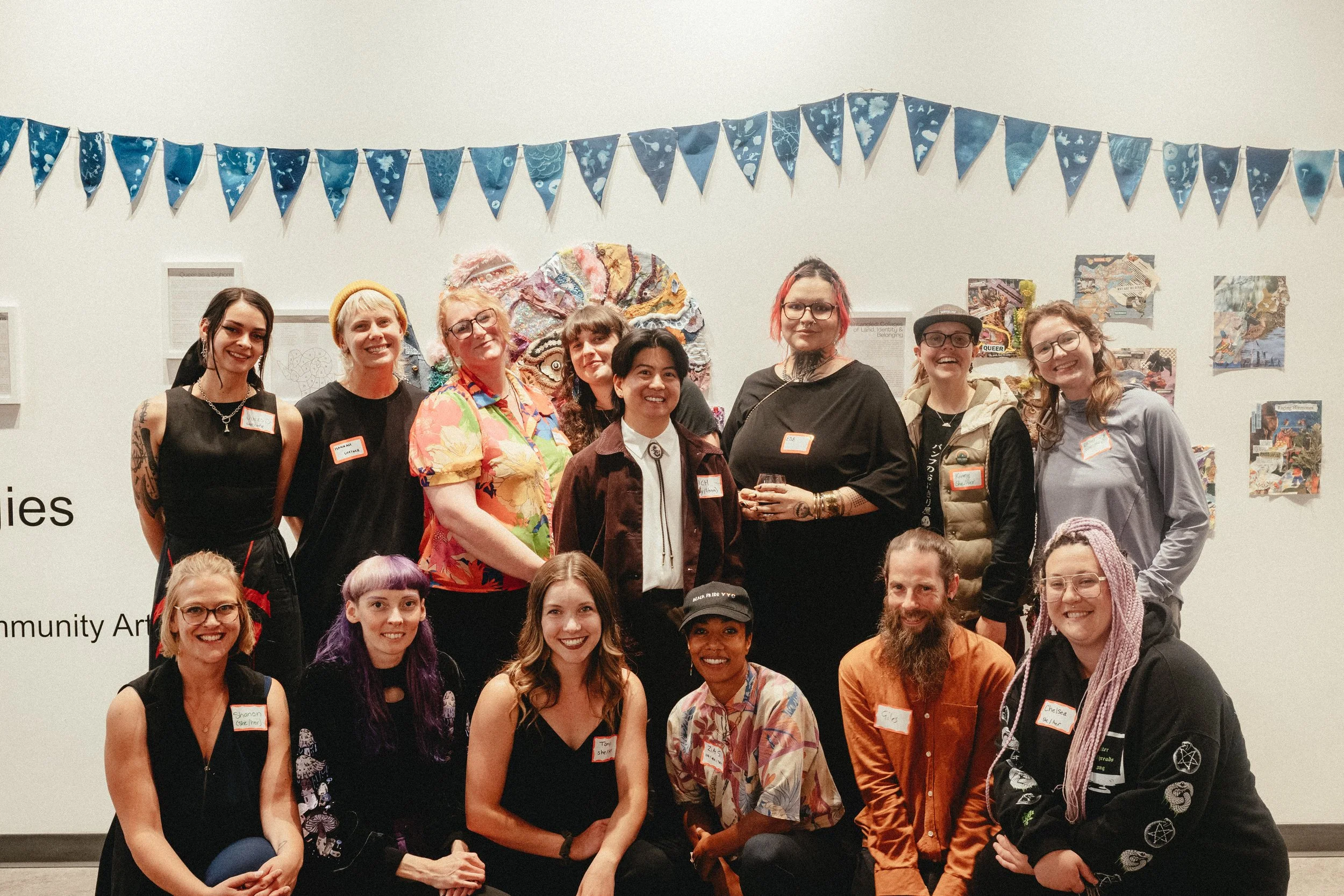
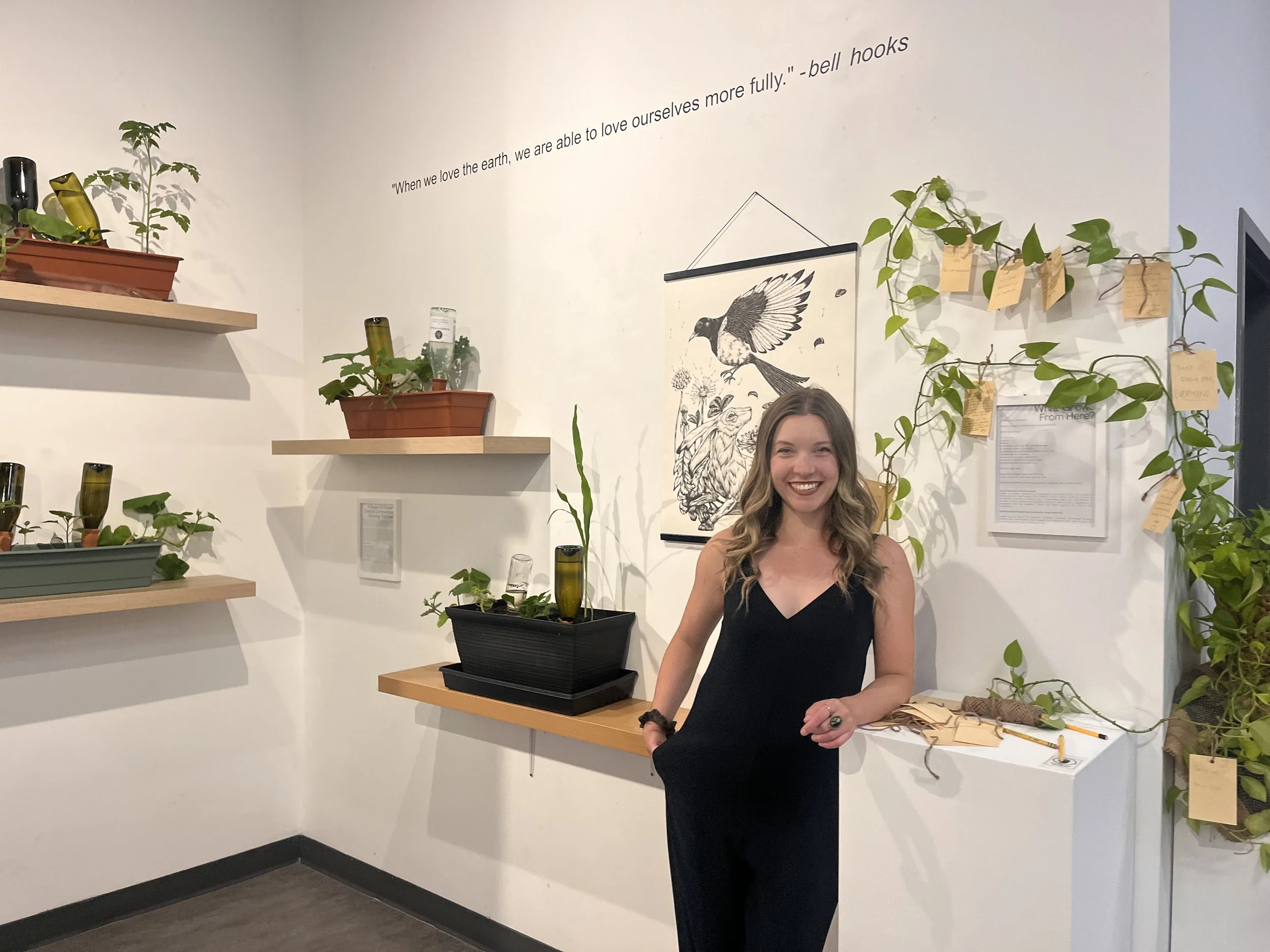
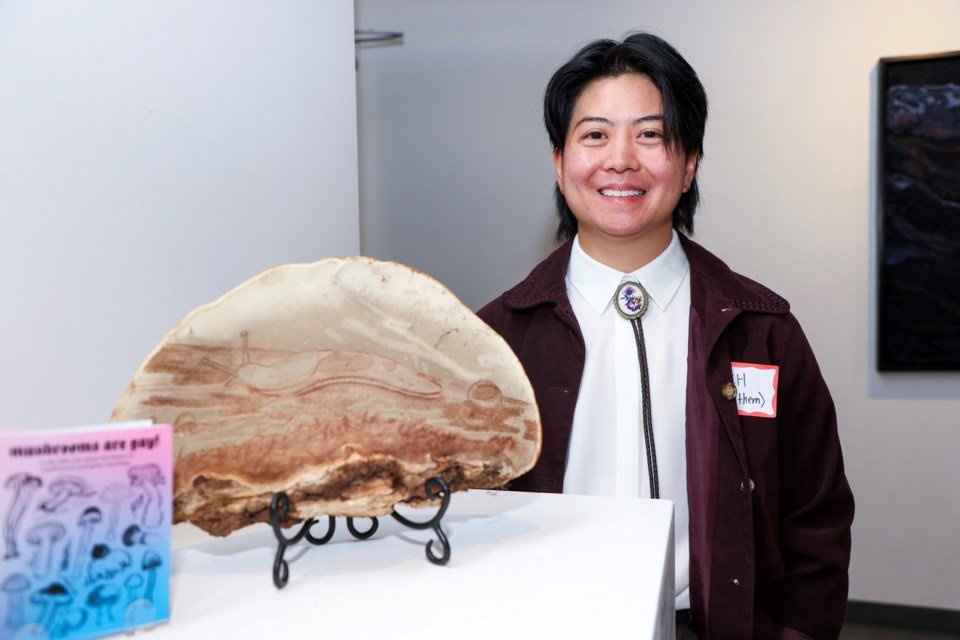
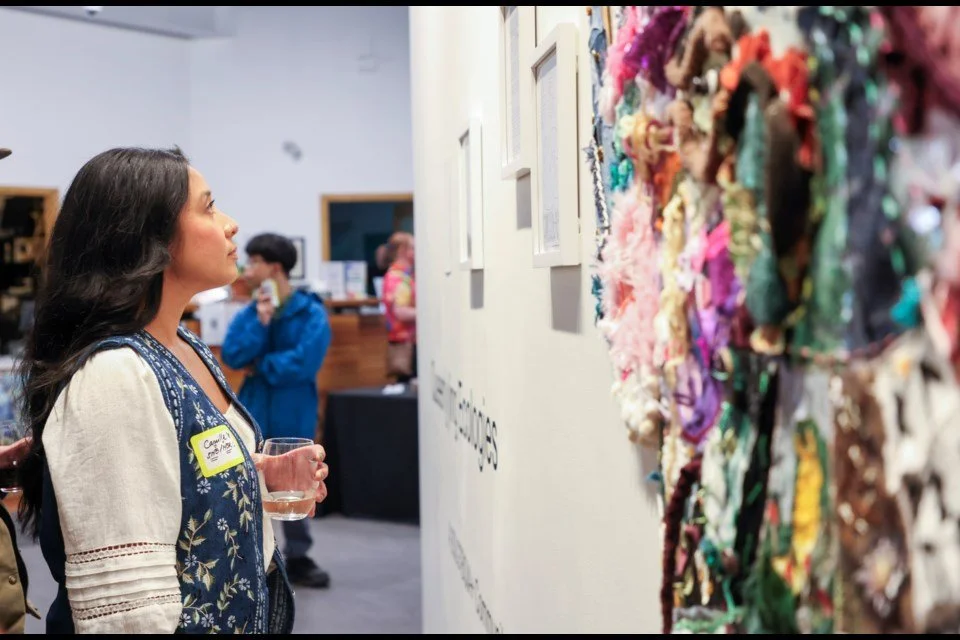
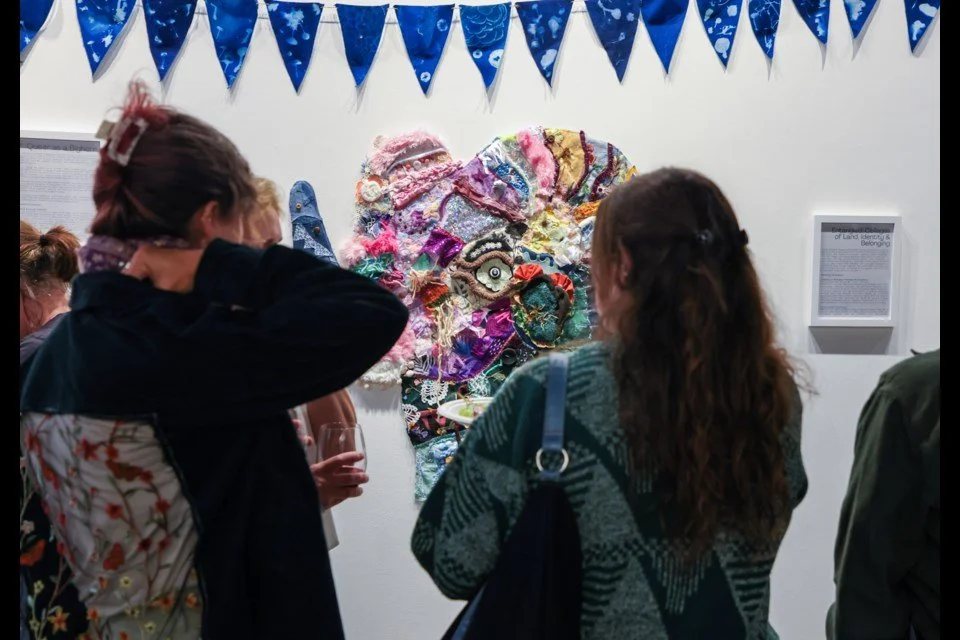
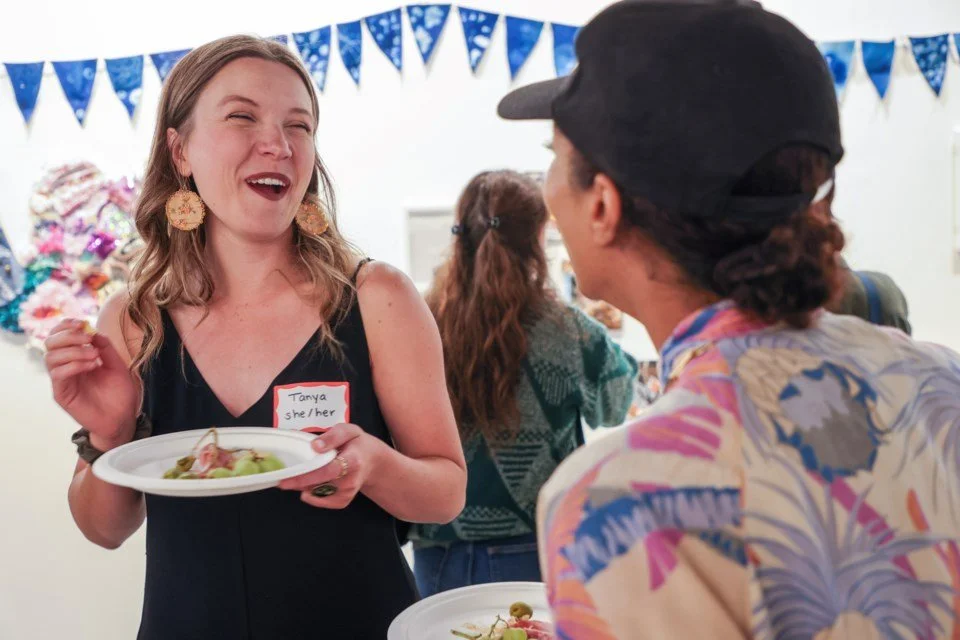
The Queer(y)ing Ecologies public exhibition is free and open to everyone until September 7, 2026 at artsPlace. The opening reception for this exhibition took place on August 13, 2026 with over eighty attendees. The evening included a curator talk, artist talks, and a screening of the film, Animal Pride: Nature’s Coming Out Story.
Photos taken by Jungmin Ham (Rocky Mountain Outlook).
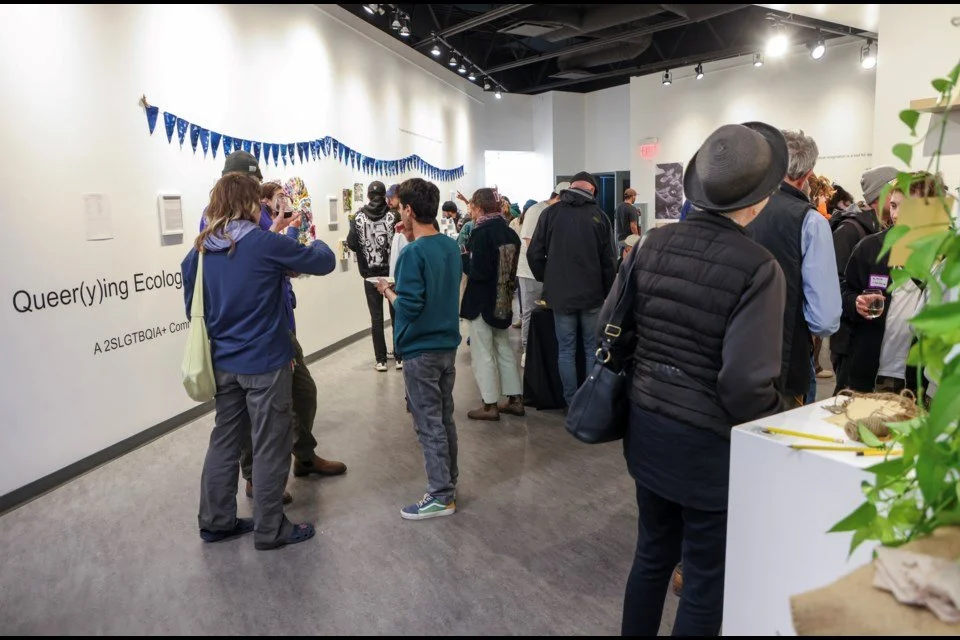
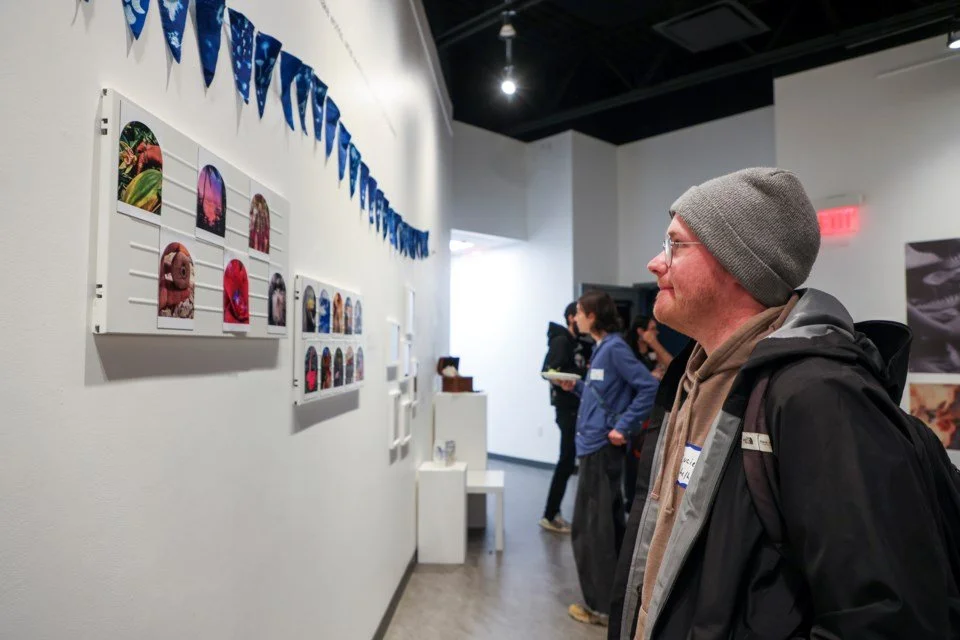
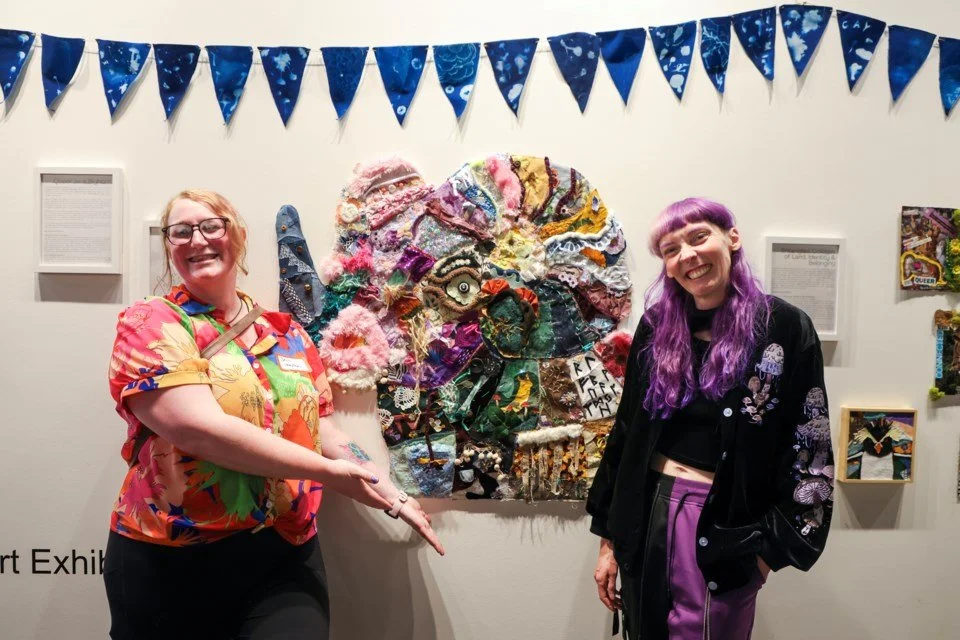
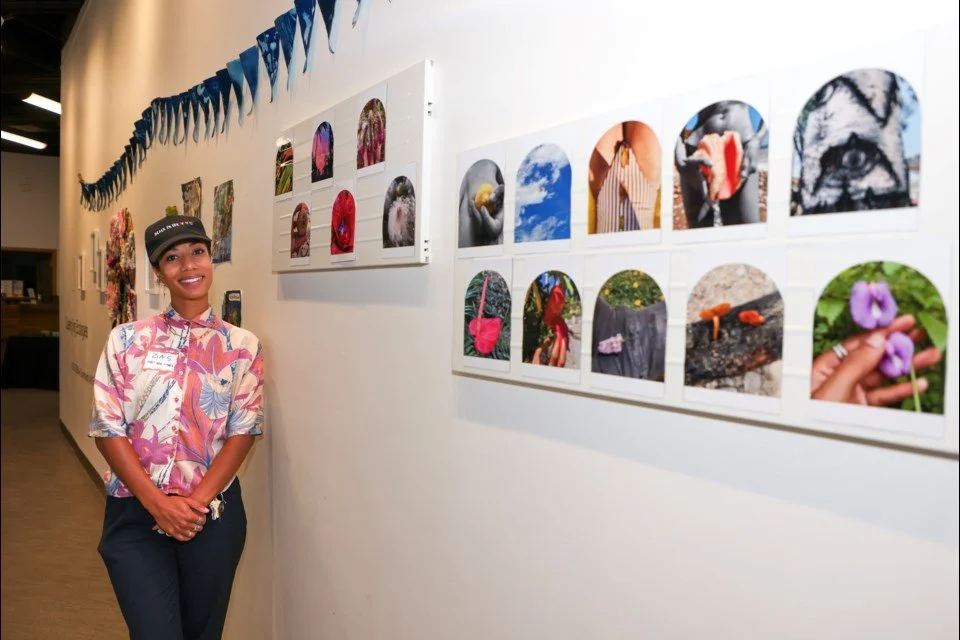
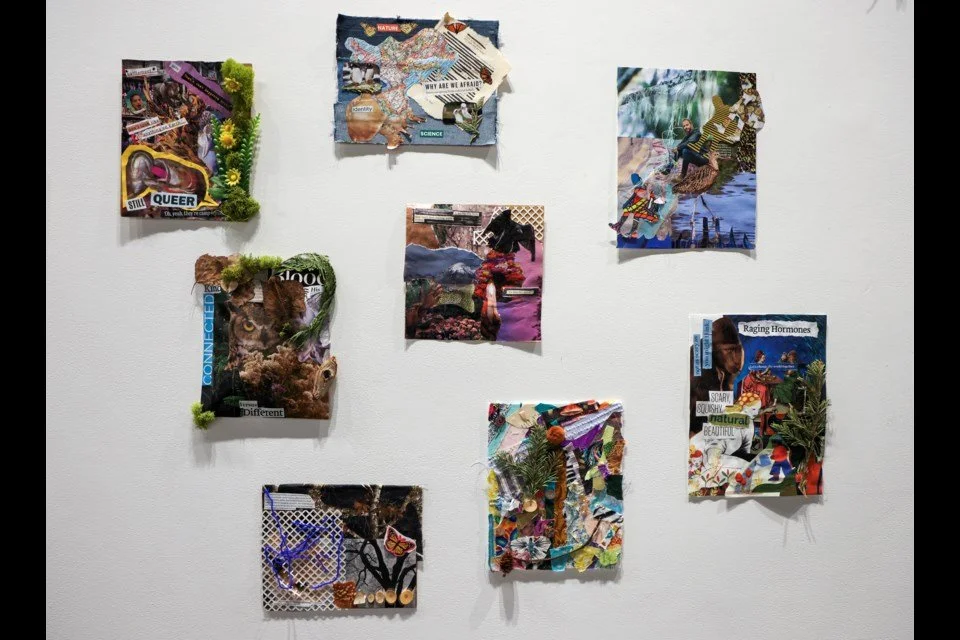
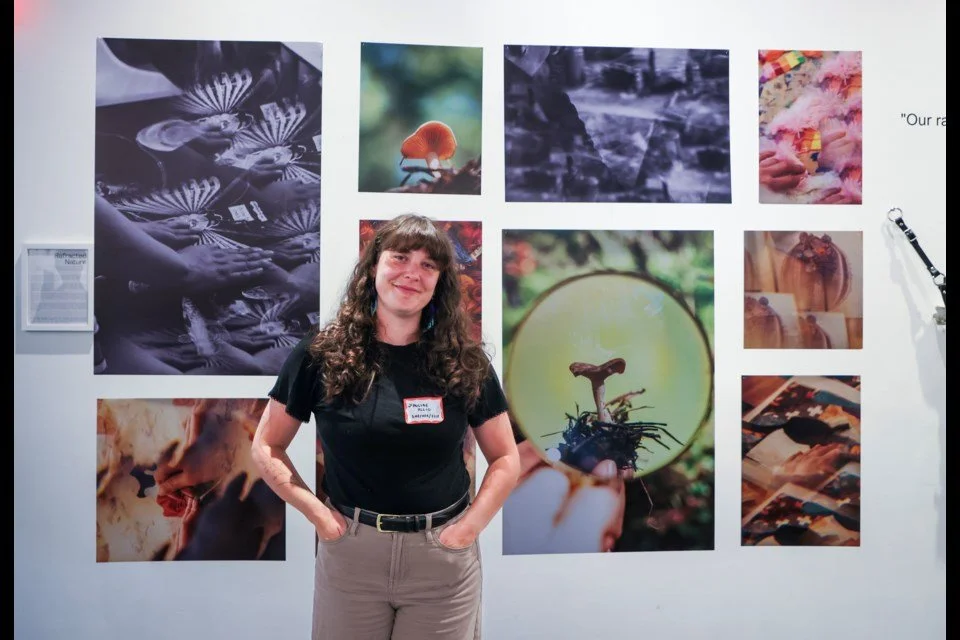
“Ultimately, queerness invites us all... to be more undefined, unclear, transitional, merging, interdependent, cooperative, and nonhierarchical—a very fungal way of being.”
The Process: A Three-Part Workshop Series
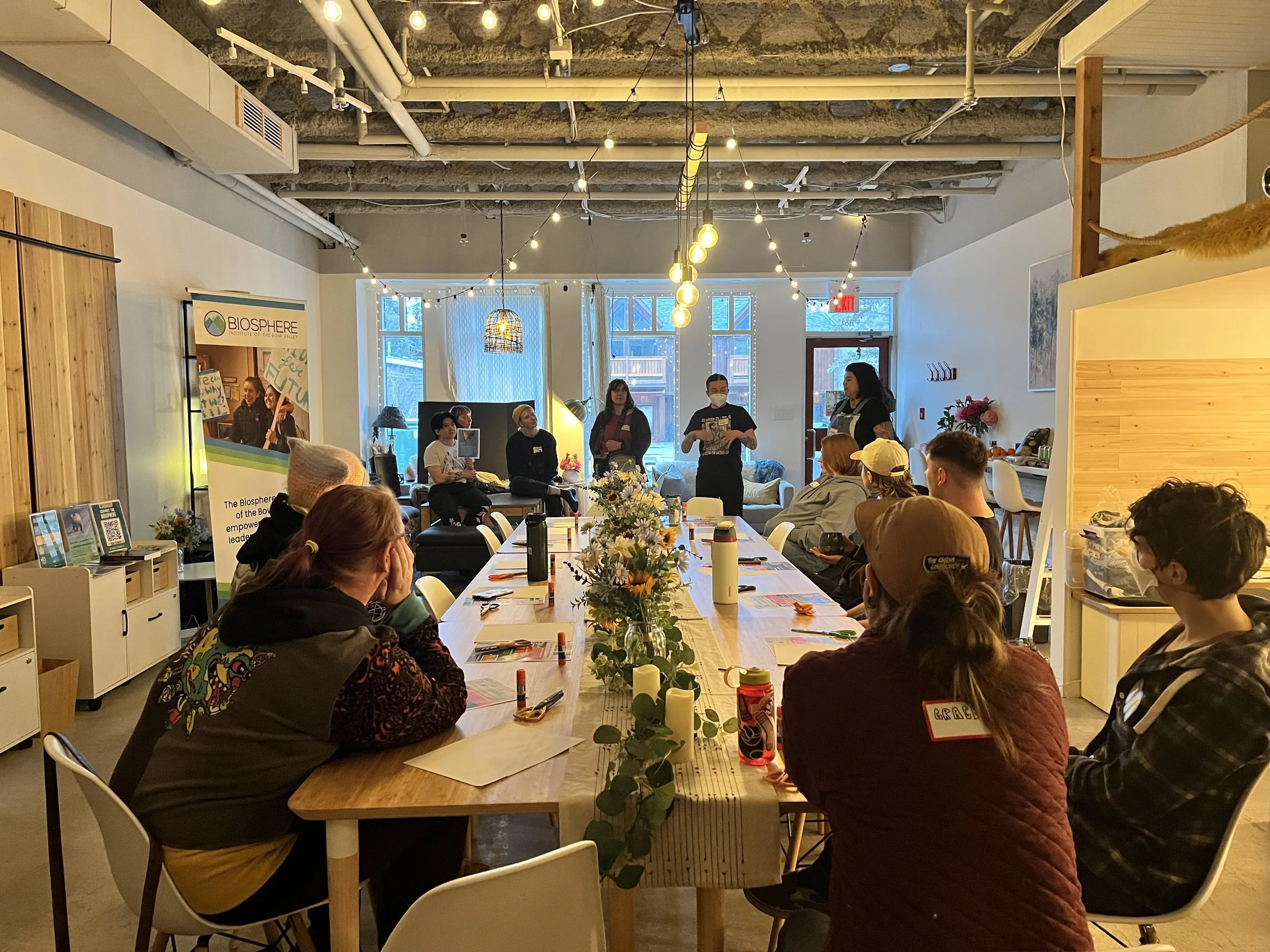
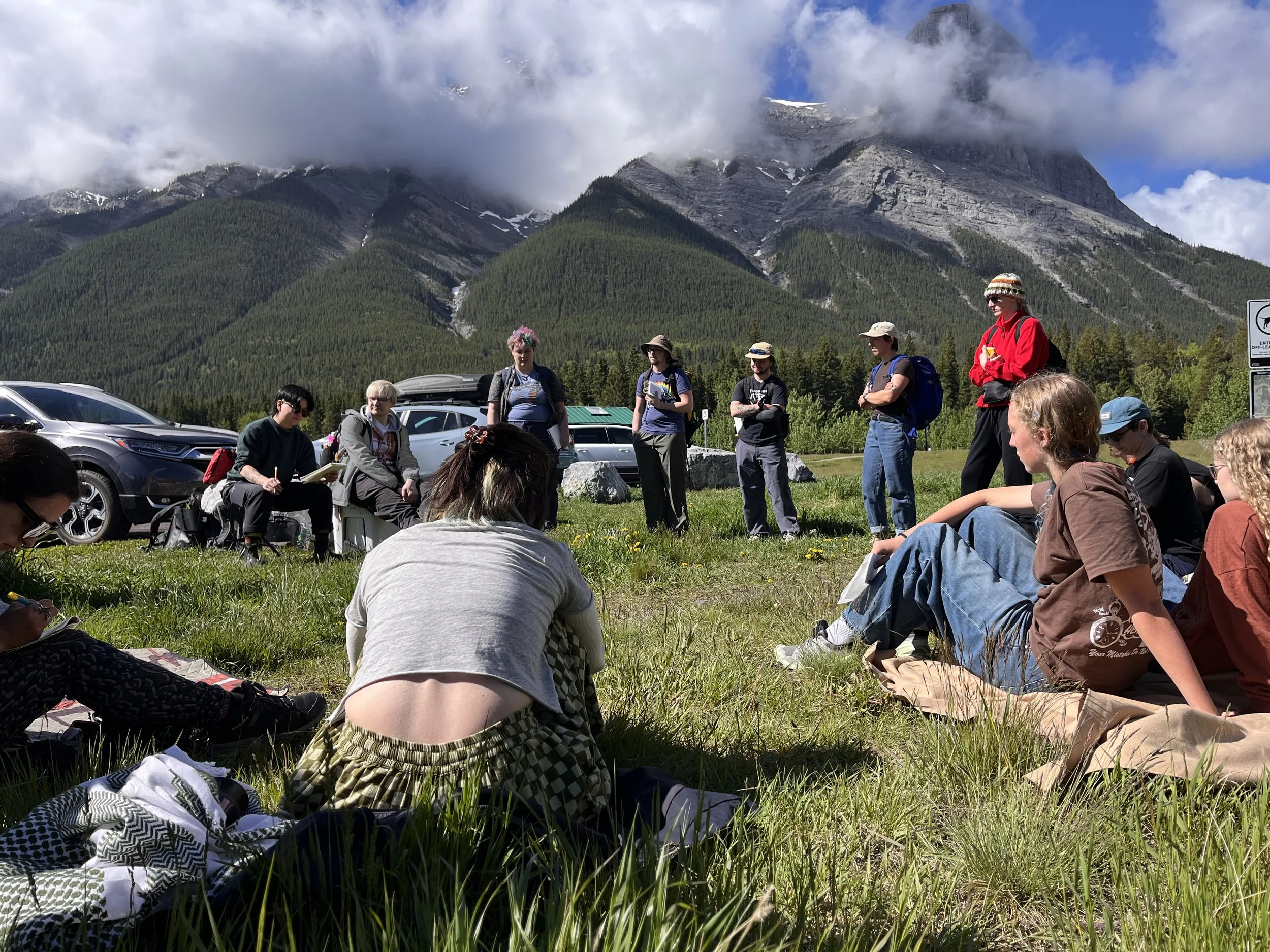
The Queer(y)ing Ecologies workshop series created space for 2SLGBTQIA+ community members to explore relationships between queerness, land, and environmental care through art, storytelling, and dialogue.
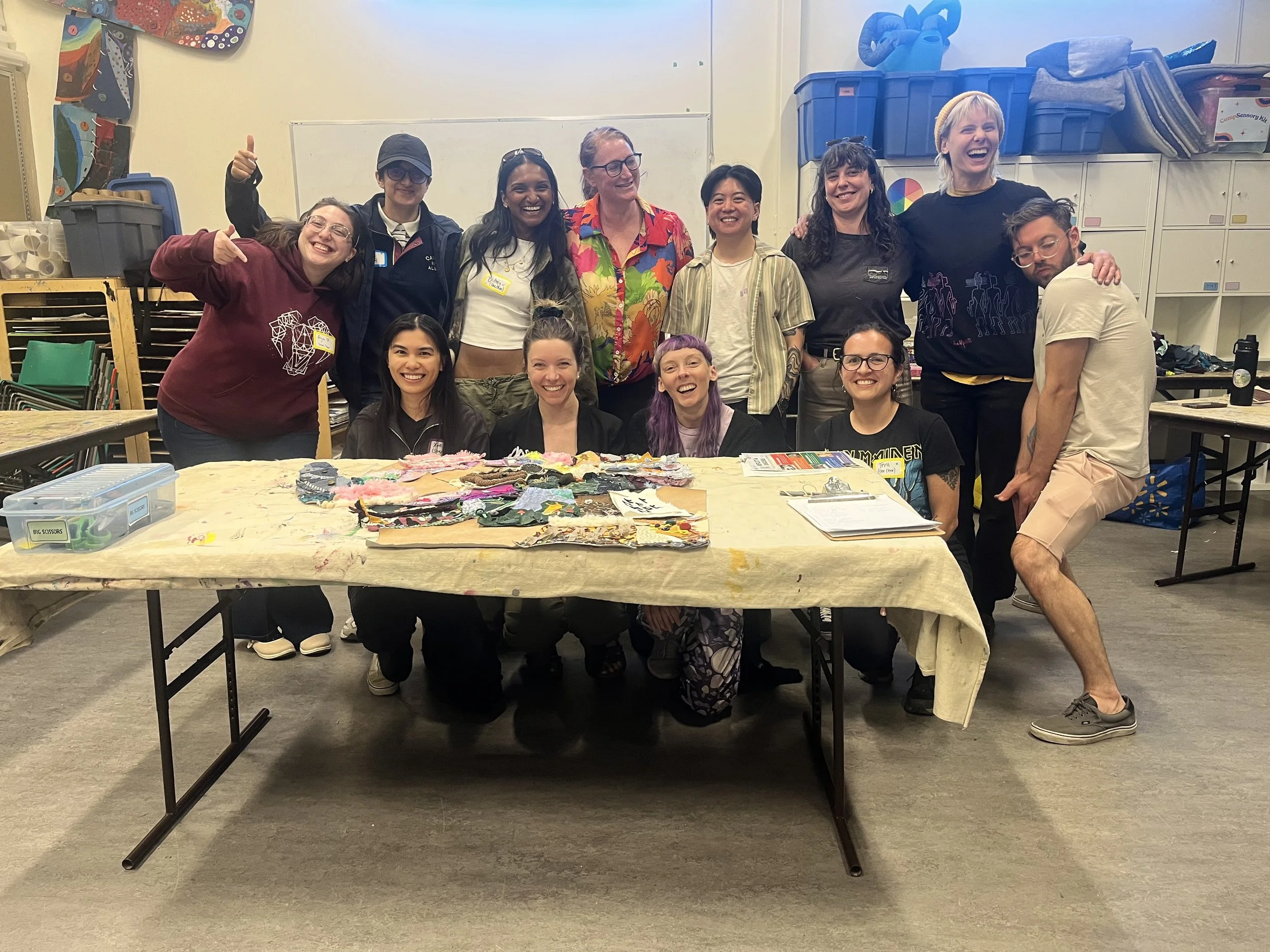
We paired local 2SLGBTQIA+ artists with an ecologist, scientist, biologist, or other knowledge holder. In each workshop, one piece of collective artwork was made.
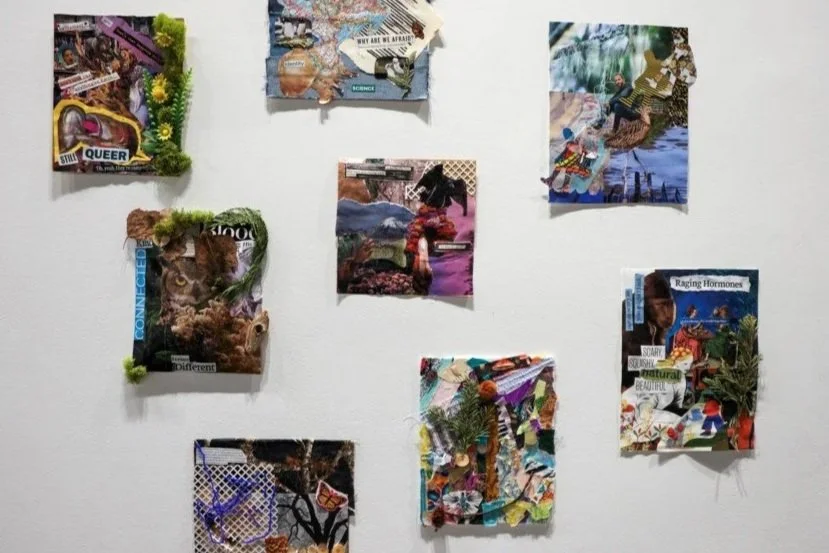
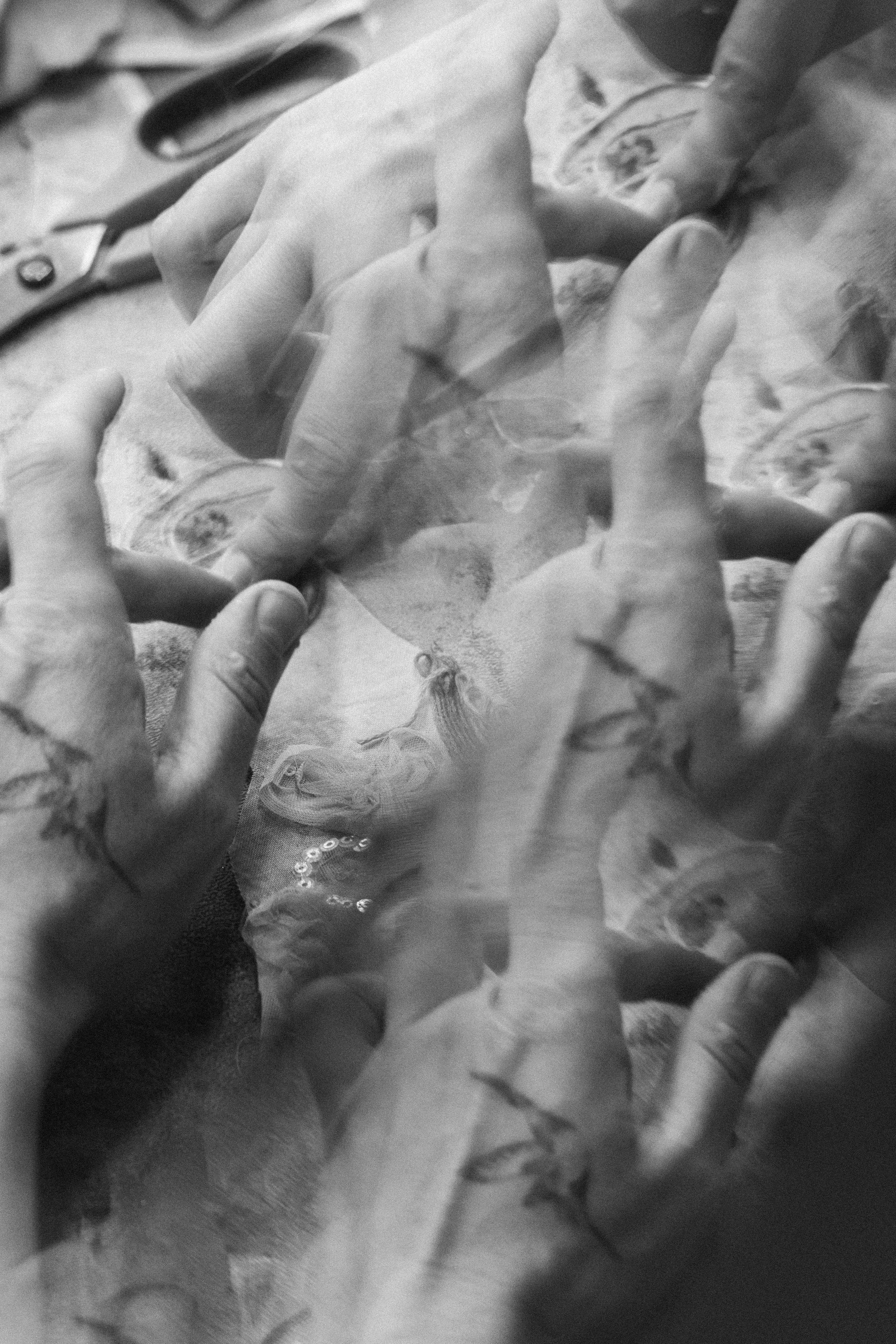
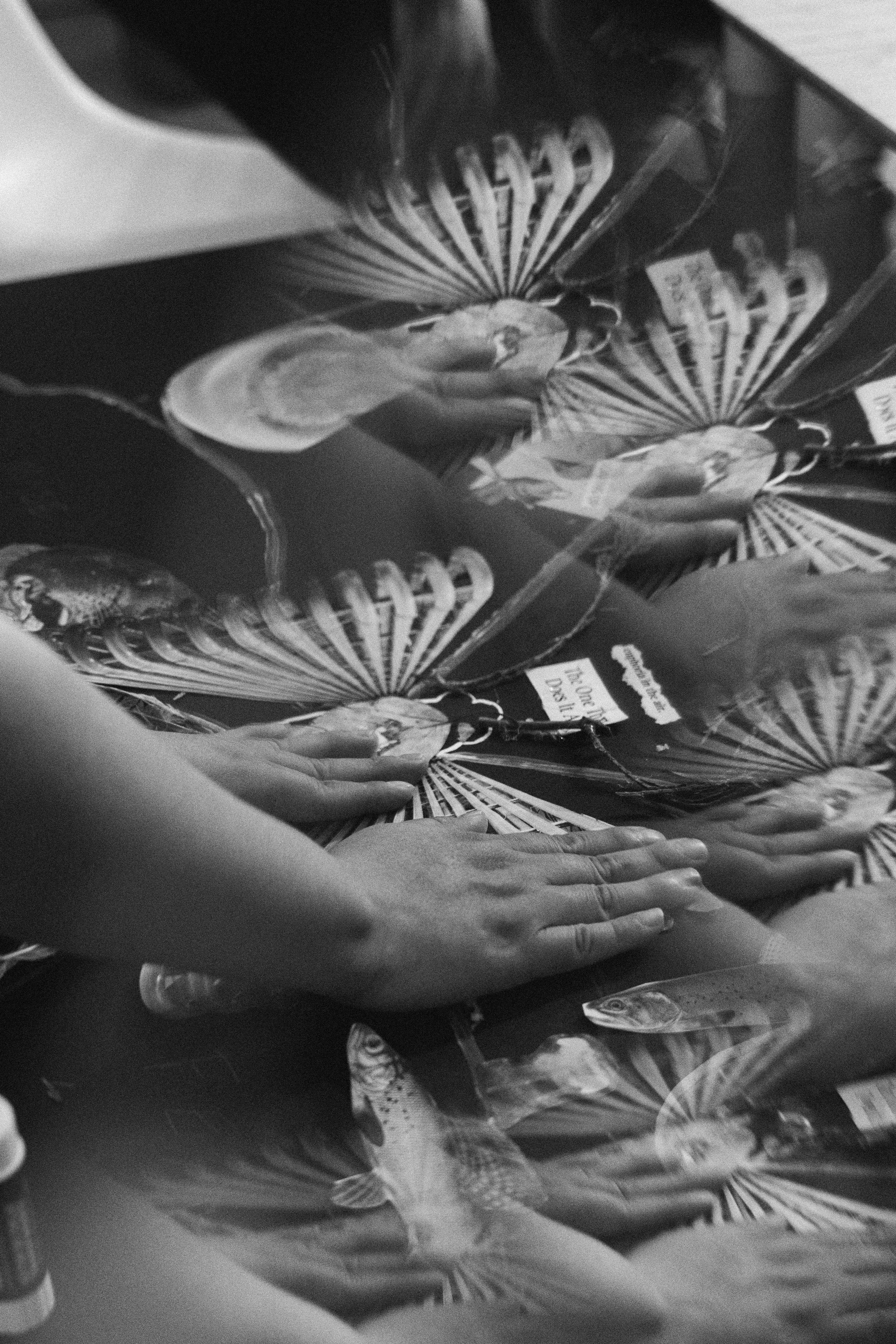
Photo: Collages from the workshop.
Workshop #1: Upcycled Ecologies Collaging
WORKSHOP VENUE: CANMORE TOGETHER APRIL 8, 2026 I 7-9 P.M.
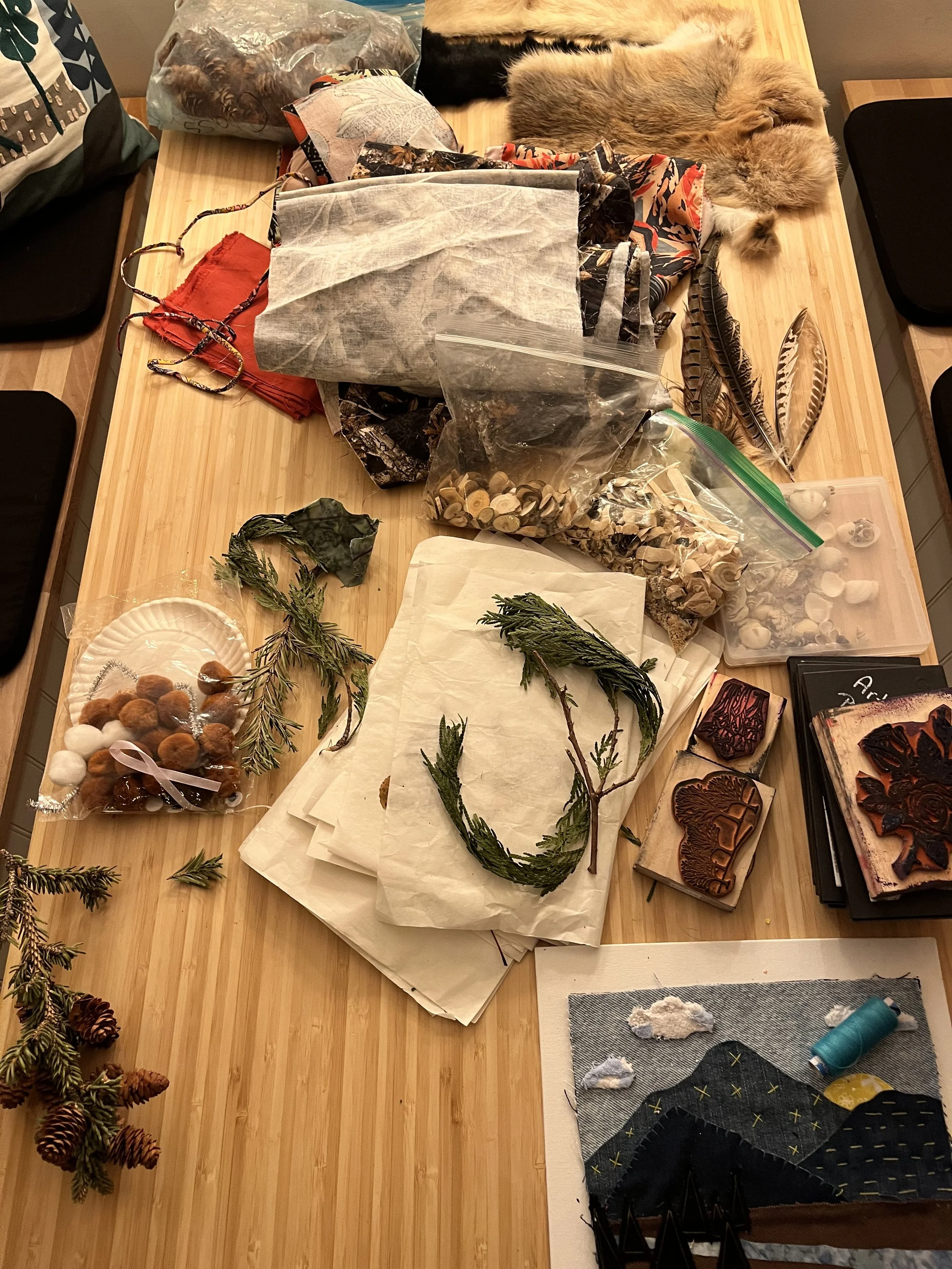
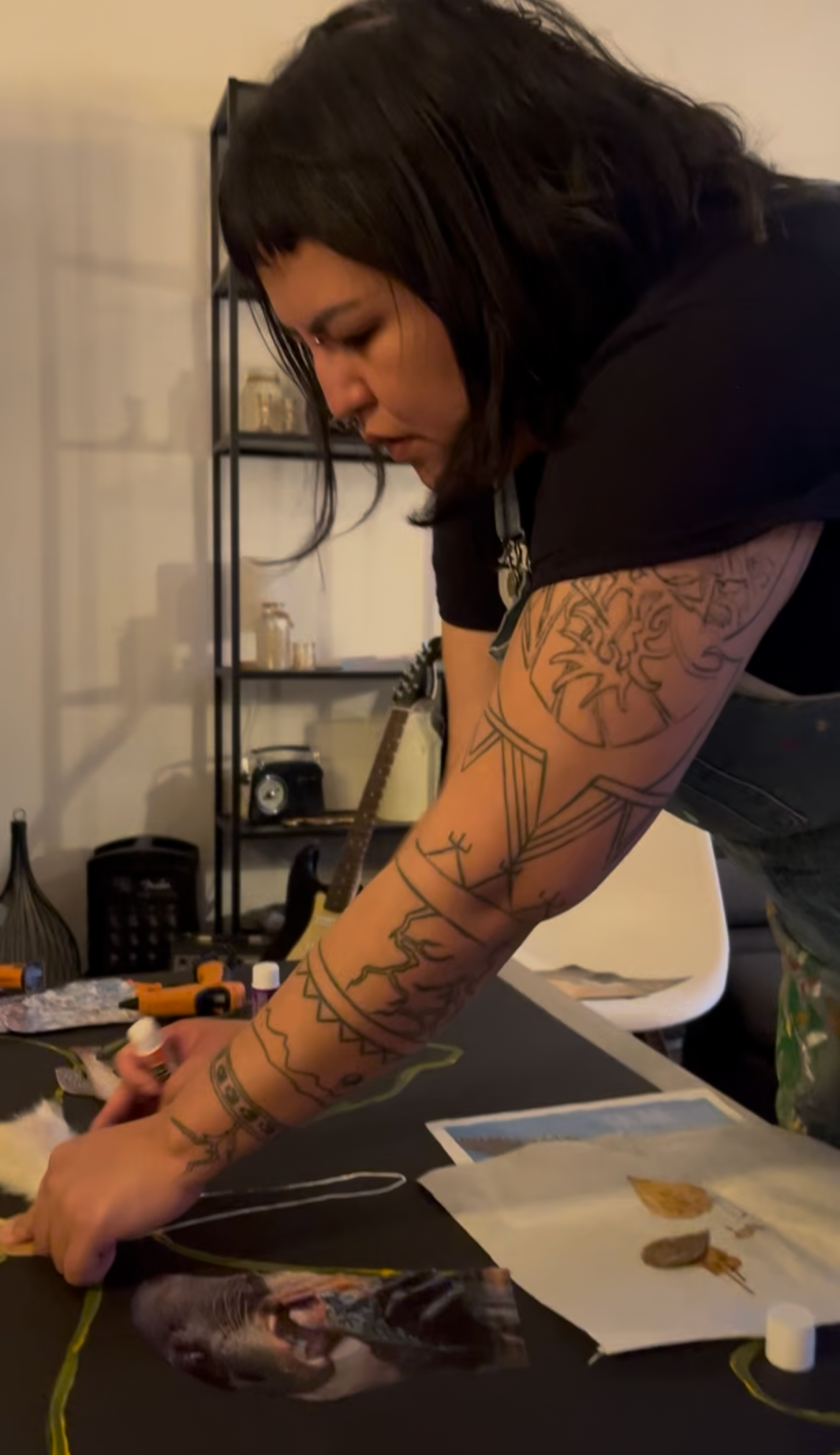
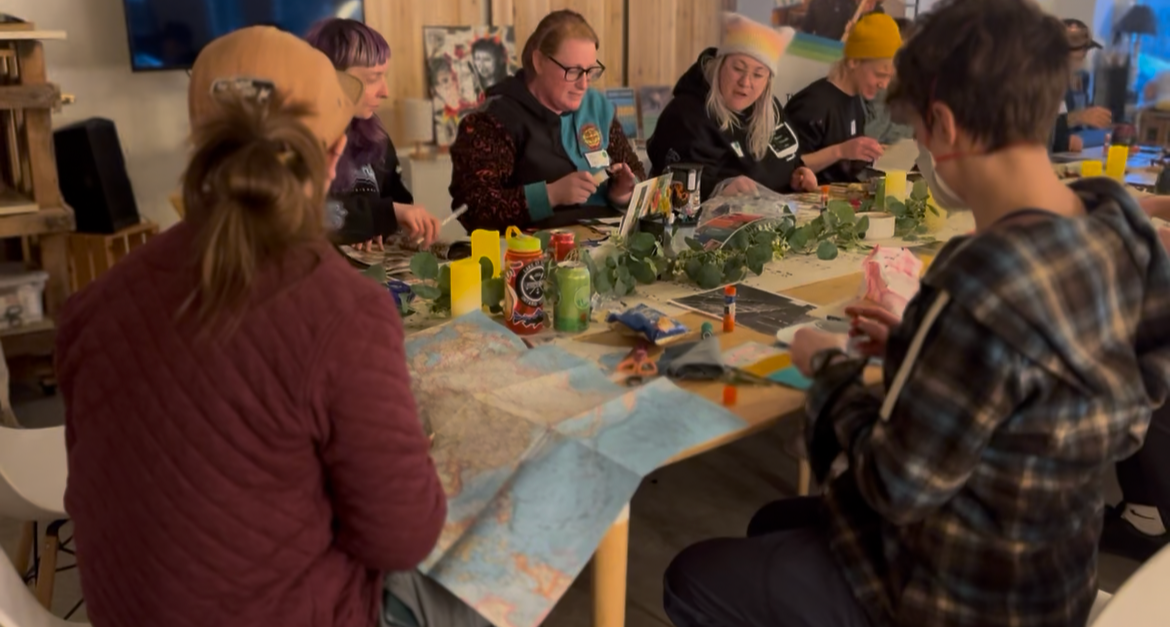
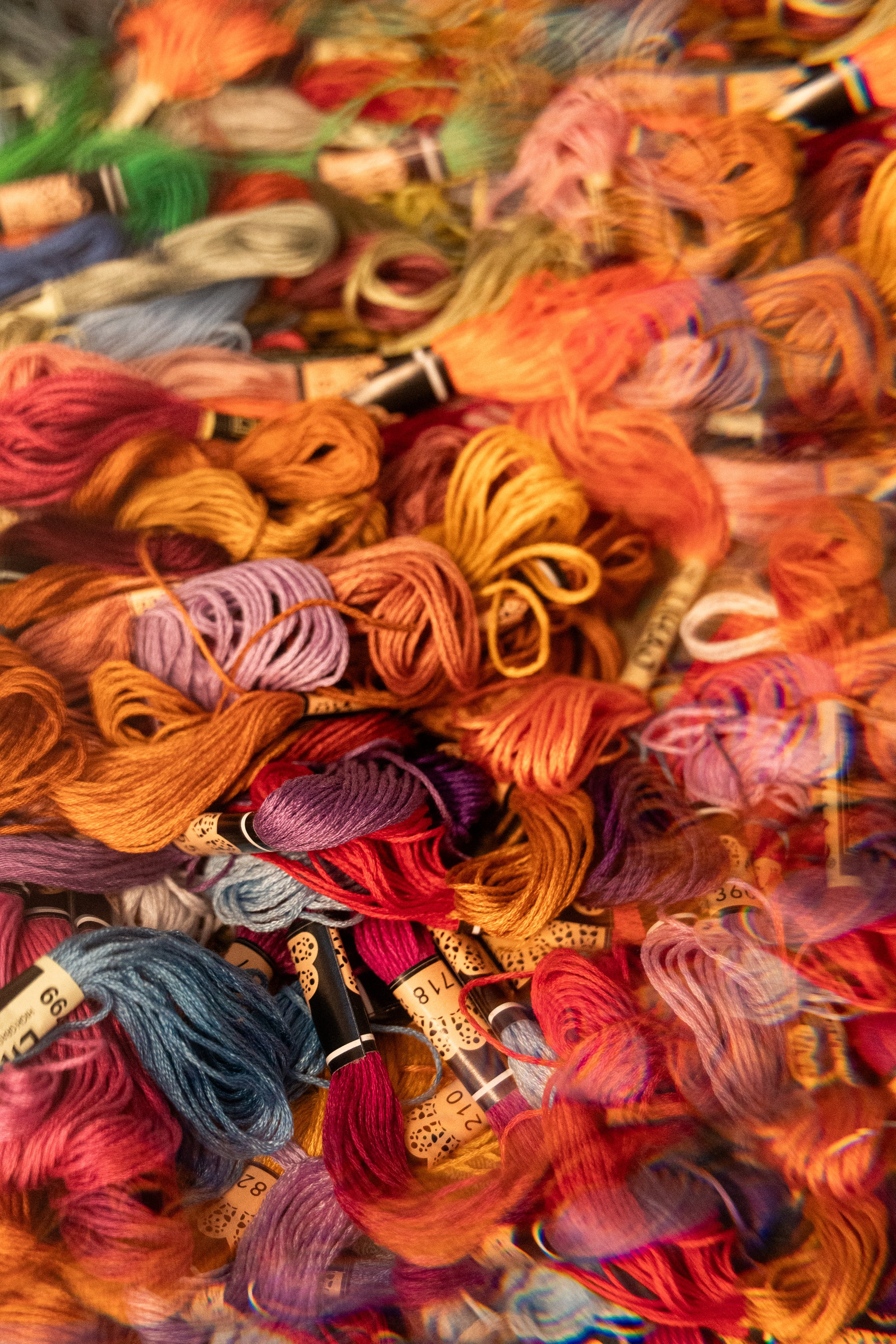
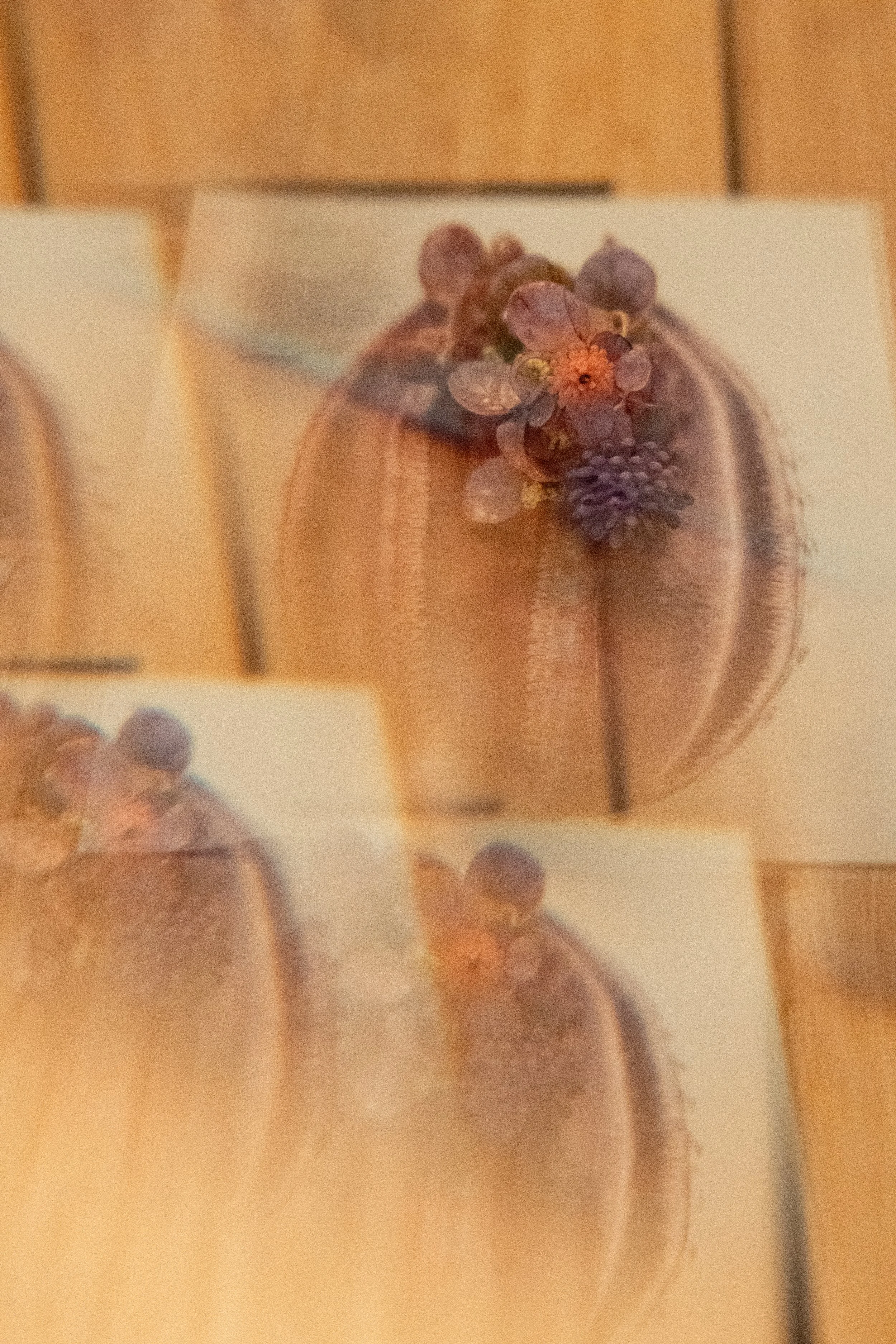
These upcycled collages were created during a collaborative workshop led by Stoney mixed-media artist Cheyenne D. Bearspaw, Suwataga-Mu (she/they) and vegetation ecologist Rebecca Smith (they/them). Through collage, participants explored relationships to land, identity, queerness, and the more-than-human world. Using reclaimed and natural materials including yarn, newspaper, found objects, and dried flowers, they transformed everyday and discarded materials into expressive visual stories. Together, the works reflect the many ways we are shaped by place, connected to one another, and continually becoming in relationship with the land.
Facilitators: Cheyenne Suwataga-Mu (she/they), Multi-media Artist
Rebecca Smith (they/them), Ecologist
Workshop #2: Queer as a Bighorn
WORKSHOP: ARTSPLACE MAY 11, 2026 I 6-9 P.M.
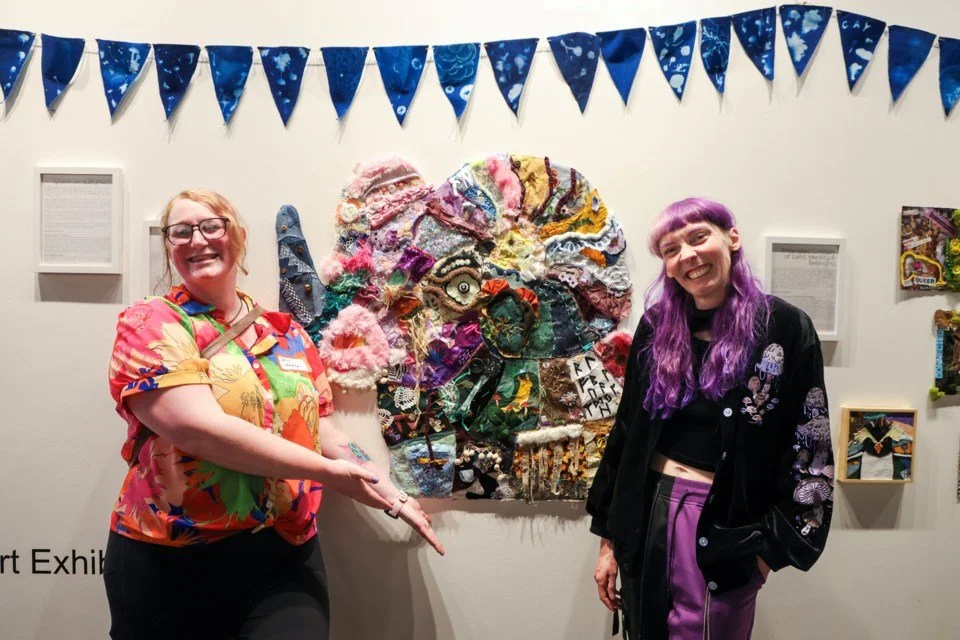
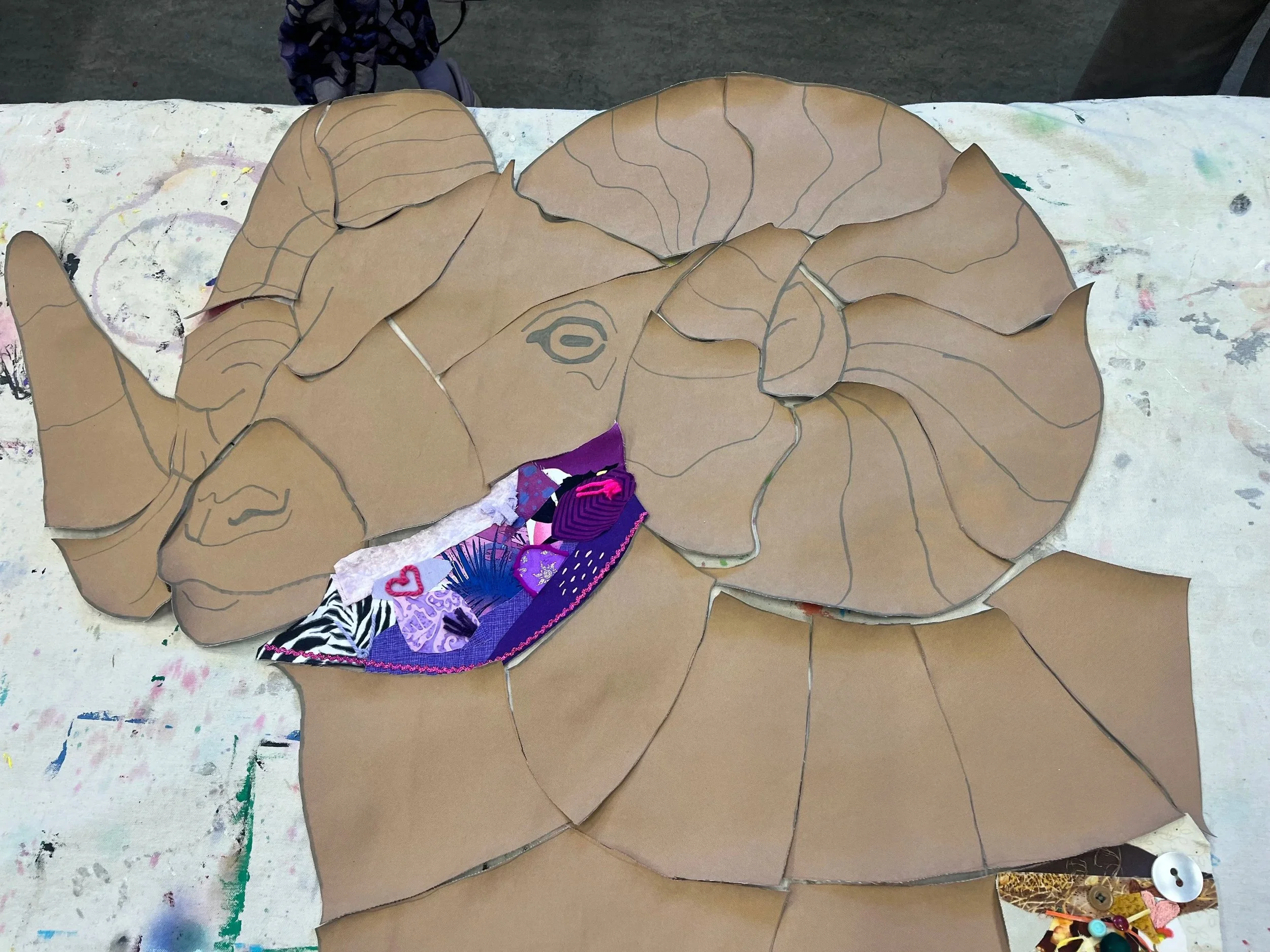
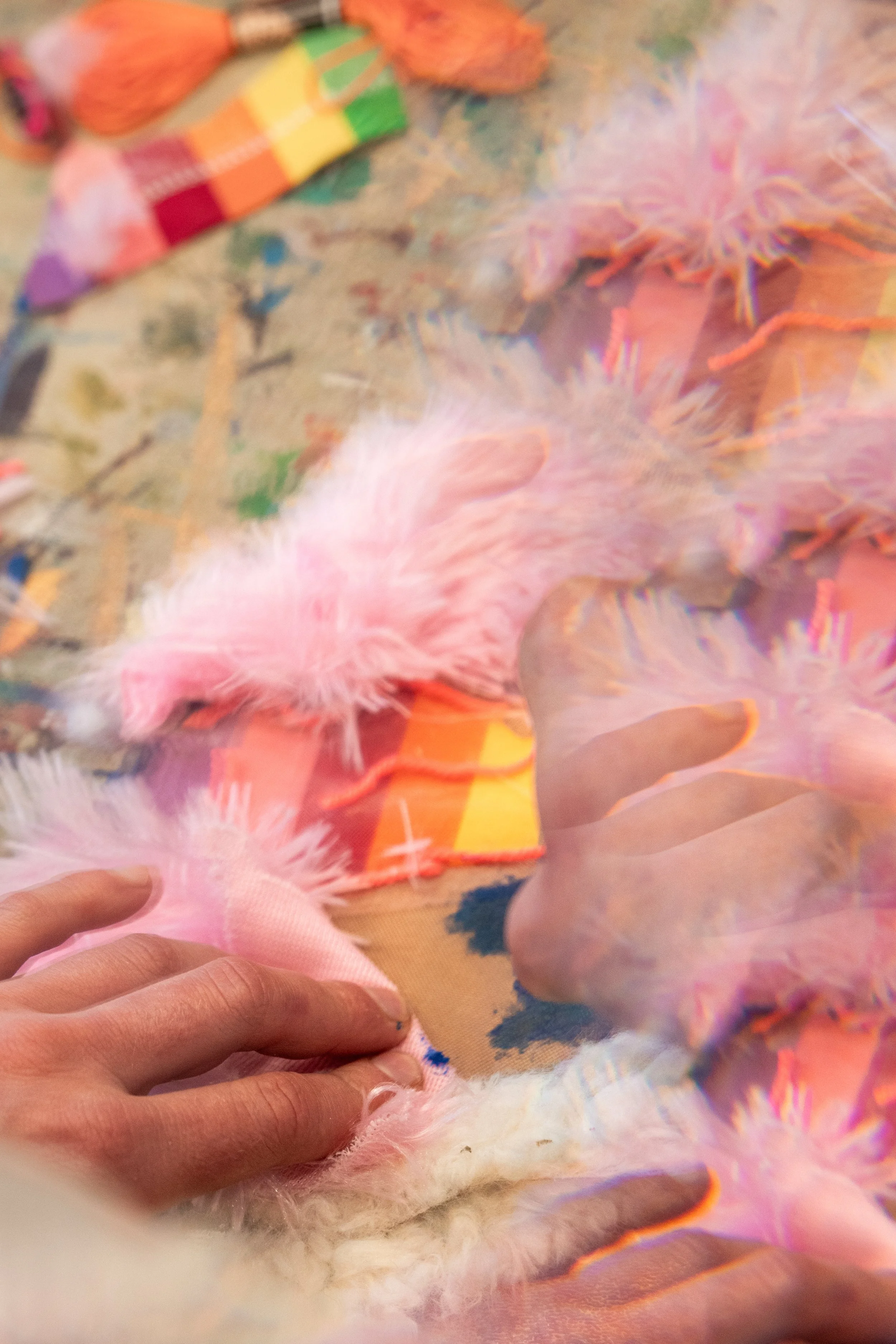
This collaborative textile artwork was created through a hands-on workshop led by local artists Hannah Antonsen (she/her) and Jess Sampson (she/her). Inspired by one of the Rockies’ queerest creatures—the bighorn sheep—participants explored identity, curiosity, and belonging through fabric collage and sewing.
Bighorn sheep are highly social animals, often forming close, same-sex groups. Rams are known to engage in same-sex sexual behaviour, while young males may form strong social bonds and spend considerable time together outside of breeding. Their complex social lives remind us that relationships in nature are diverse, fluid, and not always centred on reproduction.
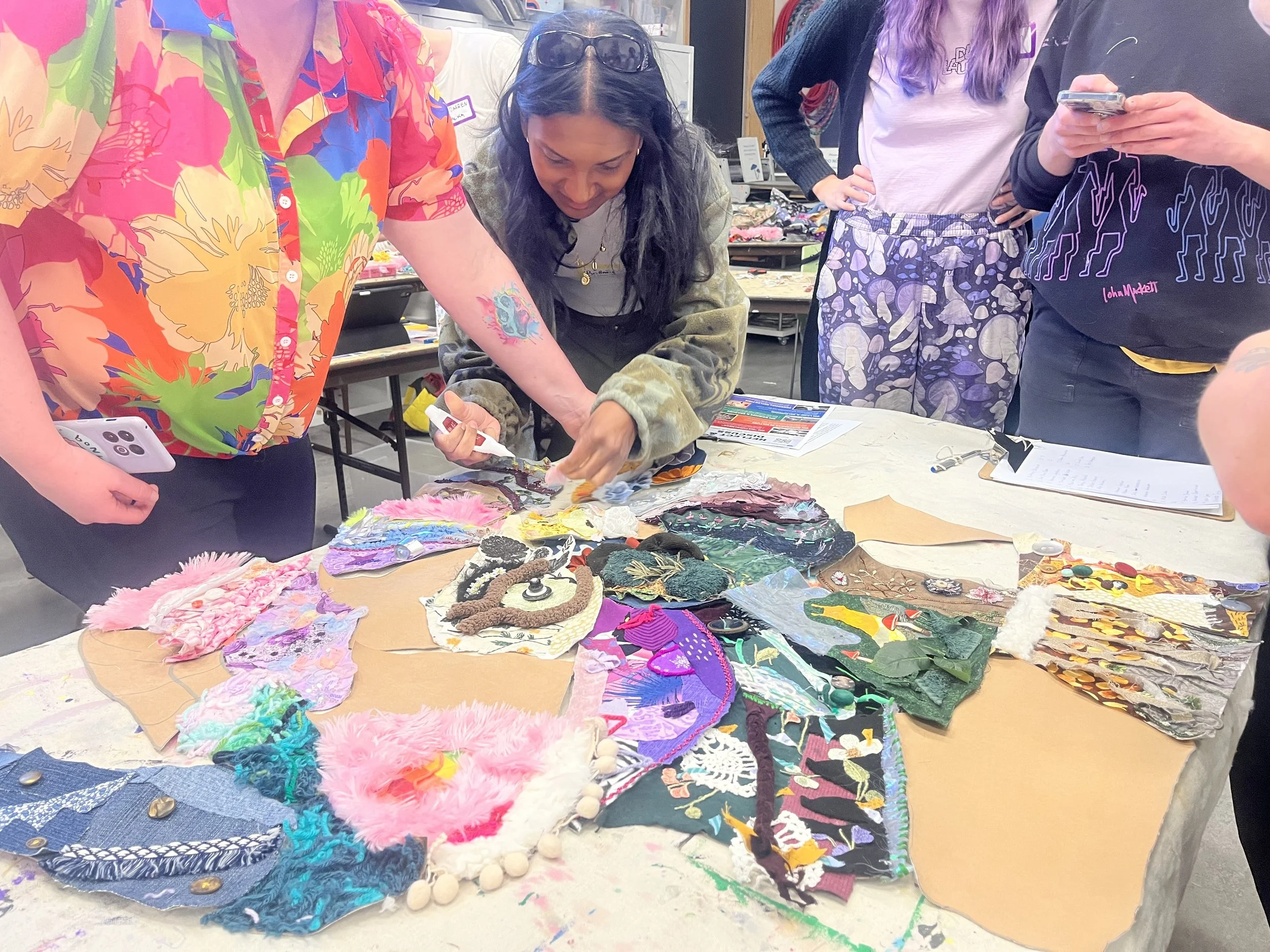
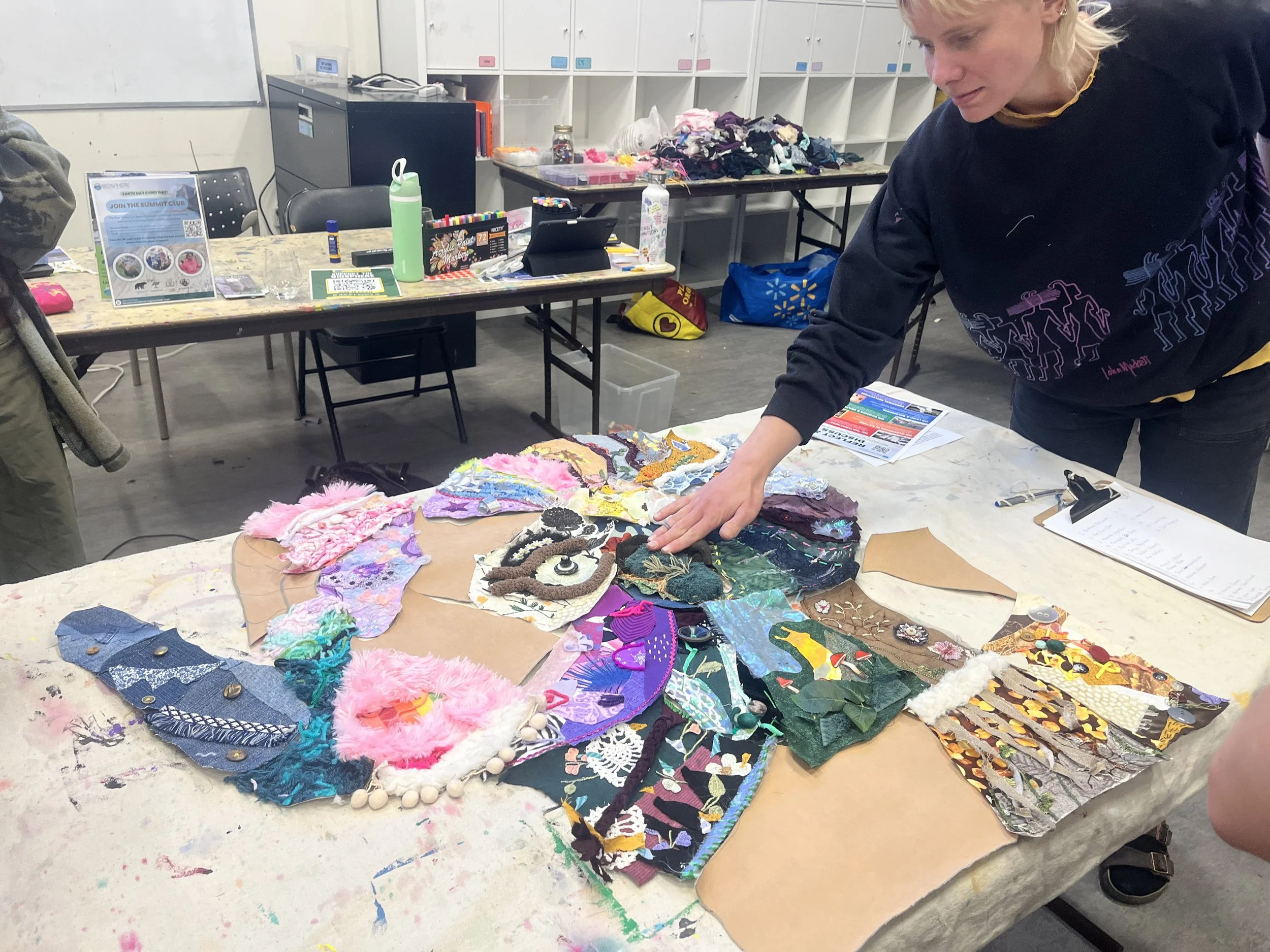
Using found, recycled, and repurposed materials, each participant created an individual textile patch, bringing their own colours, textures, ideas, and expressions of identity into the work. Jess and Hannah then brought these individual pieces together, weaving and stitching them into an exquisite collective mosaic portrait of a bighorn sheep.
The finished piece celebrates both individuality and connection, and a reminder that, like ecosystems and communities, we are each distinct while also contributing to something much larger than ourselves.
Facilitators: Hannah Antonsen (she/her), Artist
Jess Sampson (she/her), Artist
Workshop #3: mycelial connections
WORKSHOP VENUE: ARTSPLACE JUNE 13, 2026 I 10 A.M.-2 P.M.
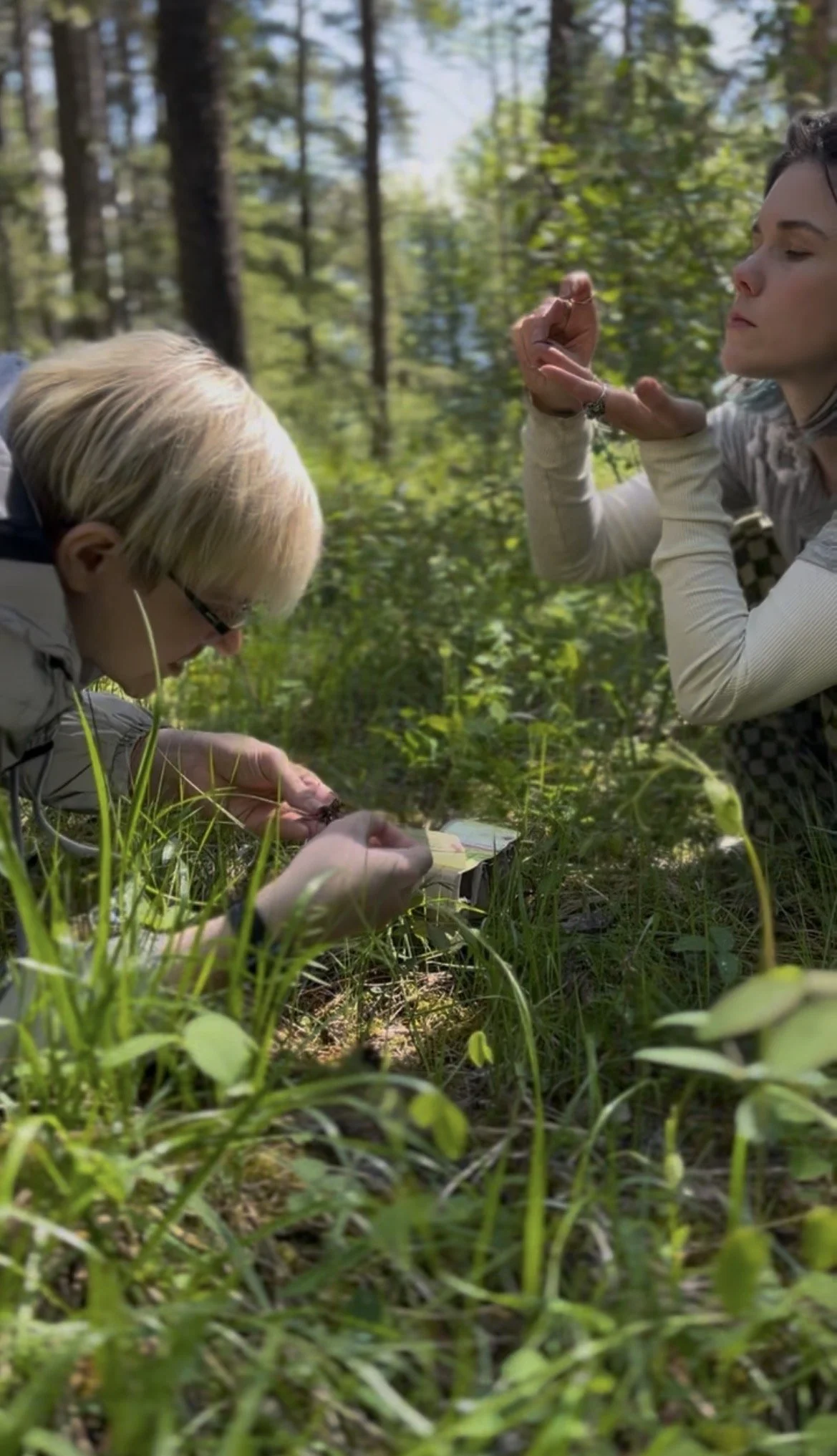
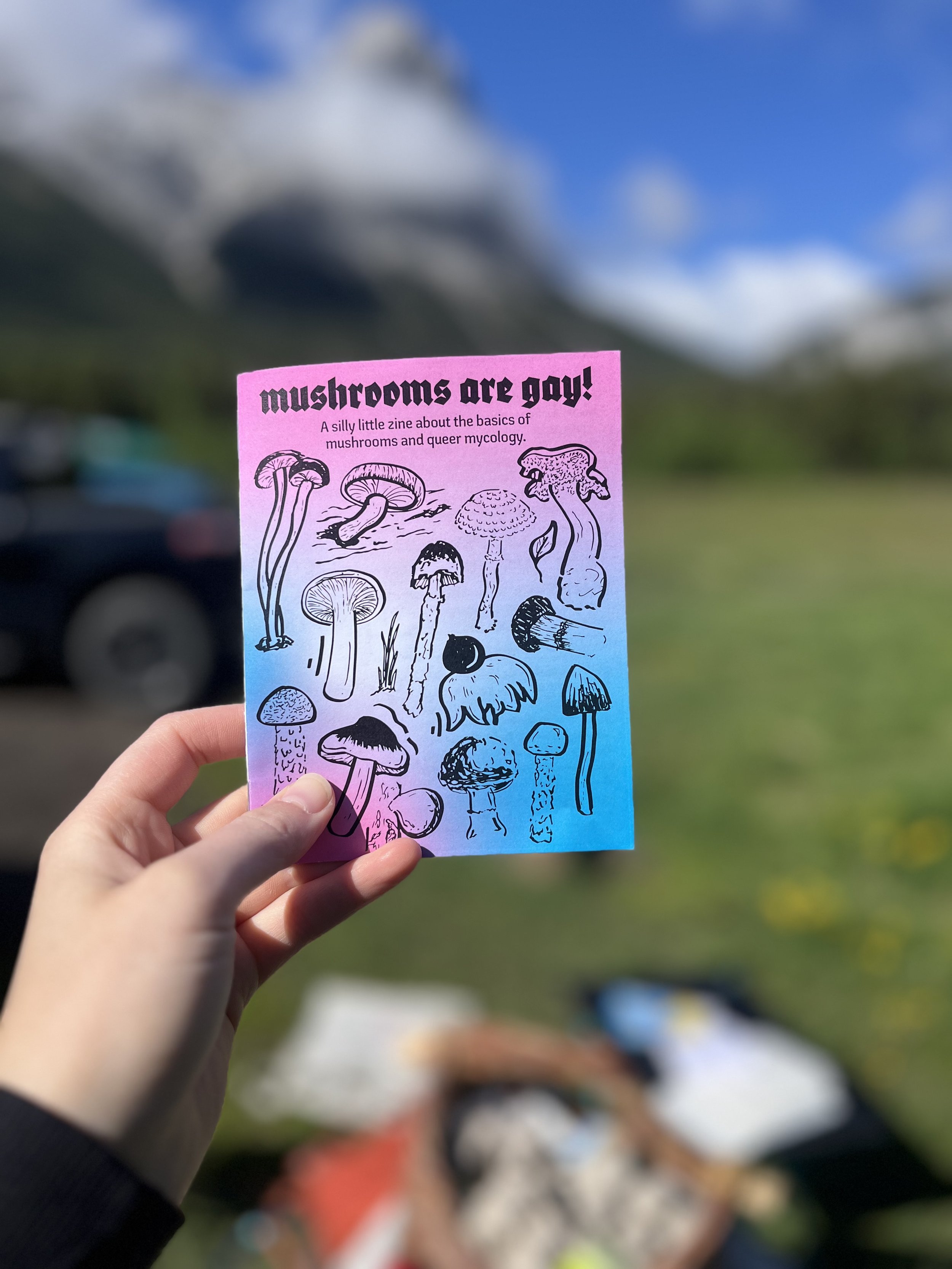
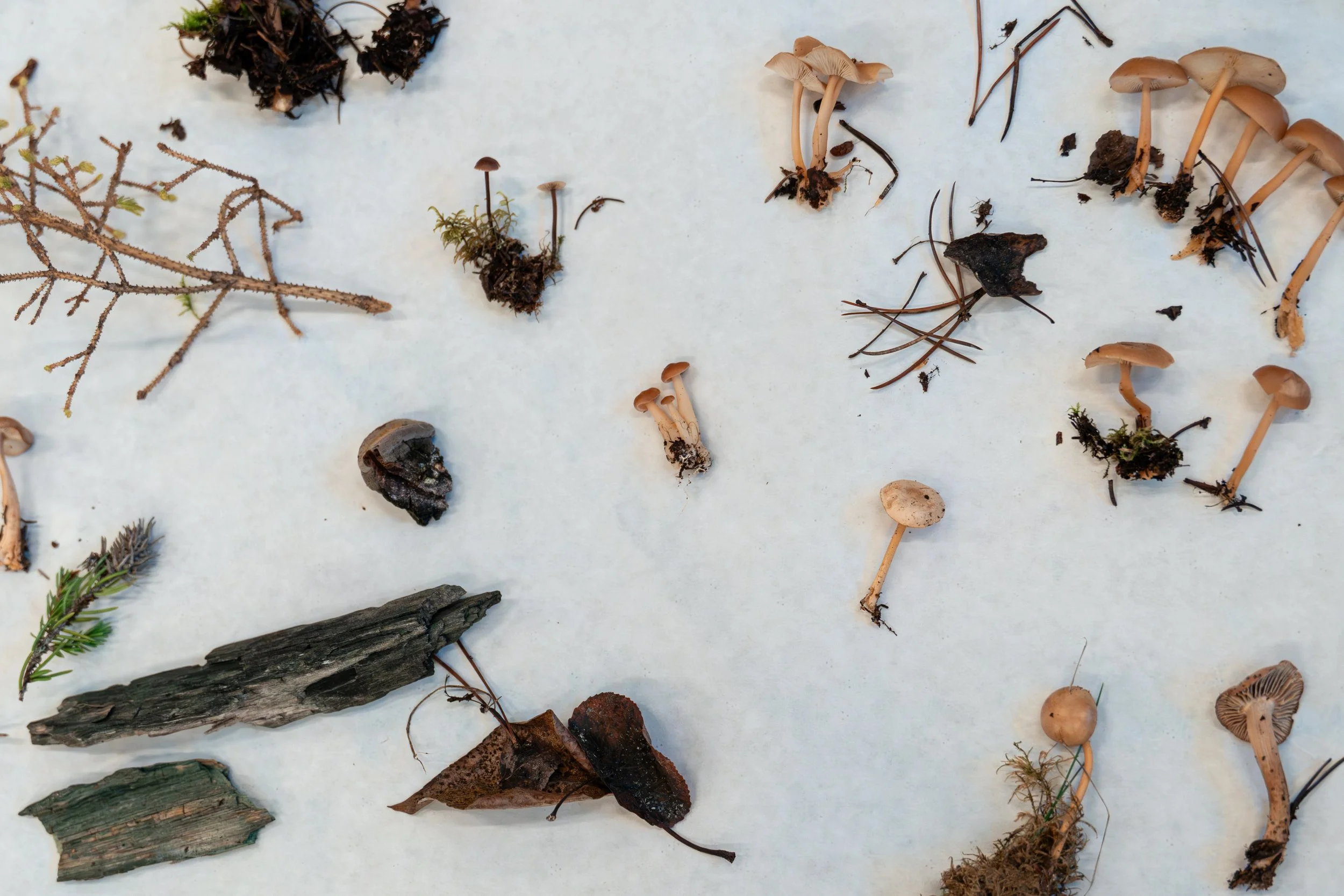
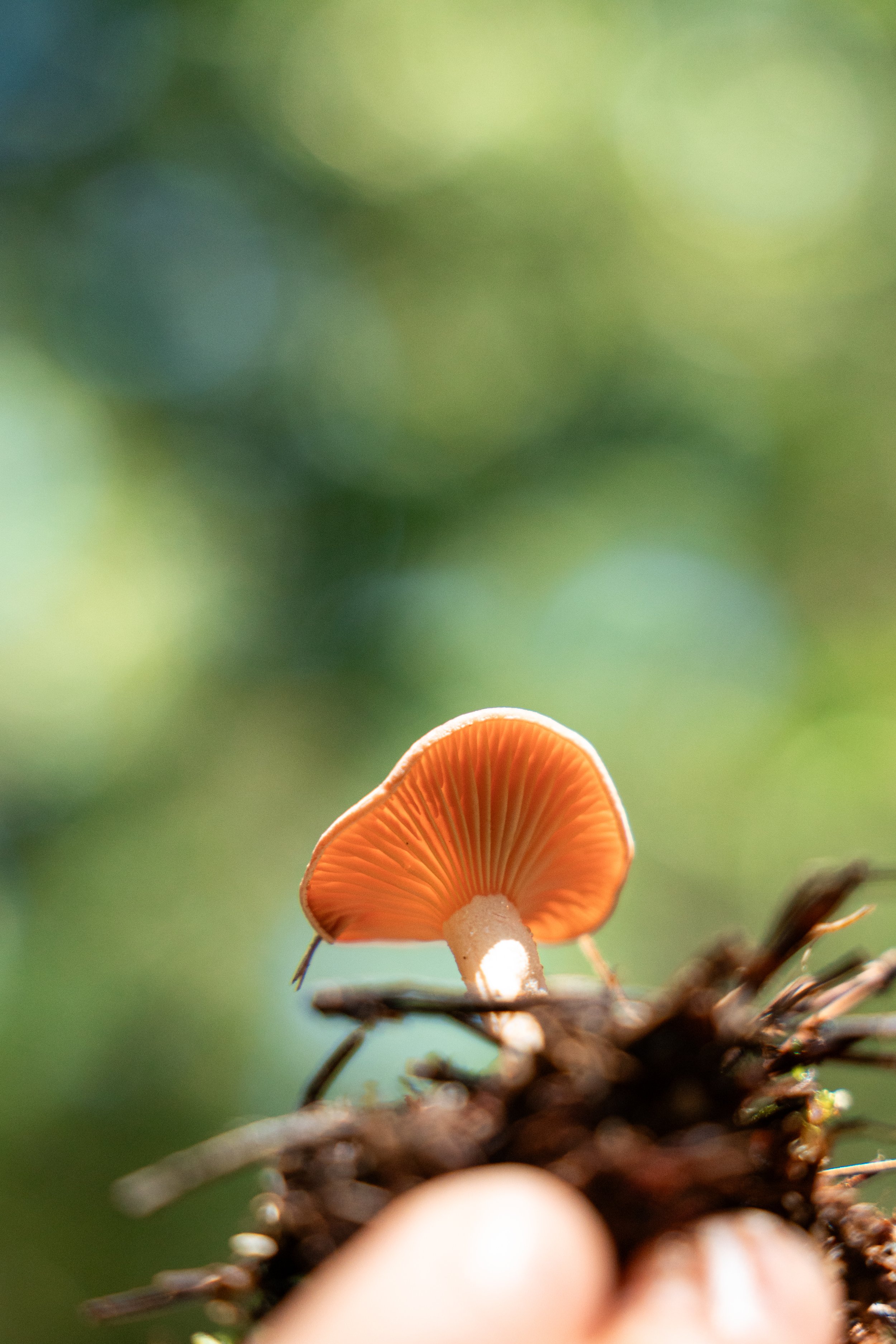
Fungi complicate the categories we rely on. They resist neat definitions of individual, sex, and even organism. Neither plant nor animal, fungi grow invisibly, surface briefly, and blur the boundaries between bodies. They invite us to think more flexibly about what life can be.
Fungi also occupy ecological roles that can make us uncomfortable: decay, parasitism, and transformation. While increasingly celebrated for their beauty and complexity, they are also framed as threats in medicine and agriculture. This tension invites us to question how we assign value, and what we consider normal, desirable, or worthy of care.
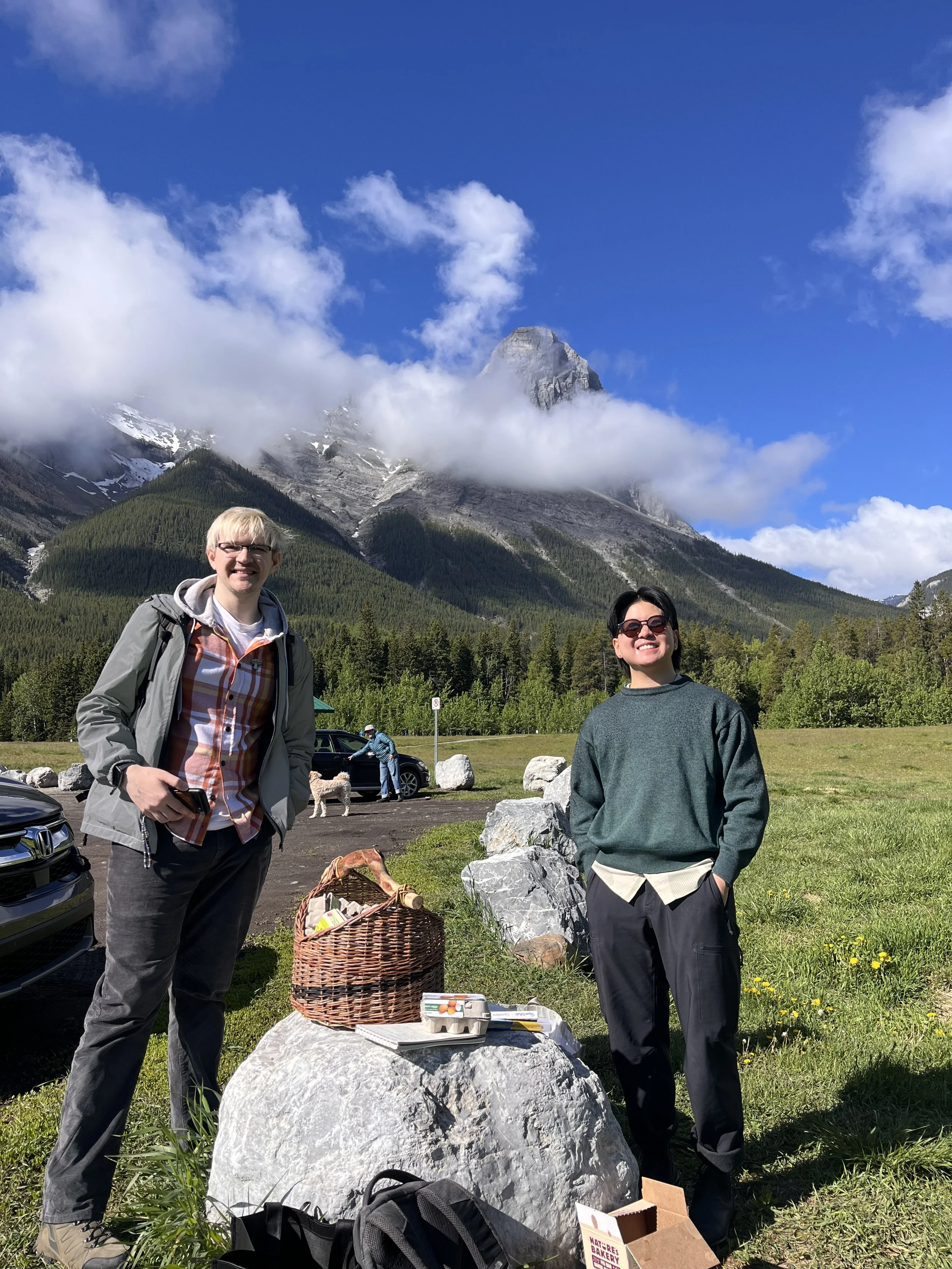
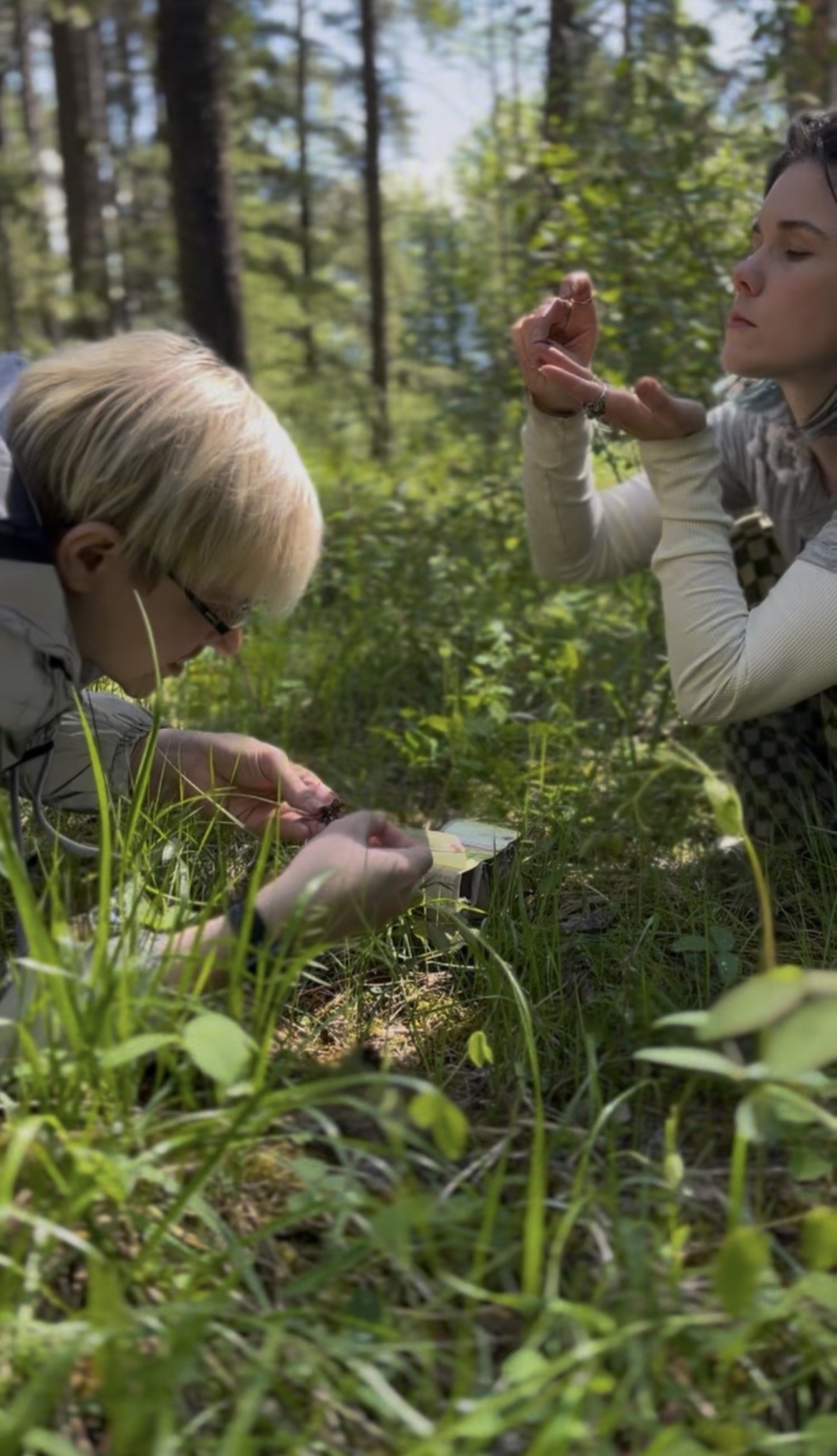
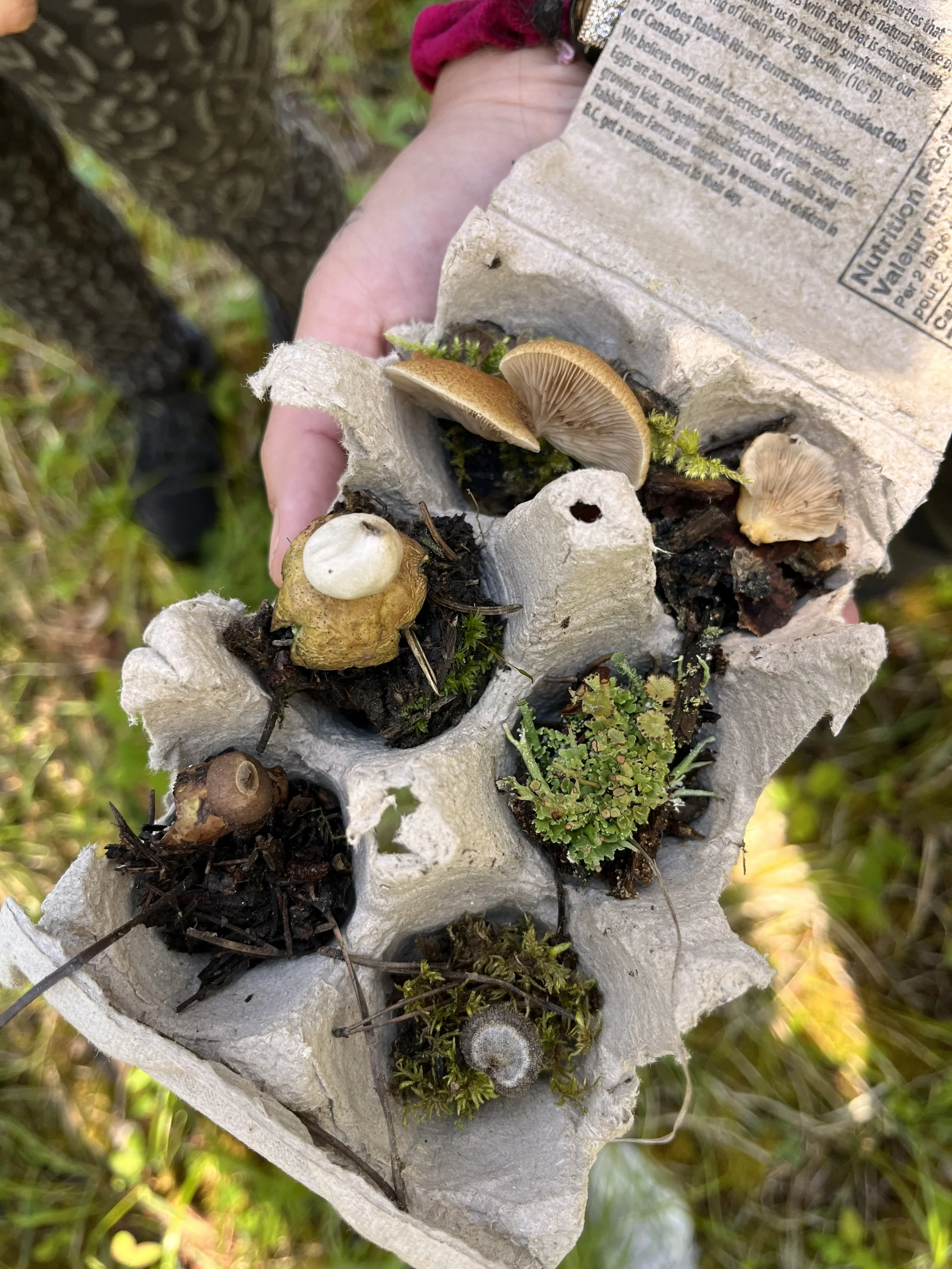
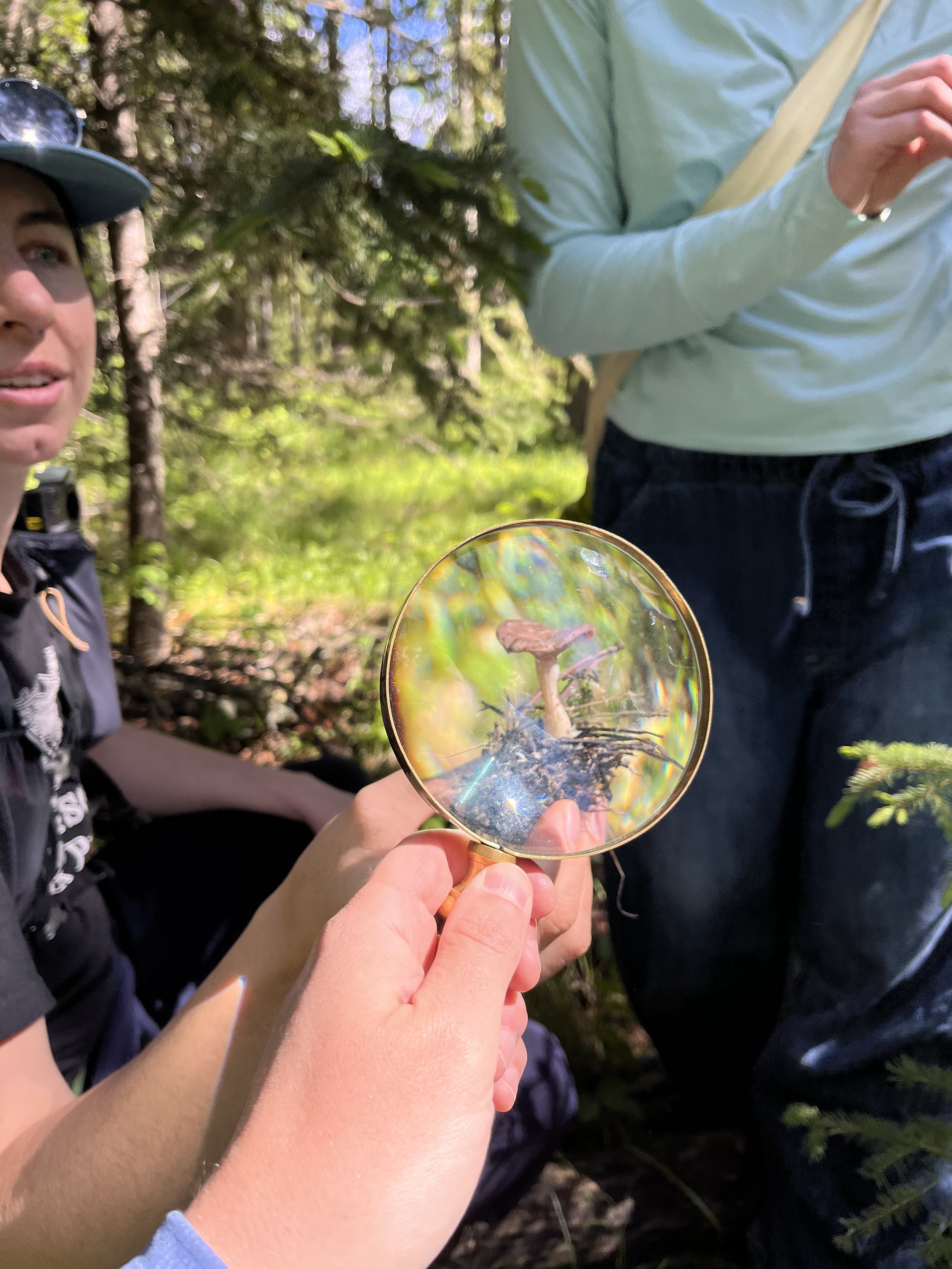
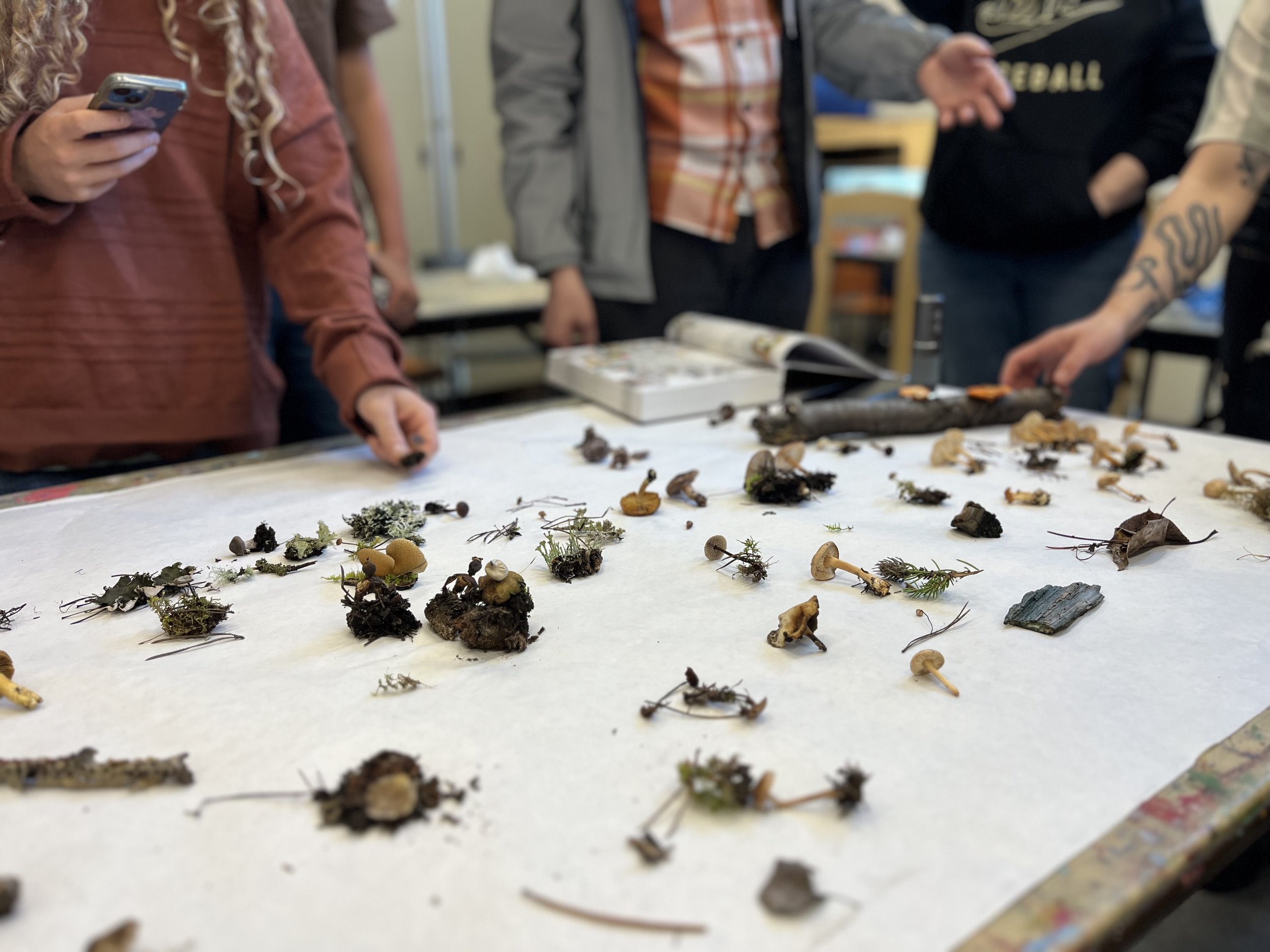
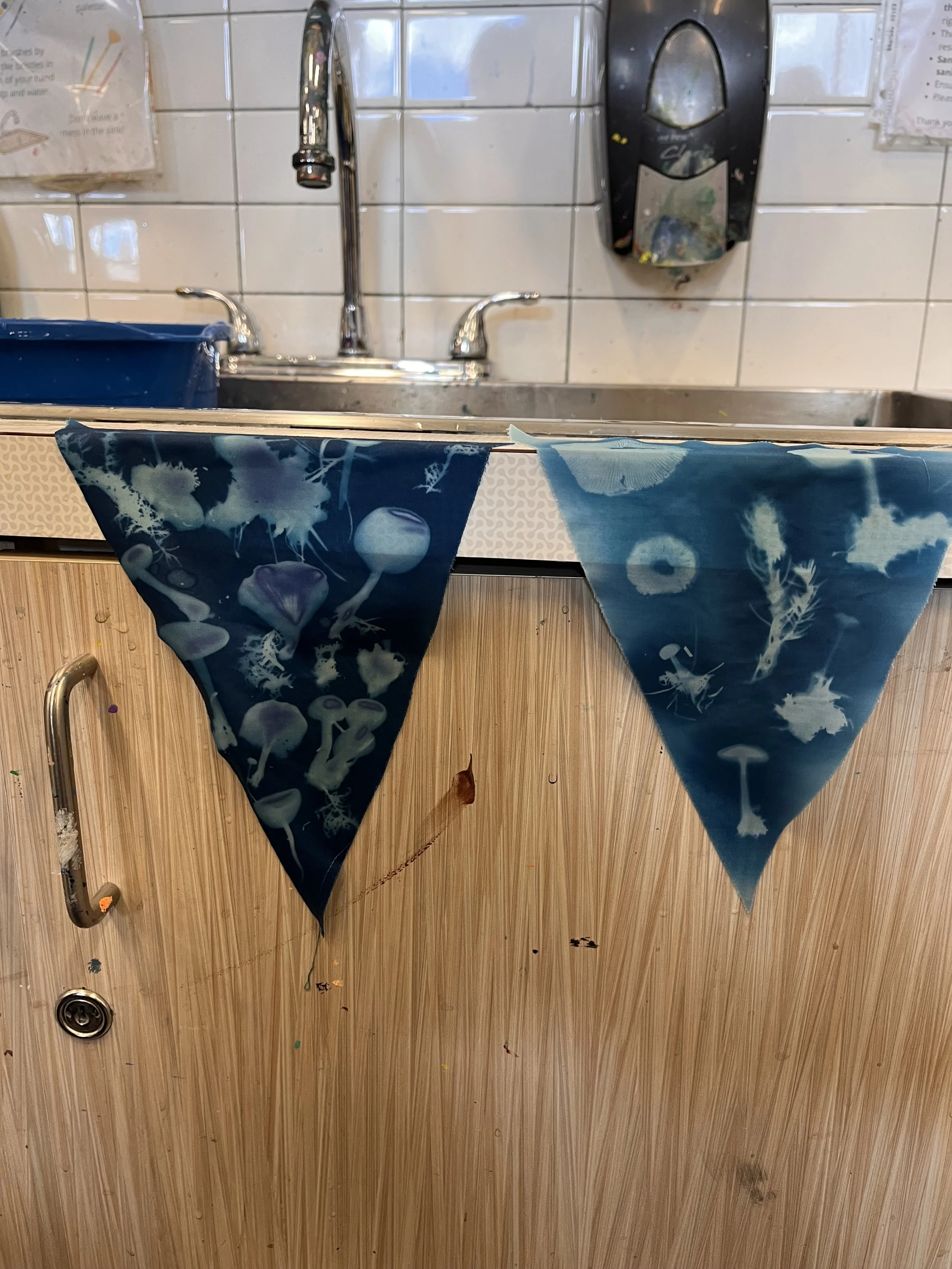
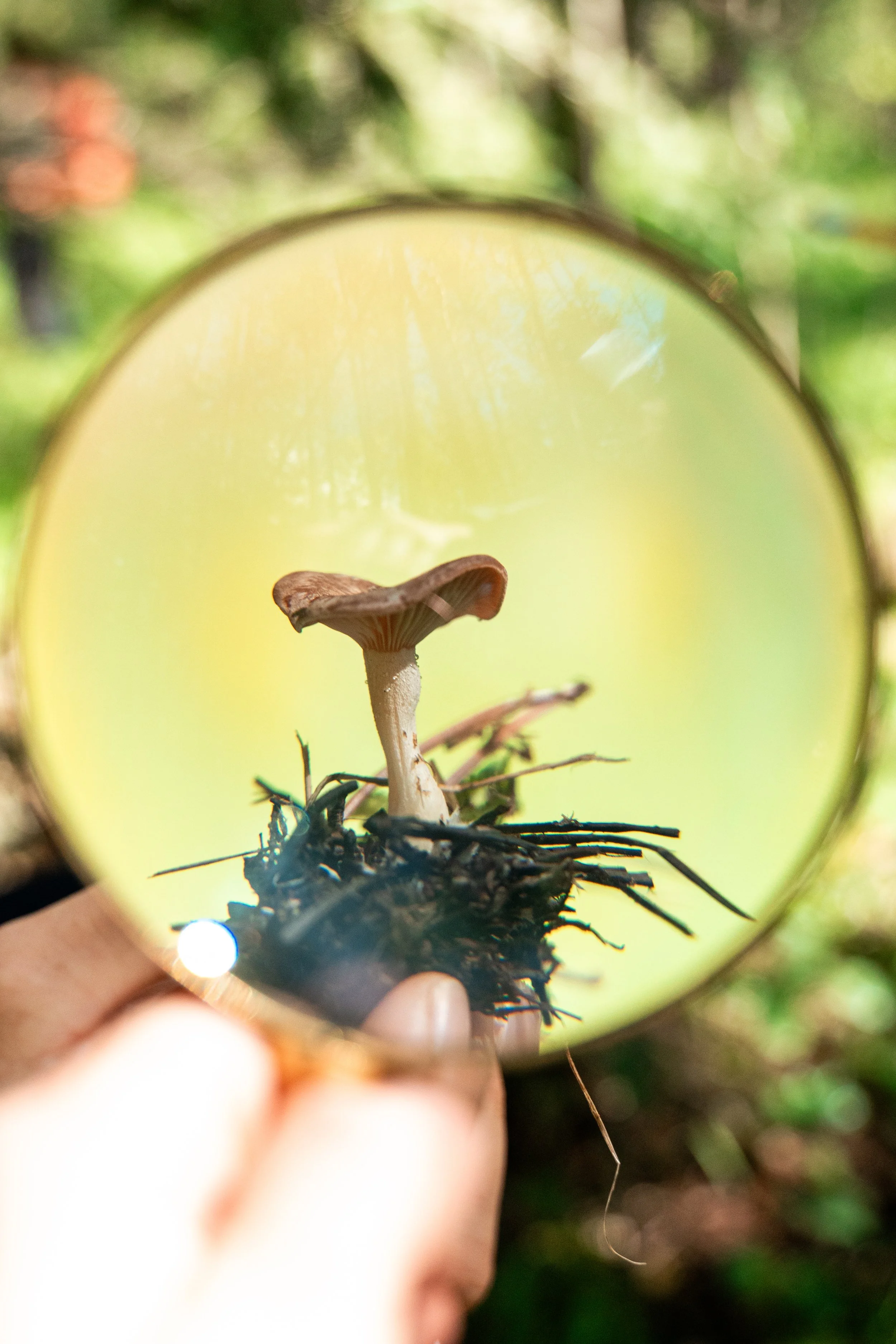
This collaborative bunting was created during a workshop led by mycologist Arseniy Belosokhov (he/him) and artist Mich Lam (they/them). Using a cyanotype process with light-sensitive fabric dye, participants arranged mushrooms directly onto blue-dyed cloth and exposed it to sunlight. Where the mushrooms blocked the light, they left white impressions and fungal forms, creating unique botanical and fungal silhouettes.
Brought together as a single bunting, these individual pieces become a collective exploration of the porous boundaries between bodies, species, and ways of being.
Facilitators: Mich Lam (they/them), Artist and Fun-gi
Arseniy Belosokhov (he/him), Mycologist
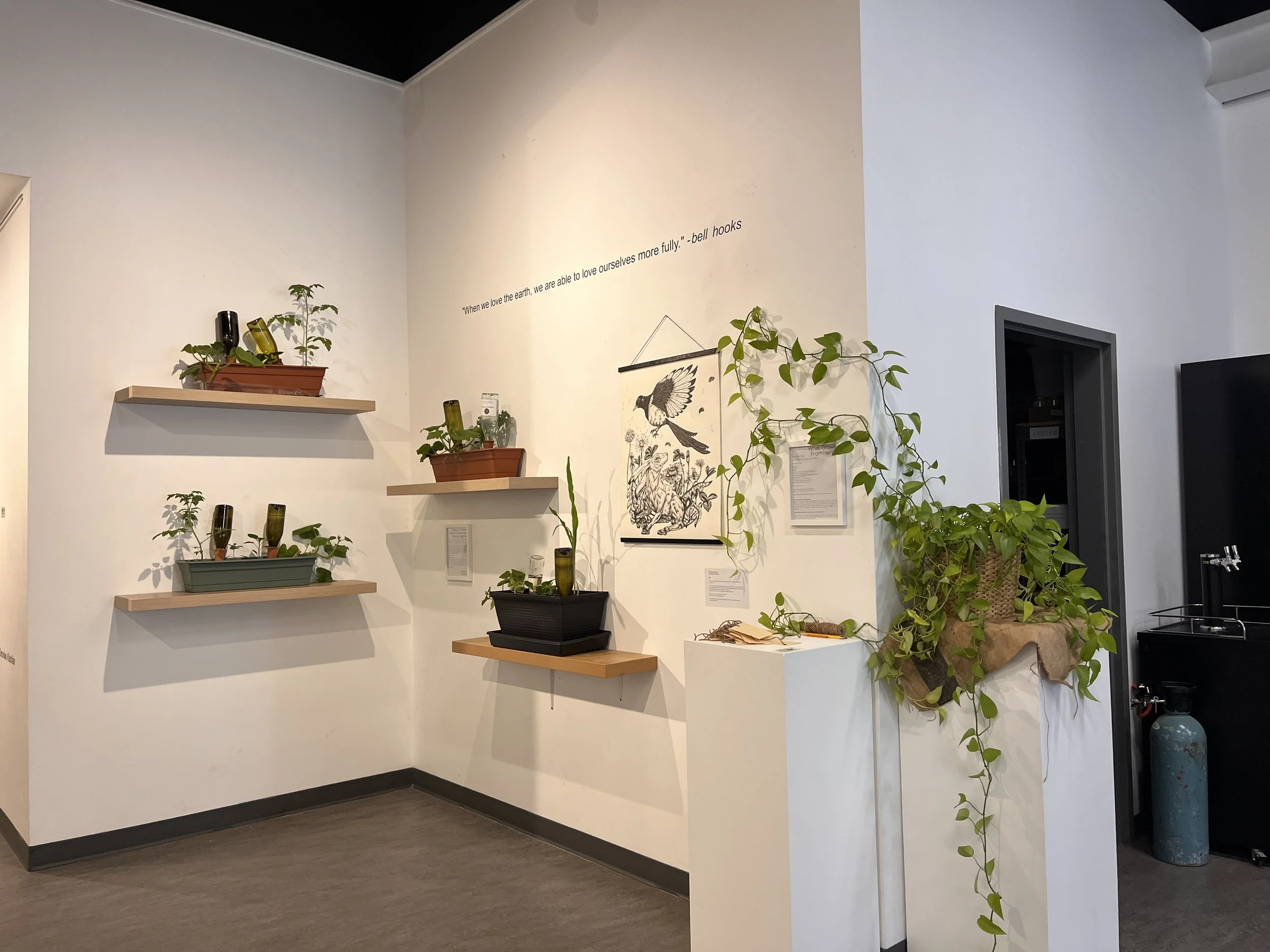
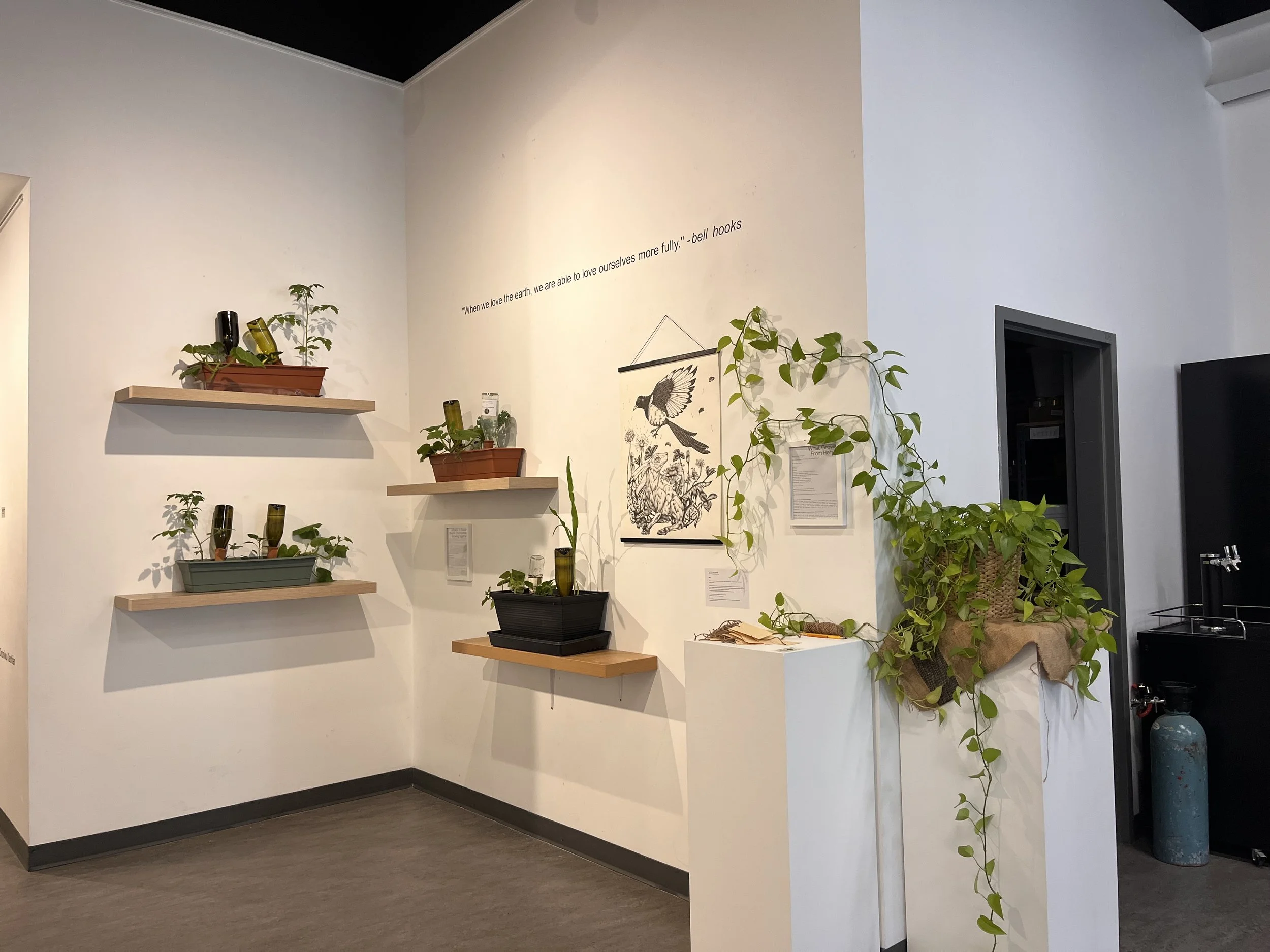
Concepts of inclusive belonging are explored in this piece, as plants native to Turtle Island are planted beside introduced plants, as well as agricultural plants whose ancestry can be traced back to Turtle Island. These plants teach us that definitions of belonging are socially constructed, that those definitions change and can be changed, and that, if we are all good neighbours, there is room for all of us.
Corn, squash, tomatoes, and peppers were carefully bred by Indigenous peoples over thousands of years before spreading to Europe, Asia, and Africa, forever changing cuisines around the world. Meadow Blazing Star, Giant Hyssop, Yellow Coneflower, and Pineappleweed are native plants that have evolved alongside the ecosystems of Turtle Island. Lamb's Quarters, originally cultivated as an agricultural crop, has since been classified as a weed despite its exceptional nutritional value. Broadleaf Plantain is an introduced species from Europe that thrives in disturbed soils and marginal areas, where it helps stabilize and rehabilitate degraded ground.
Facilitators: Rachelle Renaud (she/her), Ecologist
Tori Ames (she/elle), Horticulturalist
Why does it matter?
The stories we tell about nature shape how we understand ourselves and each other. Ideas about what is “natural” have long influenced how we think about gender, sexuality, and belonging, and have sometimes been used to portray queer and trans identities as abnormal or outside of nature.
These ideas have real consequences. When queerness is framed as “unnatural,” it can reinforce narratives that contribute to homophobia and transphobia. This feels particularly relevant at a time when 2SLGBTQIA+ identities, rights, and belonging continue to be the subject of public debate, including here in Alberta.
Queer ecologies invite us to question these assumptions and consider whose perspectives and relationships to land have historically been valued, overlooked, or erased. They also ask us to think about how systems of exclusion shape both our communities and the ways we understand and care for the natural world.
Nature doesn't provide a rulebook for how humans should live. But looking at it more openly can challenge the idea that there is only one “natural” way to be… and help us imagine broader possibilities for belonging, resilience, and care for one another and the ecosystems we are part of.
curious to learn more?
Animal Pride: Nature’s Coming Out Story (film): In Animal Pride: Nature’s Coming Out Story, Queer naturalist Connel Bradwell challenges mainstream biology’s blindspot for queer animal behaviour in nature. Schooled in the birds and the bees, survival of the fittest, The Origin of Species, Connel sees the disconnect – how can humans be Queer, while animals supposedly aren’t?
A Field Guide to Gay Animals (Podcast): Strap on your binoculars and lace up your boots: A Field Guide to Gay Animals explores sexuality, gender, and joy in the animal world. Hosts Owen Ever and Laine Kaplan-Levenson take you on a quest to see beyond the natural world as we know it and into the natural world as it is: queer as f*ck.
An Introduction to Queer Ecology (Podcast): Interview with Catriona Sandilands
Nature is Gay (Podcast): A biweekly podcast exploring gender and sexuality in animals, plants, and fungi.
Queer Planet (film): In this CBC Gem documentary, explore the rich diversity of animal sexuality and meet the scientists who are questioning the traditional concept of what’s natural.
“I think that drawing on LGBTQIA+ histories of resistance and thinking seriously about the ways in which our intimate relationships can be other than tied to petrocapitalism, I think that’s why queer ecology is actually pretty important at this moment. And that in current conditions, we see a flourishing of queer forms of land and property ownership. There’s a number of queer networks and also more specifically QTBIPOC, queer trans BIPOC, networks of farmers who are grappling with these multiple forms of relationship and multiple forms of creatively providing mutual aid in times of economic crisis and that mutual aid extending to include better relationships with our more than human kin, either through organic agriculture, for example, or forms of thoughtful ecological restoration.”
Thank you to our partners and funders
This project was a collaboration between the Biosphere Institute of the Bow Valley, Canmore Pride and artsPlace.
Thank you to the Town of Canmore Micro Grant Program, Rozsa Foundation, Canmore Inn & Suites, and Pursuit Community Fund for funding this project.