

Did you know that WildSmart is a program of the Biosphere Institute, a local charity? Our work relies entirely on donations and sponsors. If you would like to support our community-based efforts to promote human-wildlife coexistence, please donate now!
BEAR ACTIVITY UPDATE (May 1, 2026)
(Banff National Park East Gate to Bow Valley Provincial Park)
Bear activity is picking up in the Bow Valley and grizzly bears have been frequently seen roadside along Highway 40. Drivers need to be cautious of bears feeding roadside - check your speed, drive by slowly and don’t stop and create bear jams.
There are still a few collared grizzly bears in and near their dens, but other grizzly bears (and black bears) have been seen moving around on the landscape in Kananskis Country. At this time of the year, bears are emerging from their dens hungry, and are often found in the valley bottoms looking for food. This can result in an increased chance of encounters with humans as we too spend most of our time in the valley bottoms! As such, all recreationists should always be expecting to encounter bears and mentally plan for this, which includes carrying bear spray and knowing how to use it. Sightings will likely increase over the next few weeks as the weather gets warmer, more people head out on the landscape and more bears emerge from their dens.
Females with cubs will continue emerging from their dens in the coming weeks and they will be very protective of their young. It is very important to give these new mothers and their young, and ALL wildlife, lots of space, at least 100 metres (which is 10 school bus lengths)!
With the upcoming warm weather, the ditches along the highways will start greening up which is going to draw bears roadside looking for that green grass! Remember to obey speed limits and slow down if you see wildlife by the road, but please do not stop to view wildlife. Always remain in your vehicle and stay at least 100m away. Remember to obey all “No Stopping Signs” and if you see one animal be prepared to see more and adjust your speed accordingly. Other wildlife such as coyotes, deer, elk and sheep are also feeding roadside right now so extra caution is needed. Travel safely and help protect our wildlife (and yourselves) by slowing down, especially during dawn, dusk and night.
It is very important to give these mothers and their young, and ALL wildlife, lots of space, at least 100 metres (which is 10 school bus lengths)! Photo taken in K-Country on April 30, 2025.
VIEW CURRENT WARNINGS AND CLOSURES
Please be advised of an Area Closure for the west slope of Tunnel Mountain, south of the Tunnel Mountain Trail in Banff for elk calving season. All official trails in the surrounding area (Tunnel Mountain Trail, Surprise Corner and the Bow River Trail) remain open. This closure is intended to reduce human-wildlife conflicts by providing secure habitat for female elk during calving season which typically occurs from May 15th to June 30th. Elk mothers will aggressively protect their newborns by charging and kicking people! Serious injuries can occur.
SOME THINGS TO ‘BEAR’ IN MIND
Since we are all sharing the valley bottoms at this time of year, there is an increased chance of encountering wildlife, and you need to be properly prepared! Always remain vigilant and remember these tips for responsible trail use and to reduce the risk of close encounters with wildlife:
Make lots of noise to alert wildlife to your presence. The human voice is the best tool!
Travel in a group, keep children close by and avoid heading out at dusk, dawn or night when wildlife is most active.
GIVE WILDLIFE SPACE! Always stay a minimum of 30 metres (or 3 school bus lengths) from ungulates like deer, elk, moose and sheep and 100 metres (or 10 school bus lengths) from carnivores like bears, cougars, wolves and coyotes.
Be aware of your surroundings (look and listen for wildlife and their signs, including tracks and scat). That includes not wearing earbuds/headphones, which will limit your ability to hear approaching humans AND wildlife.
KEEP DOGS ON A LEASH unless you are in a designated off-leash dog area. Practice being able to pull out your bear spray while holding your dog on a leash in case of an encounter, or consider leaving your dog at home. Always pick up after your dogs as their feces can act as an attractant for bears. Never leave doggy poop bags on the trail - throw them in the garbage.
Give wildlife space by NOT entering closed areas, and be extra vigilant when entering areas with active warnings in place!
Carry bear spray in an easily accessible location, know how to use it and be prepared to use it. Make sure it is not expired, and if you need to refresh your memory on the proper use of bear spray, we have an excellent video on our website. Bear spray should be carried while walking on well-travelled trails, including the trails in and around town; it is also effective against non-hibernating wildlife such as cougars, wolves, coyotes and elk.
Question: Have you checked to see if your bear spray is expired?

Double check to make sure your can of bear spray has not expired! If it is expired, it is time to buy a new one!
WILDLIFE AMBASSADOR WORDS OF WISDOM
Living and recreating safely in bear country means understanding many things, from signs that bears are around, to what to do in a bear encounter. As we wander in the wilderness (or even in town sites) we are travelling in a bear’s home: their living areas, dining areas, and even their bathrooms. Recognizing the food sources that bears are currently eating can help raise your awareness of the possibility that bears are around where you are at any given moment. In this series of articles each month, written by Derek Ryder, Volunteer Wildlife Ambassador & IGA Interpretive Guide, we’re going to look at what bears are eating right now, and for the next few weeks. This month it is Horsetails.
Bears are omnivores, but while they love the ability to get a good protein source like an elk or a deer, almost 80% of a bear’s diet is fruits and vegetables. This is true of both grizzly bears and black bears in the Bow Valley. Most people know that bears love berries, but it isn’t berry season in May. So what ARE bears eating this month? Research on bear diets clearly shows that an early season food source are the new, fresh shoots of the Horsetail family of plants. To a bear, all members of the Horsetail family are just good eats. Click here to read Derek’s full article about Horsetails!
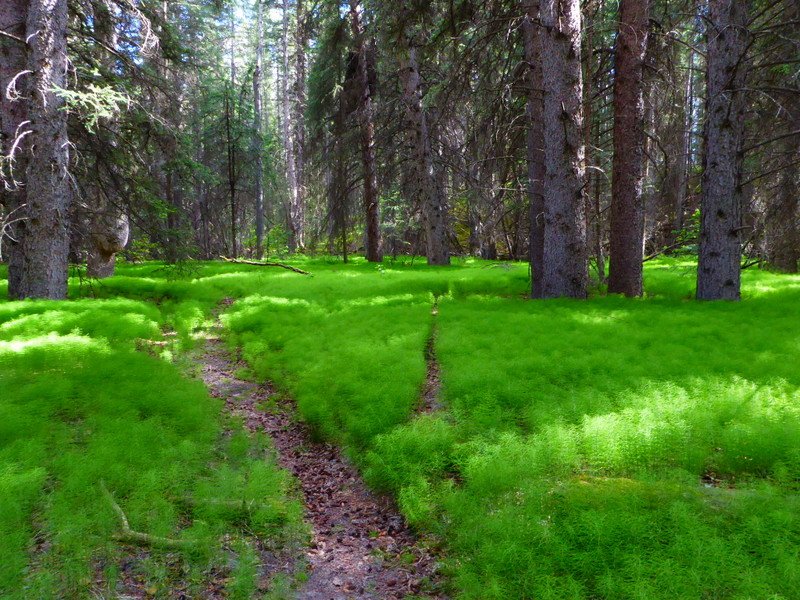
Click on this image of Horsetails to read the full article!
WEEKLY WILDLIFE AMBASSADOR WHEREABOUTS
In case you have not seen them yet, our amazing Volunteer Wildlife Ambassadors have been heading out onto trails and trailheads! You can find them talking to people about responsible trail use and staying safe while recreating in bear country. Note: their locations may change at the last minute. May 2 - Ha Ling Trailhead near Canmore.
FOOD FOR THOUGHT?
Bears are especially hungry at this time of year and always searching for food so please do not draw them into residential areas, picnic areas or campsites by providing them with any sort of a meal. Keep them moving along by ensuring your yards and campsites are free of attractants such as food, garbage, recycling, pet food, greasy bbqs and bird feeders. For those who are not aware, the Town of Canmore has a Community Standards Bylaw, and residents can be fined for having Wildlife Attractants (such as garbage and bird feeders) that are accessible to wildlife in their yards.
Fruit Tree Removal Incentive Program - Fruit trees may seem harmless, but they are a leading cause of human-wildlife conflict. In fact, accessing fruit trees is the number one reason why bears in the Bow Valley are relocated or killed. We are making Canmore safer for people and wildlife by reducing financial barriers to remove fruit trees.
Fruit Tree Replacement Incentive Program - Thanks to the generous support from the G7, we’re continuing our partnership with the Town of Canmore this year to offer the Fruit Tree Replacement Incentive using the remaining funds from the 2025 allotment. The replacement incentive is run concurrently with the Fruit Tree Removal Incentive to encourage residents to remove and replace fruit-bearing vegetation from their properties, an important action to ensure that wildlife is kept wild in the Bow Valley. The program reimburses:
100% of the pre-tax cost of removing fruit trees or bushes, up to:
$500 per residential property
$1,000 per condo association or commercial property (for removal of 5 or more trees)
100% of the pre-tax cost to replace removed trees with non-fruit-bearing alternatives, up to $500 per residential property or up to $1,000 per condo association or commercial property (for the replacement of 5 or more trees).
Click here to learn more or apply for the incentive! Applications are now open while funds are available.
WILDLIFE IN THE NEWS
Grizzly bear, The Boss, feasting on dead fish at Banff's Vermilion Lakes.
Wayward flycatcher recorded in Banff and Alberta for first time.
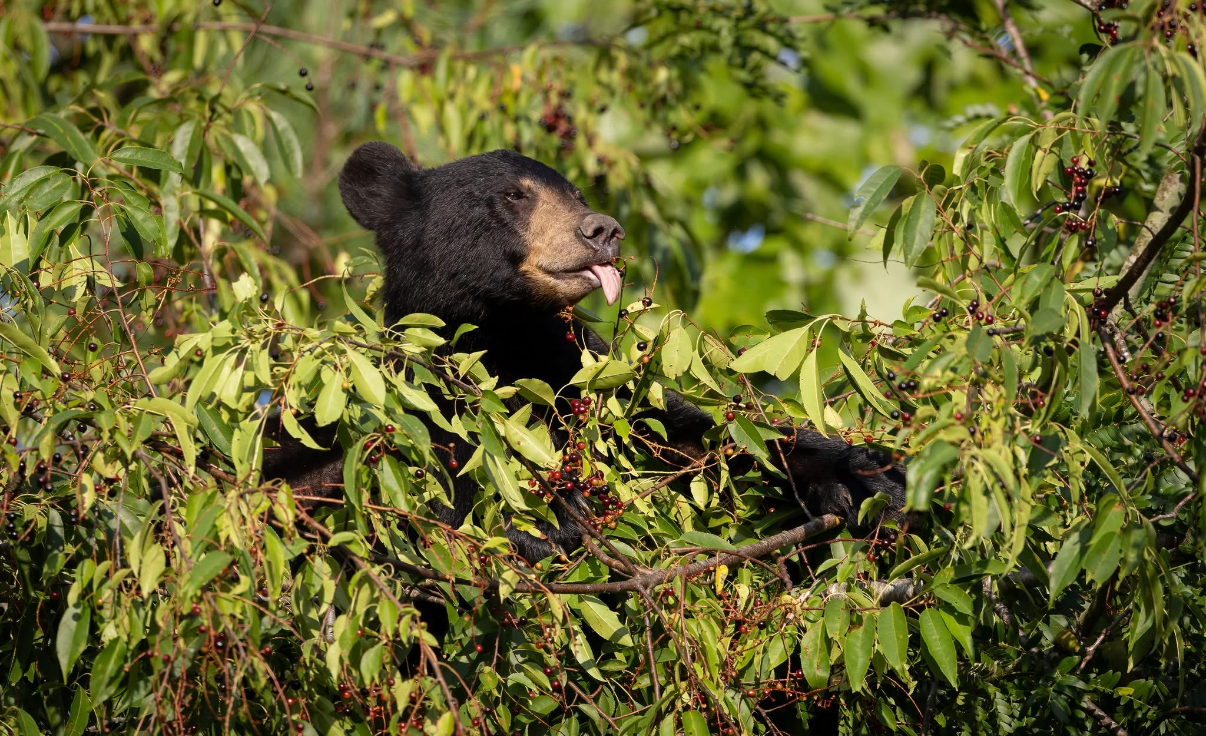
Adorable bear hug video reveals something deeper about black bear families.
Overnight closure and bear warning issued for Vermilion Lakes Road area.
California’s wildlife bridge became a target for the right. Now it’s eyeing the finish line.
Woman captures video of Polar Bear wandering around St. Anthony, NL.
Ocean surprise as woman swims with grey whale off Vancouver by accident.
Record bear sightings in Japan cause alarm as hibernation ends.
JOIN THE SUMMIT CLUB
We are inviting you to be part of something bigger. The Bow Valley inspires incredible adventures from hiking and skiing to unforgettable wildlife encounters. It’s a place we all care deeply about, and one that needs ongoing protection.
We’re inviting you to join the Summit Club, our community of monthly donors supporting environmental action in the Bow Valley year round, from human-wildlife coexistence and local climate action to youth education and community led environmental projects.
We set a lofty goal to welcome 30 new monthly donors. So far we have 16 and we would love to get some more! Even $5 per month, about the cost of a latte, makes a meaningful difference and provides steady support for this work.
By joining the Summit Club, you’re helping protect the landscapes, wildlife, and communities that make this place so special... not just on Earth Day, but every day.

AND NOW SOME PAWS-ITIVE NEWS
We are excited to welcome our new Wildlife Ambassadors to our program this year! The annual volunteer training happened last weekend and their friendly smiling faces, informative conversations and compelling stories to try and improve human-wildlife coexistence were inspiring! On behalf of the two and four-legged creatures who call this valley home, we thank you for your hard work and dedication to keep people and wildlife safe. This year the Wildlife Ambassadors will continue increasing their presence in Banff, the Bow Valley and throughout K-Country, with the hopes of bringing consistent and reliable wildlife safety messaging to these heavily used recreation areas.
In case you have not seen them yet, our amazing Volunteer Wildlife Ambassadors will be heading out onto trails and trailheads to talk to people about responsible trail use and staying safe while recreating in bear country. Keep an eye out for the Wildlife Ambassadors next time you are out on the trails in the Bow Valley, K-Country and West Bragg Creek area, and be sure to say ‘hi’ and have a chat with them!
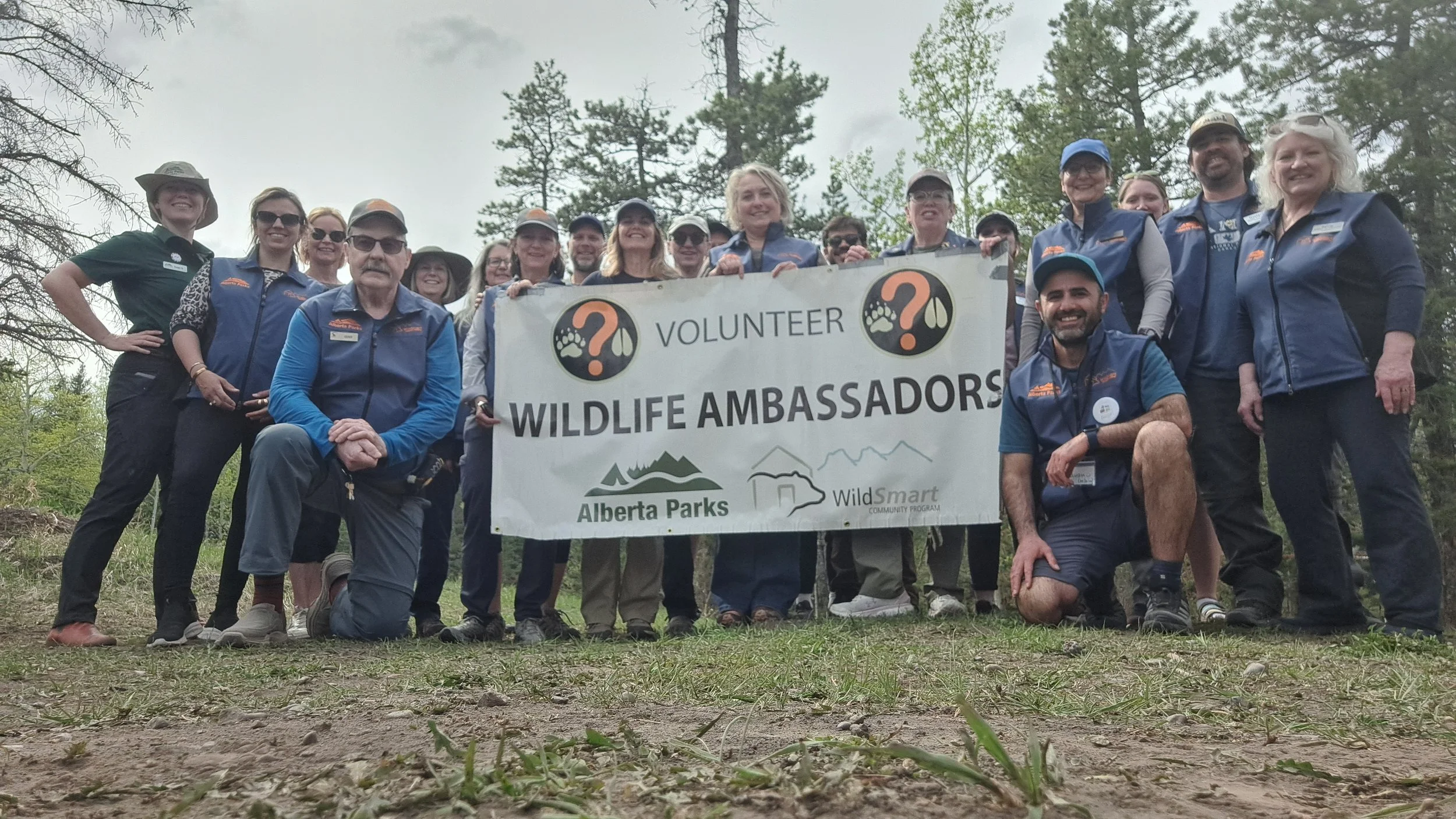
A photo from our Wildlife Ambassador training session last year on May 10, 2025.
UPCOMING EVENTS
May 2 - The Great Rain Barrel Sale
May 8 - Planting Seeds of Active Hope: Climate and Mental Health Workshop with Biosphere & Canmore Counselling (1-2:30pm, Friends Program Room, Canmore Public Library) Click here to register for free.
May 11 - Queer as Bighorn: Textile Art Workshop (2SLGBTQIA+ participants only) Click here to register.
May 25 - Earth Talks - Energy Transition in Alberta: Like Pushing Oil Uphill with local conservationist, writer, and photographer Stephen Legault (7-8pm, Friends Program Room, Canmore Public Library) - Click here to register for free

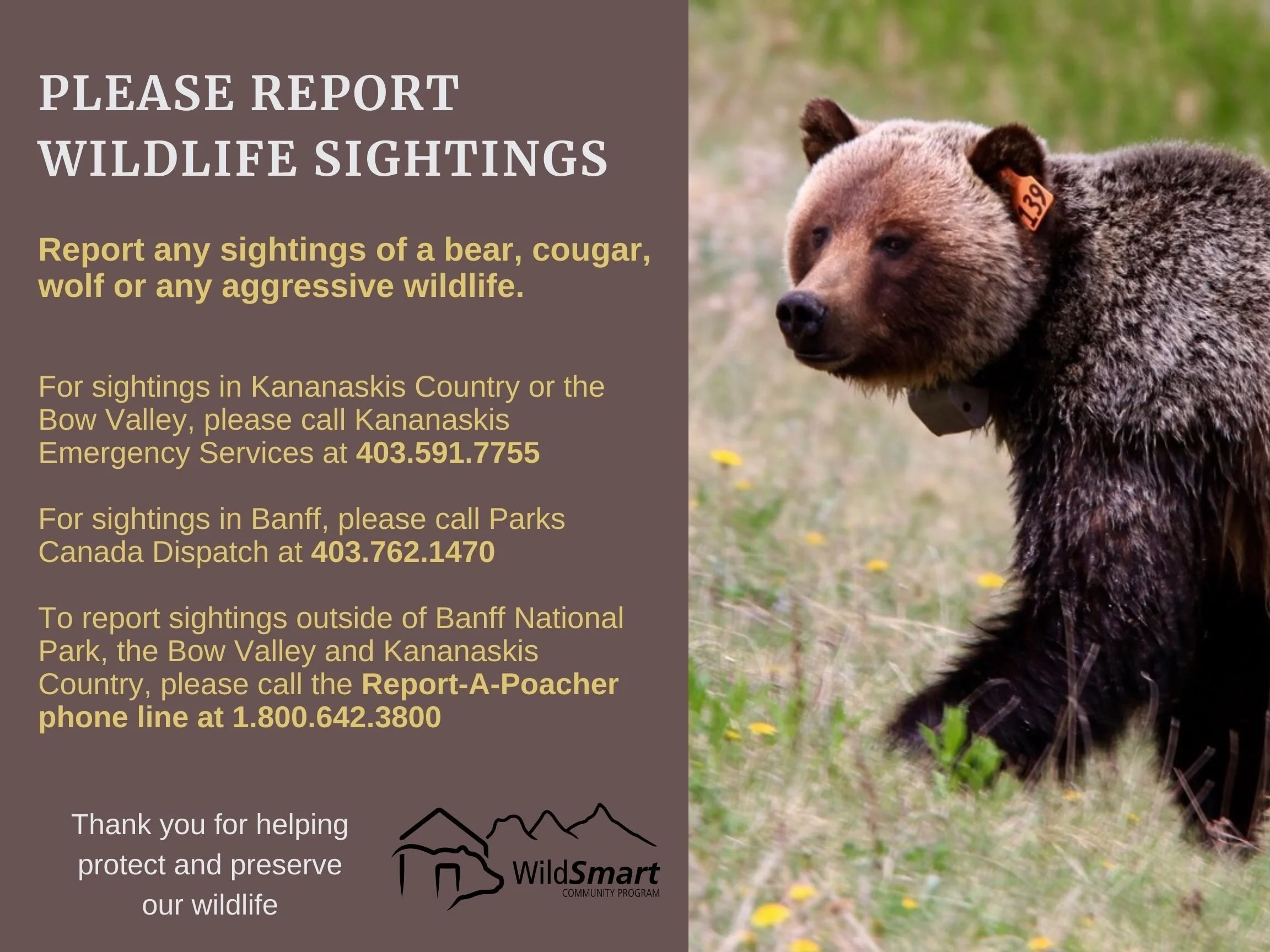
Please remember BEARS CAN BE ENCOUNTERED ANYWHERE, ANYTIME!
Report any sightings of a bear, cougar, wolf or any aggressive wildlife in Kananaskis Country or the Bow Valley to Kananaskis Dispatch at 403.591.7755