

Did you know that WildSmart is a program of the Biosphere Institute, a local charity? Our work relies entirely on donations and sponsors. If you would like to support our community-based efforts to promote human-wildlife coexistence, please donate now!
BEAR ACTIVITY UPDATE (June 18, 2026)
(Banff National Park East Gate to Bow Valley Provincial Park)
Bears are feeding in the valley bottoms, along trails and roadside, where most of their available food is located. People are primarily using the valley bottoms (where the bears are), resulting in a large number of sightings of both grizzly and black bears throughout the Bow Valley, including in residential areas, as well as in K-Country. There have also been reports of multiple black bears in the Bow Valley with multiple young of the year cubs. This could pose an issue with people getting in between the sow and cubs. If you see a bear cub, assume there may be more as well as a very protective mother close by. Make noise and leave the area. Take home lesson: Expect to run into a bear while out on the trails!
There were several warnings and closures put in place this past week in Kananaskis Country and in Banff National Park related to close surprise encounters and bears accessing food and other wildlife attractants in tents at campgrounds.
Bear Closure - A portion of Upper Kananaskis Lake Circuit trail from North Interlakes Day Use to White Spruce Day Use. This closure includes Everest Trail, and all portions of shoreline due to a grizzly bear bluff charge.
Area Bear Closure: Lake Minnewanka Trail, Aylmer Pass Trail, and Campgrounds: Lm8, Lm9, Lm11, Lm20, Lm22, Lm31 are closed to all users due to black bears displaying food-seeking behaviour.
A reminder that a warning gets put in place for an elevated risk of encounters, and closures are put in place to give bears space and protect the public - so please respect them!
Managing Wildlife Attractants: Reminder to campers to be diligent in keeping ALL wildlife attractants secure from bears including food, garbage, recycling, pet food and any other scented items. Lock them in vehicles, hard-sided trailers or bear-proof storage lockers and never leave these items unattended, even for a minute. Never leave food and scented items in tents as bears can easily access them. Always dispose of garbage in bear-proof bins. If a garbage bin is full, do not leave your garbage beside it. Remove it from the area and find another bear proof bin to deposit your waste.
RELATED ARTICLE: Bear rips tents, triggers evacuations and closure of Banff's Lake Minnewanka campgrounds and trail.
At your picnic table - Do not have so much food spread all around your table(s) as you will not have enough time to gather it and secure it if a bear were to approach. Think about storing all your food in a plastic bin or cooler that can easily and quicky be gathered up and moved/stored in your vehicle, hard-sided trailer or bear locker. The goal is to try and make sure the bear does NOT get any food rewards. If a bear approaches your campsite or picnic table, do your best to gather up and secure all the food and USE YOUR BEAR SPRAY. We can’t prevent bears from walking through our picnic areas, campsites and backyards, but we can certainly do our best not to give them a food reward or a reason to linger! Don’t be the reason a bear has to be killed because it got into un-natural food sources on your campsite!
On the Trails: Remember to make lots of noise (yell, shout) to let wildlife know you are coming down the trail to avoid surprise encounters, and give them time to move off of the trail. Travel in groups (ideally four or more), keep pets on a leash and carry bear spray and be prepared to use it in case of a close encounter. Even if you are going for a leisurely walk around Canmore you should be carrying bear spray and always be mentally prepared to encounter bears and elk. If you know of or have heard of bear activity in a given area, please consider recreating elsewhere!
Some reminders for trail runners and mountain bikers who move quickly and often quietly along the trails: Make lots of noise (yell, shout) to let wildlife know you are coming down the trail and slow down to avoid surprise encounters with wildlife, especially around blind corners, at the tops of hills, or in areas with thick vegetation and poor sight lines. It is also a good idea to keep ear buds out for better situational awareness, check behind you to make sure you are not being followed by wildlife, and always carry bear spray in an accessible location, and know how to use it!
Roadside wildlife: Bears and other wildlife continue to be seen on and near roads. Remember to obey speed limits and slow down when passing wildlife but don’t stop and always stay in your vehicle! Never get out of your vehicle to get closer to a bear that is roadside - it stresses out and disturbs the bear, and is potentially dangerous for you, the bear and other motorists. Give bears at least 100m of space at all times and do not linger near wildlife feeding roadside - keep moving along! Be extra vigilant at dawn, dusk and during night time hours to avoid collisions with wildlife. Seeing wildlife roadside (or ON the road) can be an awesome experience, but it's critical for the safety of the wildlife, and yours too, that you do it right. The Friends of Kananaskis Country have some great Tips for Roadside Wildlife Viewing for motorists and cyclists.
Grizzly bear seen feeding on Dandelions in K-Country on June 16, 2025.
ELK: The Elk Calving Warning remains in effect for Canmore. Most mother elk have now had their calves and the youngsters are up and running around. Female elk will still aggressively defend their calves by kicking and charging at you if they feel threatened. The presence of calves also attracts predators such as bears, cougars, wolves and coyotes so be aware of your surroundings, even on popular and well visited trails around town and along the river.
Elk calves are often hidden in dense vegetation along the trails so extra vigilance is required. The best way to keep them at ease is to stay at least 30m away - which is three school bus lengths. If you see any elk, immediately leave the area (i.e. turn around and go the opposite direction to give elk lots of space) and DO NOT TRY TO SNEAK PAST THEM. Even bikers should not be trying to sneak past elk on the trails. Stay on open trails instead of walking through dense vegetation, keep pets on a leash and always carry bear spray and be prepared to use it when recreating anywhere in the valley. When walking with dogs, stay well clear of all elk (we recommend over 100m) and leave the area immediately. Mother elk will charge at dogs from a distance, even when on leash, in order to protect their offspring. With bears being seen around Canmore, and aggressive mother elk protecting their calves, it is a good idea to be carrying your bear spray whenever you leave the house to go out for a walk, run or ride!
If you do find yourself in the cross hairs of an aggressive cow elk, get some sort of barrier between you and the elk (i.e. larger trees, car, boulders, picnic table, etc.). Do not turn your back on the elk and try and get behind the barrier as quickly as possible. Use your bear spray if needed.

Cow elk with her calf. Remember to stay away from all elk, at least 30m, which is 3 school bus lengths, and never try to sneak past them!
VIEW CURRENT WARNINGS AND CLOSURES
A reminder to please report any sightings of a bear, cougar, wolf or any aggressive wildlife in the Bow Valley or K-Country to Kananaskis Dispatch at 403-591-7755. In Banff, call Dispatch at 403.762.1470. They prefer to get first hand reports from the people who see the wildlife!
SOME THINGS TO ‘BEAR’ IN MIND
It is very important to properly manage wildlife attractants such as food and garbage while hiking, camping and at Day Use Areas. If you see garbage on the ground, pick it up and put it in a bear-proof bin. If the bin is full, take the garbage home with you, but never leave garbage on the ground. It sounds like common sense, but never feed any wildlife (yes, that includes squirrels and chipmunks) and never leave food unattended, even for a minute.
Keep a BEAR FREE Campsite! Even open and closed beverage containers are considered a wildlife attractant. Bears will bite and puncture beer and pop cans to drink the contents as they contain a lot of calories and sugar! Attractants must be stored inside a hard-sided vehicle/trailer, or locker at night (not in your tent) and when you’re away during the day. Attractants include coolers, food, beverages, toiletries, pet food, garbage, recyclables and other scented items.
Officials will remove unattended attractants if they are not stored correctly, and an enforcement action may follow! All park visitors and campers need to be extra vigilant in securing their food and other items that attract wildlife, even when they are still at their campsite or picnic area. It is important to always have your bear spray ready and available, just in case you get any unwanted four-legged visitors.

Alberta Parks signage on picnic tables in campgrounds and day use areas to remind visitors about proper storage of wildlife attractants.
WILDLIFE AMBASSADOR WORDS OF WISDOM
Wildlife Ambassador Karen is back to remind people to respect all wildlife and leave the flowers for others to enjoy. Not only is picking wildflowers illegal in Alberta parks, but picking flowers actually kills some plants.
WEEKLY WILDLIFE AMBASSADOR WHEREABOUTS
In case you have not seen them yet, our amazing Volunteer Wildlife Ambassadors have been heading out onto trails and trailheads! You can find them talking to people about responsible trail use and staying safe while recreating in bear country. Note: their locations may change at the last minute.
June 20 - Elbow Pass and various Day Use Areas in K-Country.
June 21 - Grizzly Paw’s 30th Anniversary Birthday Bash.
FOOD FOR THOUGHT?
Fruit trees attract bears into our neighbourhoods which puts people and wildlife at risk and accessing fruit trees is the number one reason why bears in the Bow Valley are relocated or killed. Buffaloberries will start to ripen in the weeks to come. Please be proactive and remove berry bushes and fruit trees from your yard NOW before you attract a bear into town. Your tree blossoms will blossom into bear problems later! It is your responsibility to make sure that bears do not have a reason to linger in your yard, resulting in bears being relocated or destroyed.
To make Canmore safer for wildlife and people, the Town of Canmore is once again offering their Fruit Tree Removal and Replacement Incentive Program. Thanks to the generous support from the G7, we’re continuing our partnership with the Town of Canmore this year to offer the Fruit Tree Replacement Incentive using the remaining funds from the 2025 allotment. The replacement incentive is run concurrently with the Fruit Tree Removal Incentive to encourage residents to remove and replace fruit-bearing vegetation from their properties, an important action to ensure that wildlife is kept wild in the Bow Valley.
The removal incentive program reimburses 100% of the pre-tax cost of tree removal up to $500 per residential property and $1,000 per condo association or commercial property (for removal of 5 or more trees).
The replacement incentive program reimburses 100% of the pre-tax cost to replace removed trees with non-fruit-bearing alternatives, up to $500 per residential property or up to $1,000 per condo association or commercial property (for the replacement of 5 or more trees).
Click here to learn more or apply for the incentive! Applications are still open while funds are available.
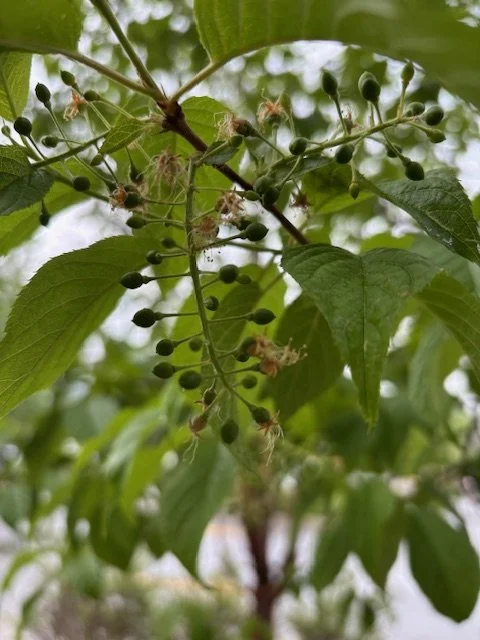
Chokecherries can be the pits for bears! Photo taken on June 12, 2025.
WILDLIFE IN THE NEWS
Bear wandering around with pipe stuck on head rescued by conservation officers.
4 grizzly bears killed by hunters through Alberta's 'problem wildlife' program so far.
A practical guide to not getting mauled by a bear while hiking or camping this summer.
A Mountain Lion watched joggers for 3 hours in Utah and no one noticed.
Bear family enjoys a playground in North Carolina.
Young black bear swims from New Hampshire into southern Maine.
AI-powered ‘Bear-dar’ alert system deployed to help Arctic communities.
AND NOW SOME PAWS-ITIVE NEWS
Wildlife crossing structures: A conservation success story in motion.
In Banff National Park, wildlife crossing structures are helping animals move safely through their home ranges just as they’ve always done. From bears to wolves, this footage captures the remarkable ways species are adapting and thriving. With 48 overpasses and underpasses and an average of >12,000 crossings each year, this is one of Banff National Park’s greatest conservation success stories.
Wildlife ecologist Jesse Whittington shares the history and effectiveness of the extensive network of wildlife crossing structures in Banff National Park. These overpasses and underpasses facilitate safe animal movement through the Canadian Rockies, significantly reducing collisions and maintaining critical habitat connectivity for various local species.
Note: Drone operations were conducted in accordance with all applicable Parks Canada regulations. Recreational drone use is strictly prohibited in all Parks Canada places.
UPCOMING EVENTS
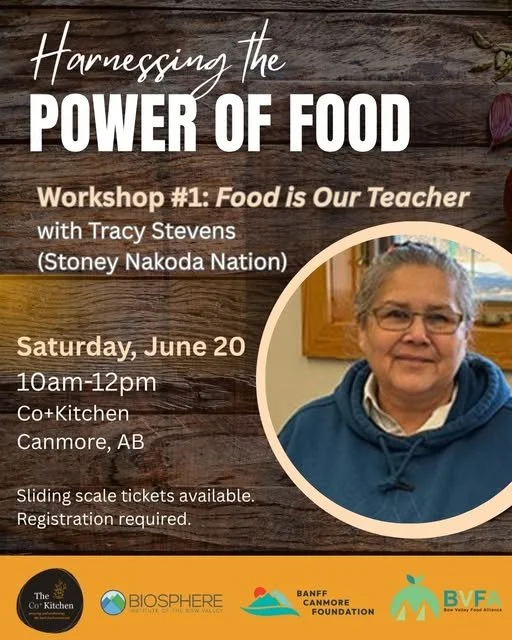
June 20 - Harnessing Power of Food Workshop: Food is Our Teacher. What can food teach us about community, culture, reciprocity, and care? Join us for "Food is Our Teacher" with Tracey Stevens (Îyârhe Nakoda), the first workshop in our 2026 Harnessing the Power of Food series! Together, we'll make bannock, connect through stories and cultural knowledge, and reflect on how food can teach us about community, belonging, and our relationships with one another and the land. Saturday, June 20 from 10am-12pm at the Co+Kitchen in Canmore.
Sliding scale tickets: $20–50. Click here to register and buy your ticket now!
June 21 - Grizzly Paw’s 30th Anniversary BIG SHINY BIRTHDAY BASH. They are turning their brewery's parking lot and backyard BEER GARDEN into a full-on summer festival with live cover bands playing 90s and 2000s favourites, brewery tours, family activities, games, food, and beer at the Old Canmore Road Beer Garden. The event runs from 12-9pm featuring Big Shiny Band, Suzie Q, The Ducks, and more! Tickets: $10 (includes a hot dog + soda) and kids 12 and under are free.
Our Wildlife Ambassadors will be there with their hands-on interactive booth and they will be running three FREE 30-minute bear spray demonstrations starting at: 1:30pm, 3:00pm and 5:00pm. You can sign up for the bear spray training at their booth on June 21. Come on by, learn how to use bear spray and chat with them about responsible trail use and how we can all work together to improve human-wildlife coexistence.
Click here for more info and to buy your tickets now!

June 24 - Online Bear Aware: Bear Safety Session with the Town of Banff and Parks Canada (7:00-8:15pm Online). Learn how to be safe in bear country, how to identify different types of bears, common bear behaviours and tools and tips to prevent bear encounters. Online registration is closed but you can call 403-762-1251 to register for the session.

June 25 - Bear and Cougar Safety and Awareness at the Bergen Community Hall (31547 Range Road 53C) from 6:30-8:30pm. Mountain View BearSmart invites you to a FREE workshop to learn how to be safe in bear country. 6:30-7:30pm: How to manage attractants at home to reduce human-wildlife conflict, the biology and behaviour of bears and cougars, how to avoid encounters with a bear or cougar, how to act appropriately if you encounter a bear or cougar, and how to use bear spray. 7:30-8:30pm: Bear spray training - held outdoors in the parking lot (weather permitting). Register by email to: info@mountainviewbearsmart.com
Click here for more information and directions.
Please remember BEARS CAN BE ENCOUNTERED ANYWHERE, ANYTIME!
Report any sightings of a bear, cougar, wolf or any aggressive wildlife in Kananaskis Country or the Bow Valley to Kananaskis Dispatch at 403.591.7755