

Did you know that WildSmart is a program of the Biosphere Institute, a local charity? Our work relies entirely on donations and sponsors. If you would like to support our community-based efforts to promote human-wildlife coexistence, please donate now!
BEAR ACTIVITY UPDATE (July 9, 2026)
(Banff National Park East Gate to Bow Valley Provincial Park)
There continue to be steady sightings of bears throughout the Bow Valley and Kananaskis Country, especially along trails, roads, in and around town, and in the valley bottoms where most of their available food is located. As more people head out into bear country to go camping, hiking and picnicking, not only are the roads getting busier, but there is an increased chance of bears and other wildlife accessing food and garbage that is improperly stored or left unattended.
Even today there was a bear jam in Canmore (on the south side on Three Sisters Pkwy) due to a black bear with 3 cubs and there has also been a recent uptick in people leaving wildlife attractants out at campgrounds and day use areas! Ravens and squirrels are getting into peoples’ food and making a mess and bears are also moving through the day use areas which is a real cause for concern.
Roadside Bears: Bears and other wildlife continue to be seen on and near roads. The safety and well-being of wildlife is far more important than you getting that perfect picture. Remember to obey speed limits and slow down when passing wildlife but don’t stop and create bear jams. Stopping next to bears increases habituation (when a bear with repeated exposure to humans at close range will lose their natural fear and avoidance of humans) which translates onto trails and in facility zones. YOU can help keep our bears wild and on the landscape by slowing down but not stopping. Never get out of your vehicle to get closer to a bear that is roadside. It stresses out and disturbs the bear, and is potentially dangerous for you, the bear and other motorists. Never feed wildlife or encourage wildlife to come closer to you or your vehicle. Give bears at least 100m of space at all times and do not linger near wildlife feeding roadside - keep moving along! Be extra vigilant at dawn, dusk and during night time hours to avoid collisions with wildlife. The Friends of Kananaskis Country have some great Tips for Roadside Wildlife Viewing for motorists and cyclists.
Two young grizzly bears feeding roadside in K-Country on July 12, 2025. The mother and third cub are hidden behind the trees.
Managing Wildlife Attractants: It is very important to properly manage wildlife attractants such as food and garbage while hiking, camping and at Day Use Areas. NEVER leave attractants unattended and don’t be the reason for wildlife having to be destroyed! Reminder to be diligent in keeping ALL wildlife attractants secure from bears including food, garbage, recycling, pet food and any other scented items. Lock them in vehicles, hard-sided trailers or bear-proof storage lockers and never leave these items unattended, even for a minute. Never leave food and scented items in tents as bears can easily access them. Always dispose of garbage in bear-proof bins. If you see garbage on the ground, pick it up and put it in a bear-proof bin. If the bin is full, take your garbage to another bin or take the garbage home with you, but NEVER leave garbage on the ground where it is accessible for wildlife! We can’t prevent bears from walking through our picnic areas and campsites, but we can certainly do our best not to give them a food reward or reason to linger!
At your picnic table: Do not let bears and other wildlife get any food rewards as a Fed Bear is a Dead Bear! If you are sitting at your table eating and a bear starts approaching your food and table, do your best to deter the bear by yelling and/or using your bear spray to prevent it from getting your food. If safe to do so, try moving your food into your hard-sided vehicle/trailer or locker nearby to prevent the bear from getting that food reward. Your safety and the bear’s life might depend on it!
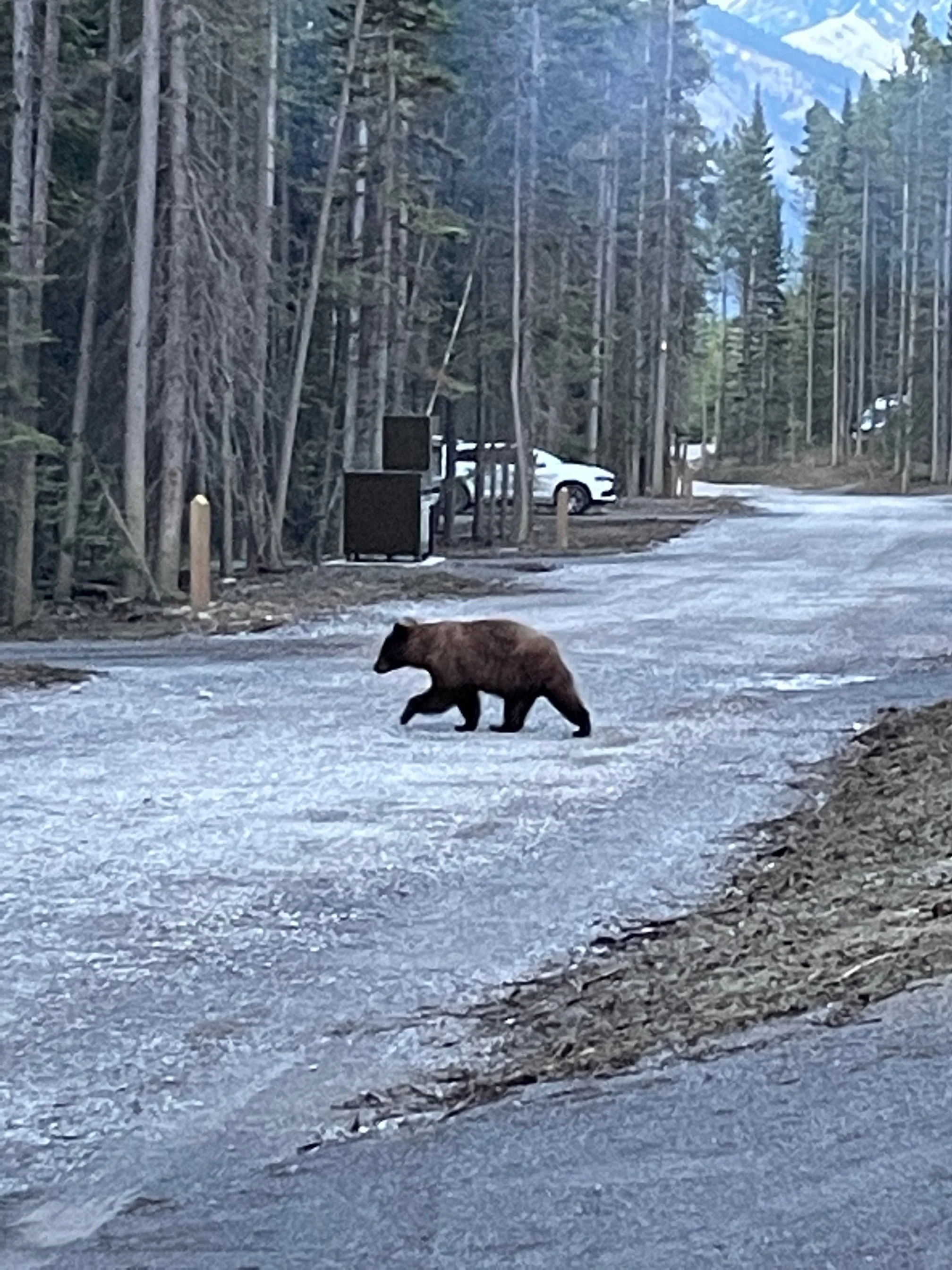
Bold black bear cruising the campsites looking for food at Spray West Campground on June 28, 2024. This bear was killed due to being heavily food-conditioned and boldly approaching people in their campsites for food.
On the trail: People need to mentally prepare themselves for encounters and remember to make lots of noise, travel in a group (ideally 4 or more), keep pets on a leash, and carry bear spray and be prepared to use it in case of a close encounter. Knowing what to do when you encounter a bear is key! Even if you are going for a leisurely walk around the neighbourhood you should be carrying bear spray. It is important to remember that bears can be encountered anywhere, anytime (not just in areas with an active warning or closure in place) so you should always be expecting to run into a bear whenever you head out on the trails in the Bow Valley and K-Country!
ELK: Even though elk calving season is winding down, this is no time to become complacent. Mother elk will still aggressively defend their calves if they feel threatened by people getting too close! Never approach elk for any reason, stay at least 30 metres (3 school bus lengths) away from all elk and DO NOT TRY TO SNEAK PAST THEM on a trail! Even bikers should not be trying to sneak past elk on the trails. Keep pets on a leash and it is a good idea to be carrying your bear spray whenever you leave the house to go out for a walk, run or ride around Canmore. When walking with dogs, stay well clear of all elk (we recommend over 100m) and leave the area immediately. Mother elk will charge at dogs from a distance, even when on leash, in order to protect their offspring.

Stay at least 30 metres (3 school bus lengths) away from all elk and never try to sneak past them!
VIEW CURRENT WARNINGS AND CLOSURES
Bear Closure - Rawson Lake Trail and Sarrail Ridge route and surrounding area due to a grizzly bear with cubs feeding in and frequenting the area surrounding Rawson Lake Trail and Sarrail Ridge route.
Bear Closure - A portion of the Paved Bike path & Lower Lake Day Use Area in Peter Lougheed Provincial Park. More specifically, the Paved bike path leading from Boulton store to Sarrail campground (does not include the portion of campground roads through Lower Lake campground). This closure is in place to prevent a surprise encounter with grizzly bear with cubs.
Bear Warning: Lake Minnewanka Trail and Campgrounds (Lm8, Lm9, Lm11, Lm20, Lm22, and Lm31) due to multiple instances of black bears making contact with tents in recent weeks.
A reminder to please report any sightings of a bear, cougar, wolf or any aggressive wildlife in the Bow Valley or K-Country to Kananaskis Dispatch at 403-591-7755. In Banff, call Dispatch at 403.762.1470. They prefer to get first hand reports from the people who see the wildlife!
SOME THINGS TO ‘BEAR’ IN MIND
Ever wonder what bears do in July? Learn all about it from our friends at BearWise south of the border. “July at a Glance: By July, cubs born this year have grown to the size of a raccoon or a small dog with big ears. Yearling bears now on their own can be the size of medium dogs. Bears of both sexes mark trees and adult bears mate. Cubs smell their mother’s breath to learn what’s good to eat. Bears’ great memories help them return to proven food sources.” Click here to read the full article about What bears do in July.
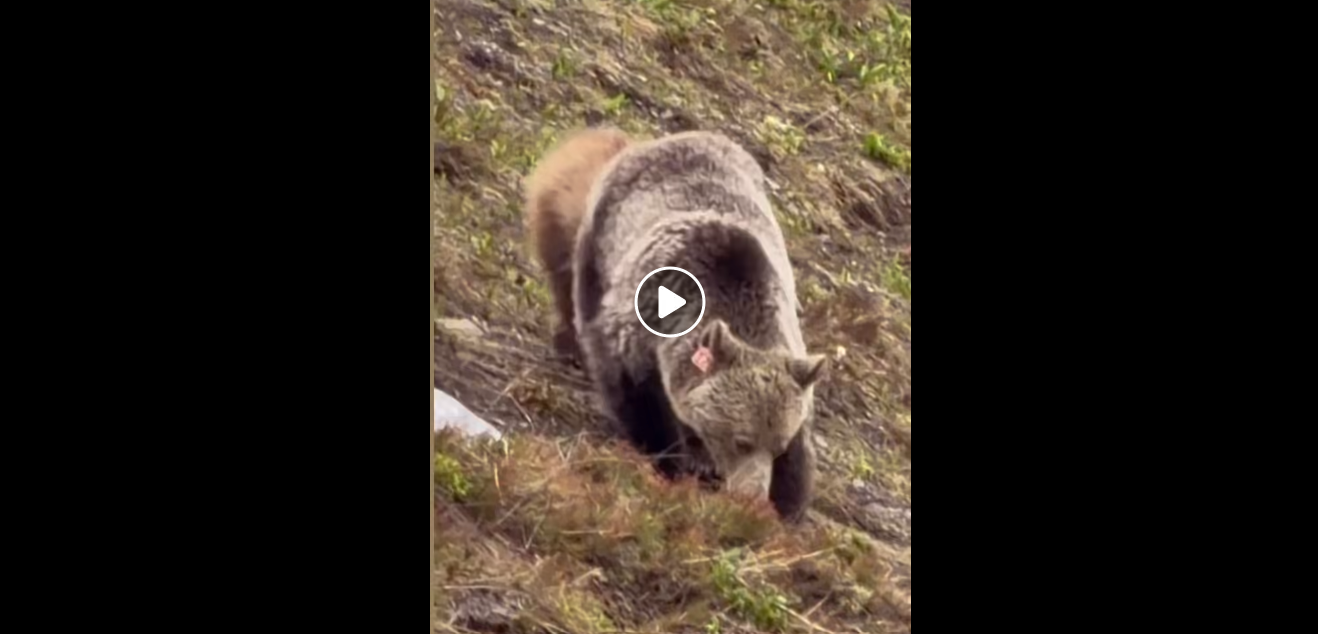
Here is another video that was recently seen on social media. This video is the perfect example of how bear bells are NOT effective. The constant bell sound did not deter the bears at all. The human voice is the best noisemaker and tool and you always have it with you. The main takeaways from this encounter: Bear Bells do NOT work and they are simply not loud enough. The human voice is the best tool to use to scare away bears and if they get too close - use your bear spray! And once again - DO NOT video tape encounters. You should be solely focused on your safety and properly handling the encounter, not getting a video for more followers and likes on social media.
WILDLIFE AMBASSADOR WORDS OF WISDOM
Living and recreating safely in bear country means understanding many things, from signs that bears are around, to what to do in a bear encounter. As we wander in the wilderness (or even in town sites) we are travelling in a bear’s home: their living areas, dining areas, and even their bathrooms. Recognizing the food sources that bears are currently eating can help raise your awareness of the possibility that bears are around where you are at any given moment. Every month we’re going to look at what bears are eating right now, and for the next few weeks, and in this edition of What are the Bears eating today? by Derek Ryder, Volunteer Wildlife Ambassador & IGA Interpretive Guide, it is Vetch.
Ask most folks what a bear’s favourite food is, and “berries” are always among the top answers. But it’s not berry season yet, and won’t be until later this month. The Dandelions are starting to go away (even in my neighbour’s yard). Between the end of Dandelion season & the core of berry season, bears start to take advantage of the roots of the fresh growing plants.
One of the plant families they like is the pea family. The common name of the most popular food is Sweet-Vetch, with the Latin family name Hedysarum. Grizzlies LOVE to dig for the roots of these plants, especially in the spring and fall outside of berry season. In central BC, where there are fewer berries, studies have shown Hedysarum is actually their main summer food source. The picture below is of Hedysarum. Like most patches of Hedysarum you’ll find in the alpine, it had old bear digs next to it. Click here to read Derek’s full article about Vetch!

Click on this image of Vetch (Hedysarum) to read the full article!
WEEKLY WILDLIFE AMBASSADOR WHEREABOUTS
In case you have not seen them yet, our amazing Volunteer Wildlife Ambassadors have been heading out onto trails and trailheads! You can find them talking to people about responsible trail use and staying safe while recreating in bear country. Note: their locations may change at the last minute. July 11 - Upper Kananaskis Lake and Kananaskis Visitor Information Centre (KVIC).
FOOD FOR THOUGHT?
We are about a week away from the Buffaloberries starting to ripen up in the Canmore area and the sunny spots in the Bow Valley, which is a bit slower than last year. Fruit trees and berry bushes attract bears into our neighbourhoods which puts people and wildlife at risk and accessing fruit trees is the number one reason why bears in the Bow Valley are relocated or killed. Please be proactive and remove berry bushes and fruit trees from your yard NOW before you attract a bear into town. Your tree blossoms will blossom into bear problems later! It is your responsibility to make sure that bears do not have a reason to linger in your yard, resulting in bears being relocated or destroyed.
To make Canmore safer for wildlife and people, the Town of Canmore is once again offering their Fruit Tree Removal and Replacement Incentive Program. Thanks to the generous support from the G7, we’re continuing our partnership with the Town of Canmore this year to offer the Fruit Tree Replacement Incentive using the remaining funds from the 2025 allotment.
The removal incentive program reimburses 100% of the pre-tax cost of tree removal up to $500 per residential property and $1,000 per condo association or commercial property (for removal of 5 or more trees).
The replacement incentive program reimburses 100% of the pre-tax cost to replace removed trees with non-fruit-bearing alternatives, up to $500 per residential property or up to $1,000 per condo association or commercial property (for the replacement of 5 or more trees).
Click here to learn more or apply for the incentive! Applications are still open while funds are available so don’t wait until it’s too late and the funds are all gone - Apply now!
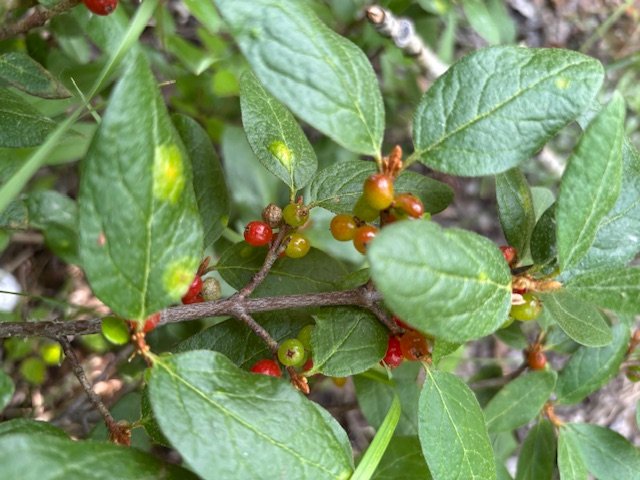
Buffaloberries will start to ripen in the next week so be proactive and remove berry bushes and fruit trees from your yard NOW before you attract a bear into town. Photo taken on July 9, 2026 in Canmore.
WILDLIFE IN THE NEWS
'I am not harmed, my dog is not harmed': woman shares story of harrowing bear encounter.
Banff wildlife experts strive to protect legendary grizzly bear ‘The Boss’ despite challenges.
Record 14 grizzlies fitted with GPS collars in Kananaskis Country.
Grizzly bear bluff charge prompts warning on Stoney Nakoda First Nation.
2 grizzly bears illegally shot along Alberta highway on same day, province says.
Threatened bull trout to be reintroduced into two creeks in Banff National Park.
Anger after ‘Betty’ the bear shot and killed by Coquitlam RCMP.
City of Salmon Arm says trail system remains closed following second bear incident.
Aggressive Black Bear Drives Women From Bighorns Camp Before Shredding Tents.
Wyoming Women Escape Black Bear Attack on Their Tents in The Big Horn Mountains.
Buy the Environment a Coffee... Join the Biosphere's Summit Club!
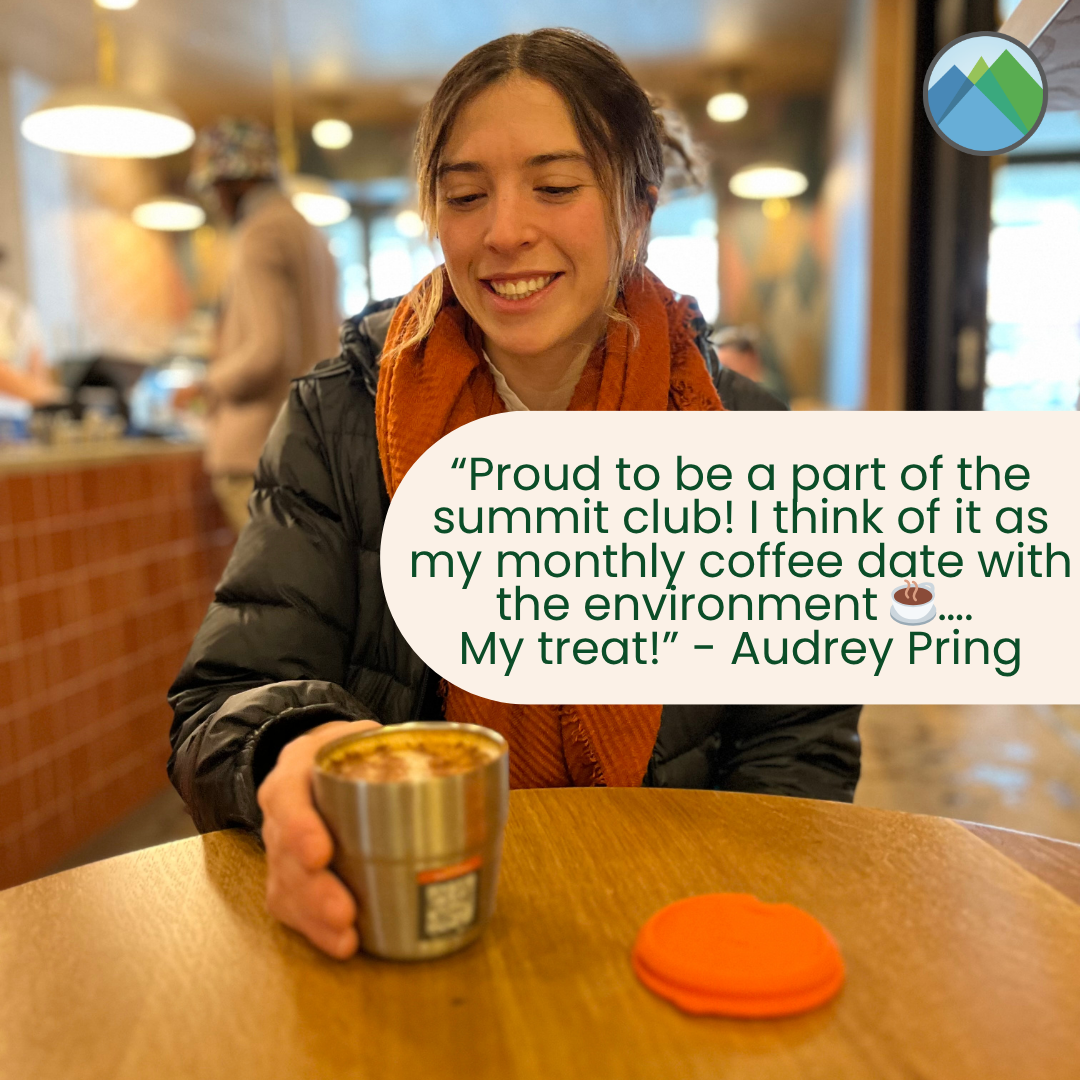
Looking for a meaningful way to give back to the Bow Valley? Join the Biosphere Institute's Summit Club, our community of monthly donors helping protect the places we love. Whether it's conserving wildlife habitat, FireSmarting, inspiring climate action, or bringing neighbours together through community programs, your monthly gift creates lasting local impact.
Even a small monthly donation (about the cost of a coffee!) helps build a healthier, more resilient Bow Valley. As a Summit Club member, you'll also receive invitations to exclusive experiences, including our upcoming summer hike with Executive Director Gareth, along with other behind-the-scenes opportunities throughout the year! Together, we can invest in the future of the Bow Valley one month at a time. Click here to join now!
AND NOW SOME PAWS-ITIVE NEWS
Planet Wild's short film featuring Yellowstone to Yukon’s wildlife connectivity work is live. In Mission 36, their team visited the successful wildlife crossing system in Banff National Park and explored their current work with partners on Highway 3 in southern B.C. and Alberta. The film beautifully captures how purpose-built bridges, tunnels, and specialized fencing are giving grizzlies, elk, and wolves safe passage across dangerous highways. The Planet Wild Community is also setting a goal to raise 50,000 Euros (around CAD$80,000, US$60,000) to buy wildlife GPS collars and remote cameras to use for Highway 3 research. Watch the film and help them spread the word by sharing it with your networks. The more people who understand how wildlife crossings work, the easier it becomes to build support for future projects. Thanks to Planet Wild for showcasing these important projects!
UPCOMING EVENTS
July 18 - Parks Day 2026. Come to Parks Day 2026 hosted by Alberta Parks and the Friends of Kananaskis Country on Saturday July 18 from 12-3pm at Boulton Bridge Day Use Area in Peter Lougheed Provincial Park. This free family friendly public event will have a variety of talks, games, interactive displays, a LIVE Interpretive Show, guided bear walks and much more! Our Wildlife Ambassadors will also be there with their hands-on interactive booth. Come on by, learn how to use bear spray and chat with them about responsible trail use, managing wildlife attractants, and how we can all work together to improve human-wildlife coexistence. Click here for the schedule of events and more info!

August 12 - Harnessing the Power of Food Workshop #2: Cooking Out of the Box!
What's in the box? Join us to find out! Gather for an evening of creativity, community, and delicious surprises as we transform a mystery selection of fresh, seasonal produce from the Bow Valley Food Alliance's Good Food Box program! We'll explore how to cook intuitively, embrace what's in season, and discover just how much is possible with a handful of local ingredients from the Good Food Box program that week.
Wednesday August 12 at 6pm at the Co+Kitchen in Canmore.
Sliding Scale Tickets: $0-50. Click here to register and buy your ticket now!

Please remember BEARS CAN BE ENCOUNTERED ANYWHERE, ANYTIME!
Report any sightings of a bear, cougar, wolf or any aggressive wildlife in Kananaskis Country or the Bow Valley to Kananaskis Dispatch at 403.591.7755