Driving the Bow Valley’s Circular Economy
Two years of circular economy ideas into action thanks to Alberta Ecotrust Foundation’s Environmental Impact Grant!
What if borrowing was as easy as buying? What if a torn jacket or broken appliance could be repaired instead of replaced? What if our community events could create memories without creating mountains of waste? How do we foster a culture of reuse, and also make system level changes that encourage a more circular economy?
These are some of the questions behind Driving the Bow Valley’s Circular Economy, a two-year initiative led by the Biosphere Institute of the Bow Valley with support from the Alberta Ecotrust Environmental Impact Grant.
The goal was to help move the Bow Valley away from the traditional take → make → waste model and toward a more circular economy, one where we share, borrow, repair, reuse and keep materials in circulation for as long as possible.
Over the course of the project, we worked alongside municipalities, libraries, businesses, event organizers, community organizations, repair experts, volunteers and residents to test what circularity can look like in practice.
And along the way, we learned that some of the most powerful climate solutions can also be some of the simplest: use what we already have, share more, waste less, and build systems that make doing so easier.
The Project at a Glance
3 Share & Repair Fairs
~450 community participants
~450 clothing items repaired*
~600 clothing items recirculated through clothing swaps*
89,066 single-use coffee cups avoided through Banff Borrows
415 items now available through the Canmore Library of Things
1,787 Library of Things circulations since May 2025
Toward Zero Waste Event Working Group convened eight times
21 event organizers attended a webinar, and accessed the TZW Event Toolkit
Coordinated and managed 2 Canmore Folk Music Festivals diverting ~90% of waste, and reducing numbers of SUI through reusable cup pilot program!
~30.8 tonnes CO₂e conservatively estimated to have been avoided through selected measurable activities* *Estimates based on available project data and conservative assumptions.
Repair More, Replace Less: Building a Culture of Repair
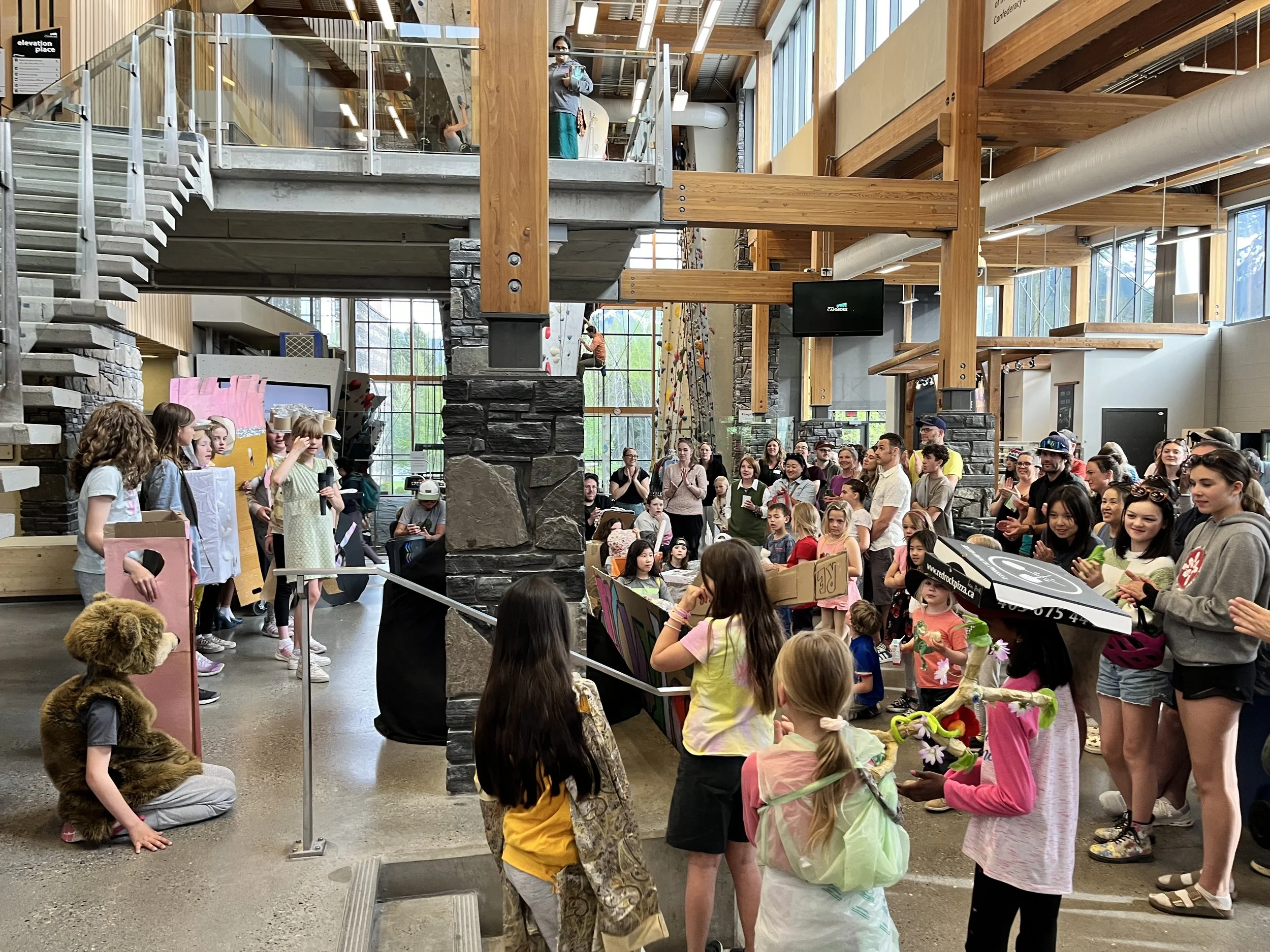
Share & Repair Fairs
A broken zipper shouldn't have to mean a new jacket. And a lamp, toaster or household item that needs a simple fix shouldn't necessarily end up in the landfill.
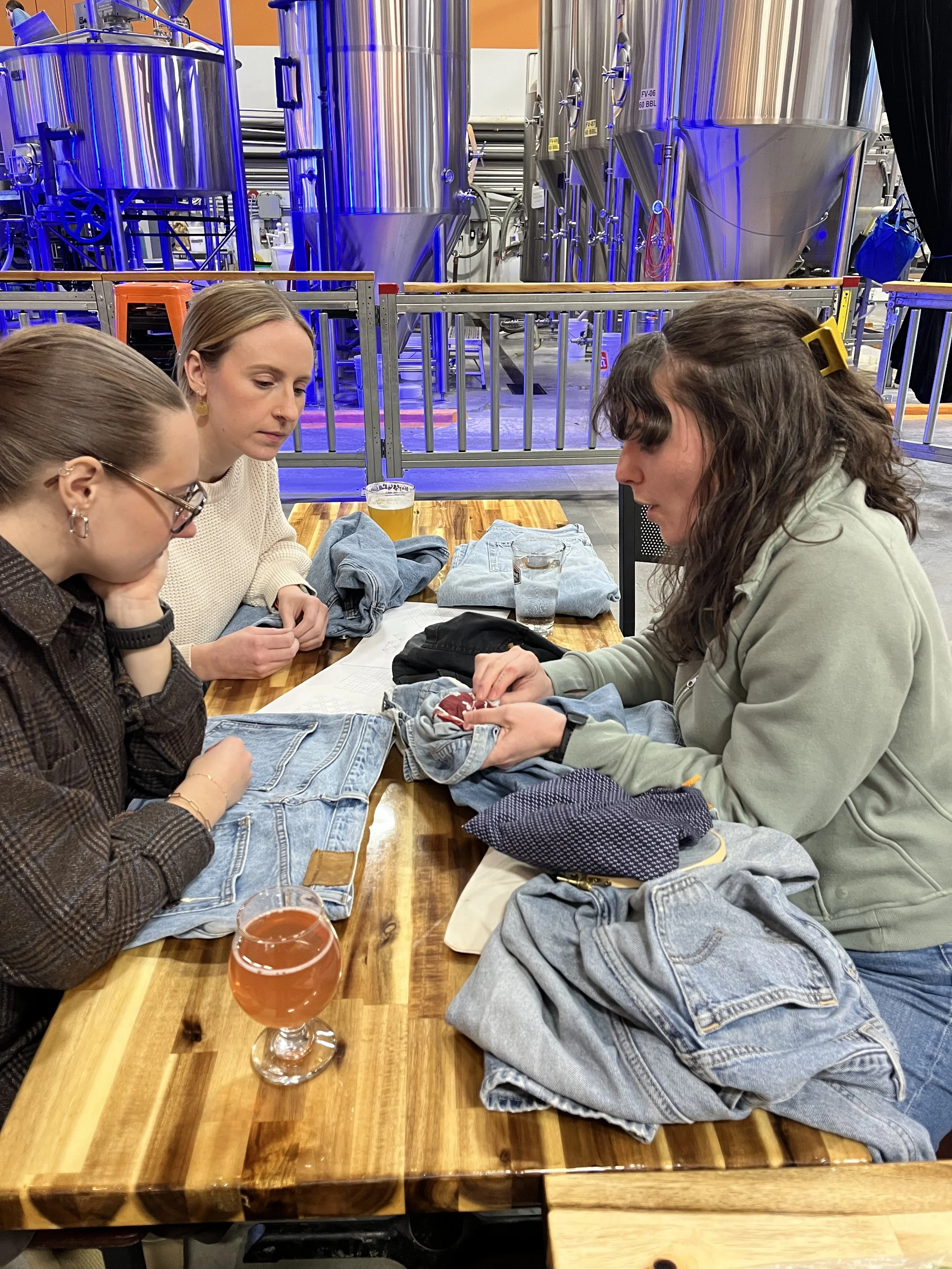
Our Share & Repair Fairs brought community members together with local repairers, makers and volunteers to give everyday items another life—and to share the skills that can help us become less reliant on buying new.


Over the course of the project, we hosted three Share & Repair Fairs, welcoming approximately 450 participants. Alongside on-site repair stations and skill sharing, clothing swaps gave hundreds of garments another chance to be worn and loved rather than discarded.
“I loved the variety of people that attended: young old, some with prior knowledge of circular economy and some learning for the first time. I was inspired by so much good work happening in the Bow Valley!”
By the Numbers
3 fairs | ~450 participants | ~450 clothing items repaired | ~600 clothing items recirculated*
But the impact wasn't only about the number of things saved from the waste stream.
Repair is also about skills, confidence, community and fostering a cultural shift. The fairs created opportunities for people to learn from one another, meet local repair experts, and experience firsthand that extending the life of what we own can be accessible and fun.
“I woke up feeling so bleh that morning and disconnected from my community. At the Share and Repair Fair, I felt re-connected with like-minded people and my community!”
Watch the video below for a recap of who attended Banff’s very first Share and Repair Fair:
“It was so amazing meeting all the vendors and learning about the great work everyone does! Thank you for putting on such an amazing event.
”
Borrow Instead of Buy
Growing the Canmore Library of Things
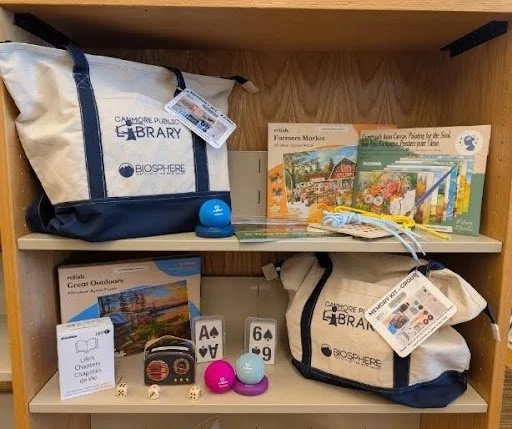
How often do most of us really need a power drill? A food dehydrator? A sewing machine? A metal detector?
Many household items are incredibly useful, but only occasionally.
Through our partnership with the Canmore Public Library, the project helped grow the Library of Things and expand access to tools, kitchen equipment and household items that residents can borrow instead of buy.
Since tracking began in May 2025, the broader collection has grown from 242 to 415 items and recorded 1,787 circulations thanks to the support of this grant.
Some of the most frequently borrowed items include sewing machines, an air fryer, bread maker, food dehydrator, food processor, drills and impact drivers, a vehicle code reader, battery charger, jump starter and sanding tools.
Sharing saves more than resources
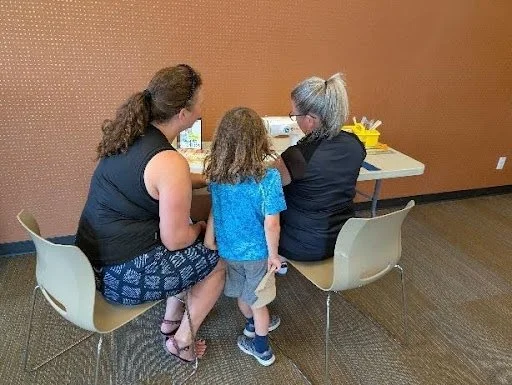
Sharing these items can reduce the materials and emissions associated with manufacturing new products, while also saving residents money and making useful equipment more accessible.
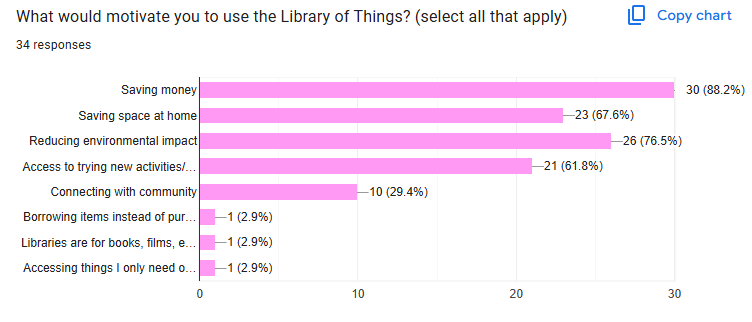
When asked in a survey, community members identified many co-benefits to using the Library of Things including saving money, space at home, environmental impact, and community connection:
One patron told the Library that borrowing the jump starter “saved him a lot of money.”
Another resident borrowed a metal detector after losing a ski pole on the ski hill. When he returned the detector, he happily reported that the missing pole had been found.
These small stories capture something bigger: when communities share resources, one item can meet the needs of many people.

A stainless steel Muuse reusable cup is high quality, sleek and totally free to borrow.
Reuse Instead of Single-use
Banff Borrows reusable cup program
Some waste doesn't need a better recycling bin. It doesn't need to be created in the first place.
Banff Borrows helped demonstrate what that can look like.
Through a reusable cup system, residents and visitors could choose a reusable cup instead of a disposable one and return it back into the system to be washed and used again.
Over the project period:
89,066 single-use cups were avoided.
That means tens of thousands of cups that didn't need to be manufactured, transported, used once and discarded.
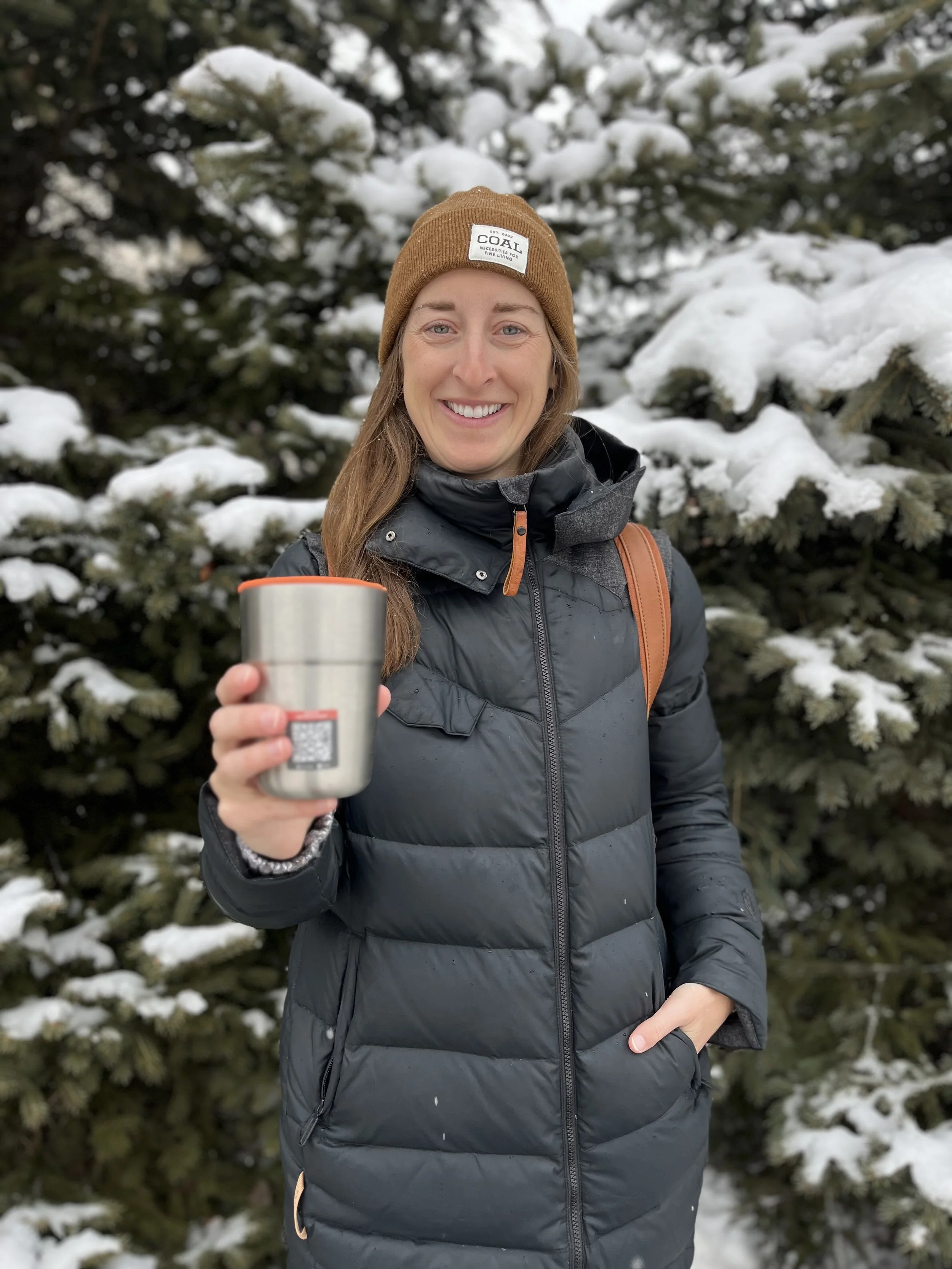
Banff’s Mayor, Cori, using a Banff Borrows reusable coffee cup!
The work also provided valuable learning about what it takes to move from individual reusable choices toward community-scale reuse systems, including participation from businesses, convenient return infrastructure, washing, communications and collaboration between partners.
Banff Borrows is a collaboration between the Town of Banff, Banff Lake Louise Tourism, Banff Lake Louise Hospitality Association, and the Biosphere Institute of the Bow Valley. Thank you to Alberta Ecotrust for supporting the Biosphere Institute’s ability to support this program. Click below to read more about the program:
“As someone who lives here and loves the Park, I’m so glad this project is happening. I get upset when I see single-use items blowing down Banff Avenue like tumbleweeds. Banff is such a beautiful place to live, and we all want to preserve it.”
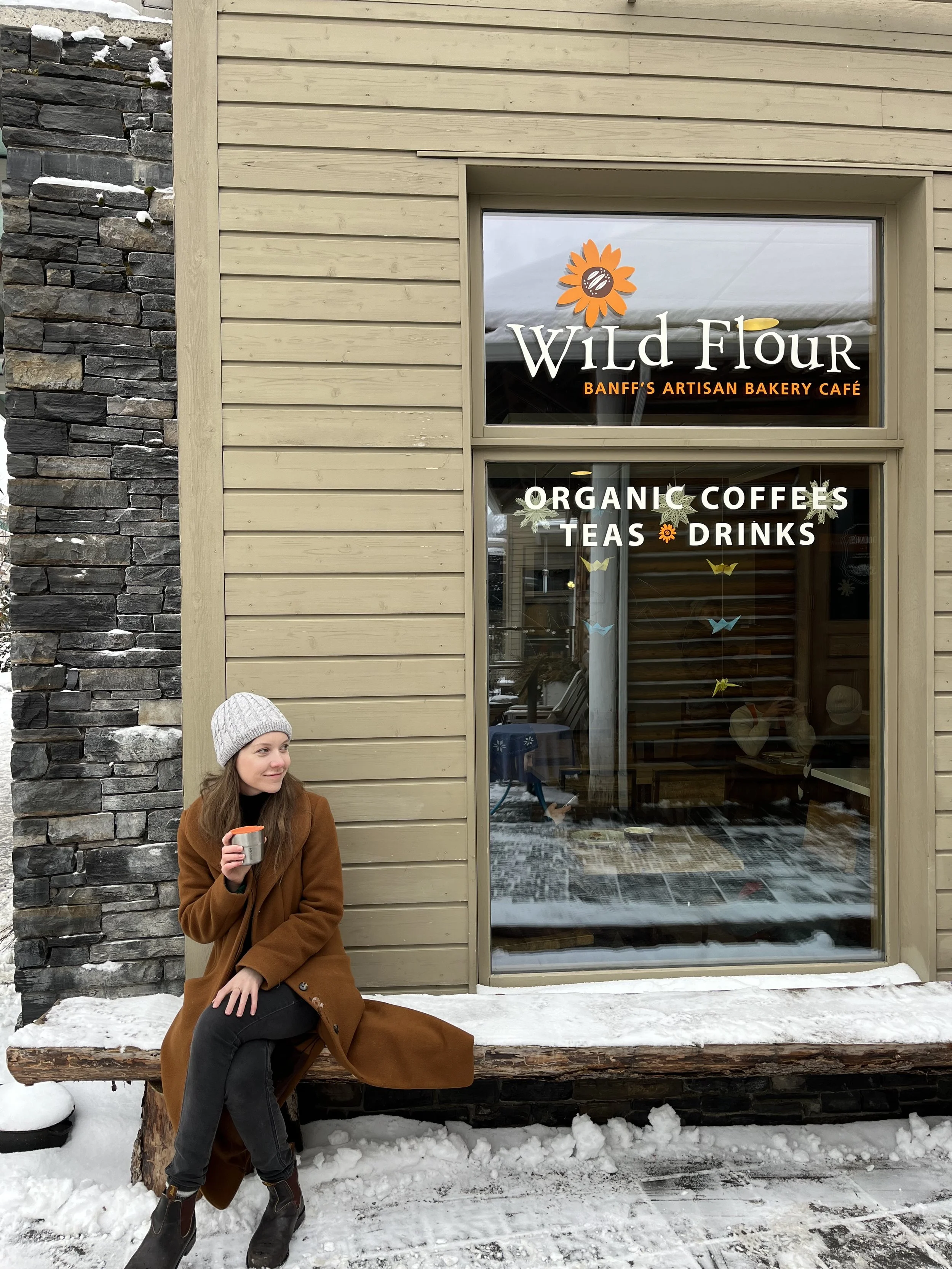
Making events more circular
Towards Zero Waste Events
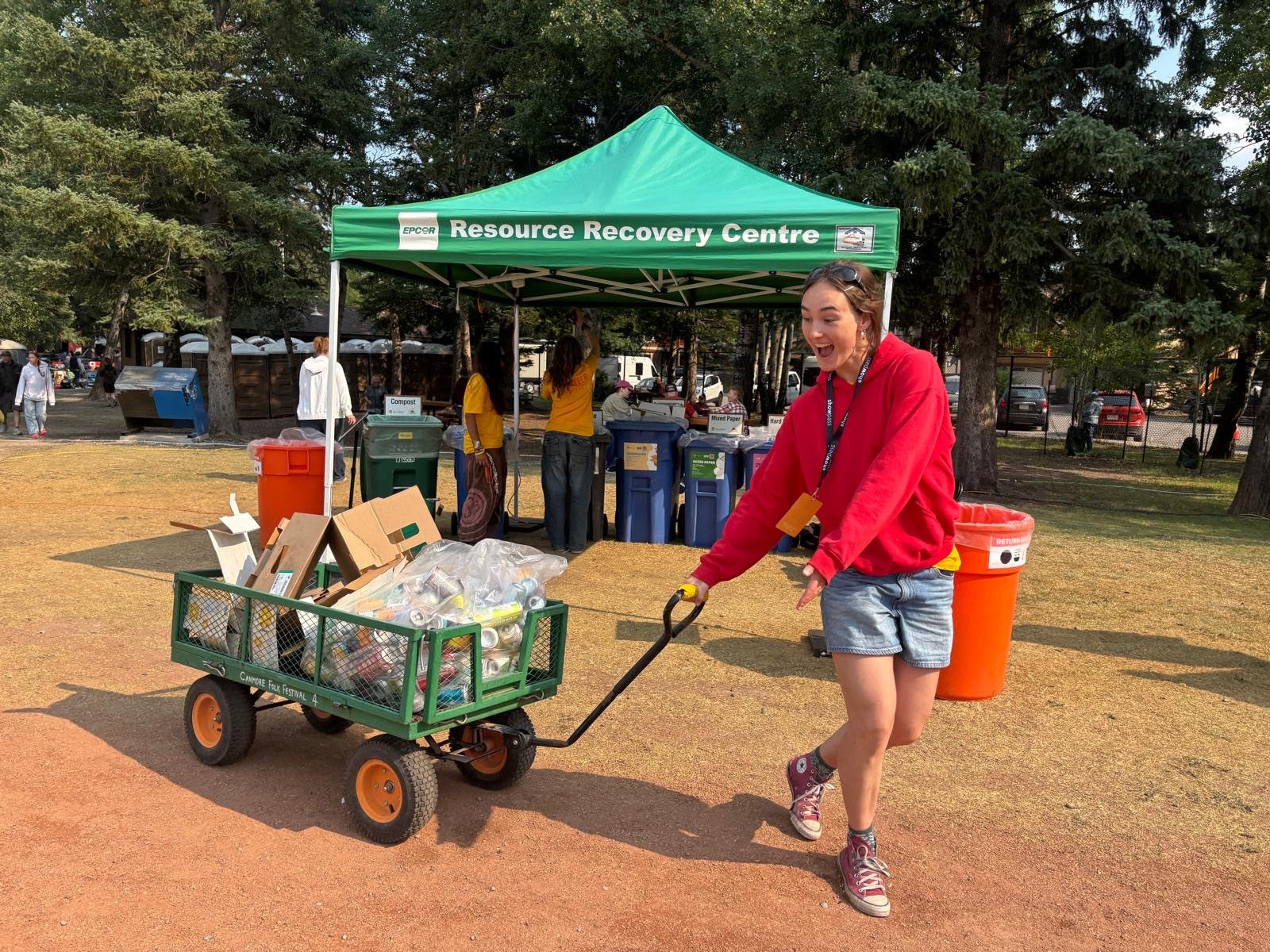
Festivals, races, markets and community gatherings bring thousands of people together in the Bow Valley every year. They can also generate a lot of waste in a very short period of time.
Through Towards Zero Waste Events, we worked with event organizers and partners to find practical ways to prevent waste before it was created and improve diversion of the waste that remained.
That meant looking beyond the garbage and recycling bins to ask questions such as:
Can we eliminate this item altogether? Can it be reusable? Can we purchase differently? Can materials be recovered? And how do we make the lower-waste option easy for attendees?
Over the project, this work supported waste reduction efforts at events and venues across the Bow Valley, including the Canmore Folk Music Festival.
From individual events to collective action, policy, infrastructure & resources
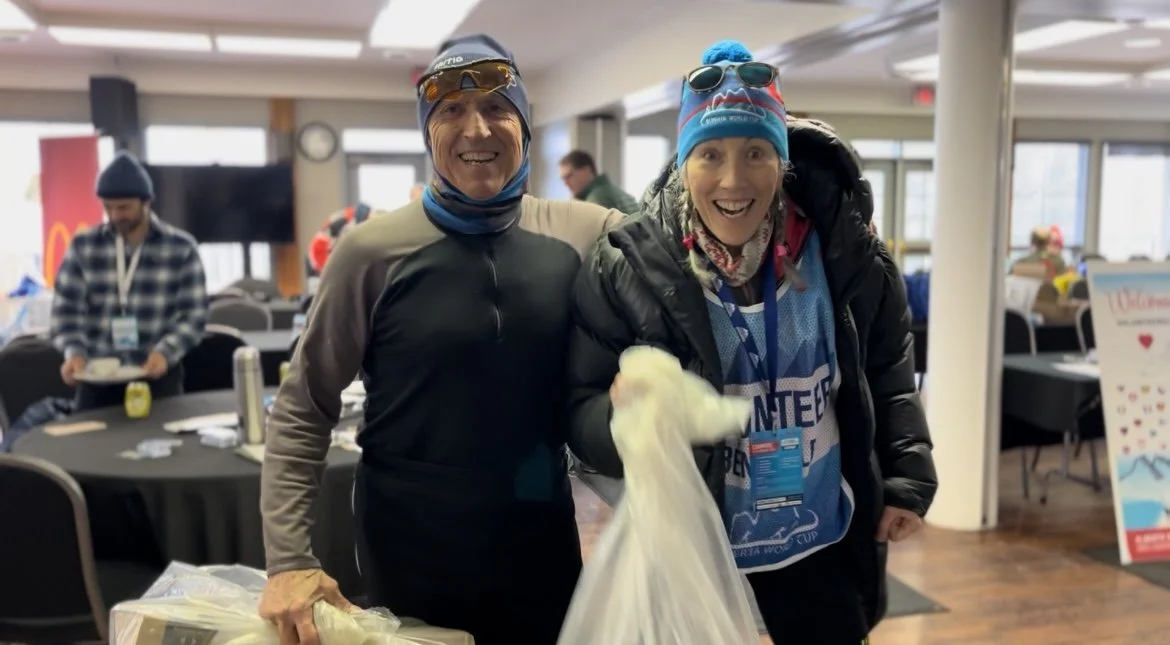
One important outcome was the creation and continuation of the Towards Zero Waste Events working group, bringing together organizations and partners to share challenges, resources, successes and solutions.
Instead of every event figuring out waste reduction independently, this creates an opportunity to learn together and build better systems across the region.
In order to better inform the toolkit below, we conducted interviews with local event organizers to gain their perspectives and insights. Nicolas, an MBA student at the Haskayne School of Business, conducted interviews with five local event organizers to better understand the challenges, barriers, and opportunities they face when working toward zero waste events. The insights gathered from these conversations shaped practical strategies and recommendations in our toolkit, making it easier for organizers to plan eco-friendly events.
Making circular choices easier
Connecting our community with the resources that already exist
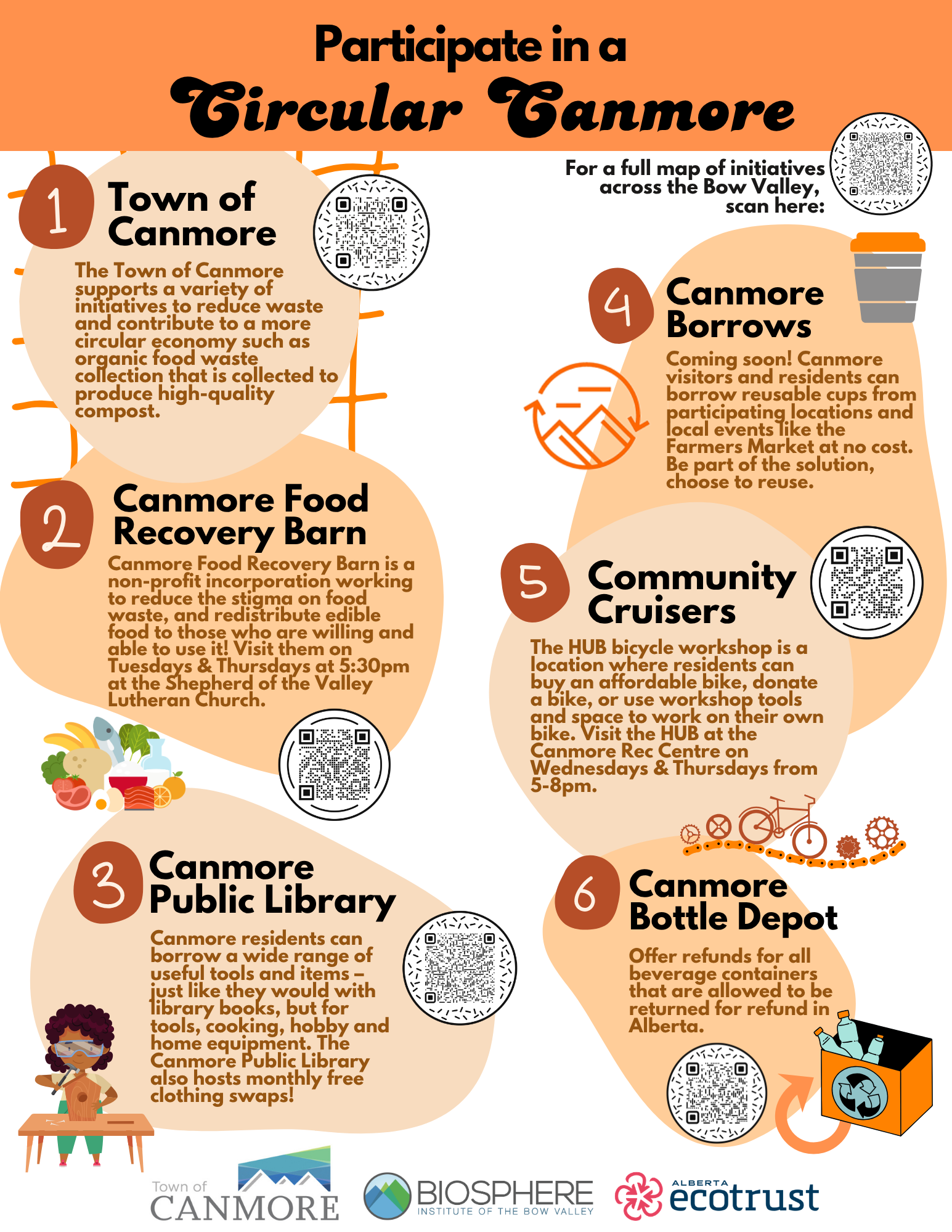
One thing became clear throughout the project: the Bow Valley already has many of the ingredients of a circular economy.
Repair services exist. Things can be borrowed. Items can be donated or reused. Organizations are reducing waste. But knowing where to go and what options exist can be a barrier in itself.
That's why another part of the project focused on making circular economy information easier to find and understand.
Through our Circular Economy Roadmap, infographics, online resources and community education, we helped connect residents and organizations with practical opportunities to:
Repair. Borrow. Share. Reuse. Donate. Reduce waste.
These resources will continue to live beyond the grant, helping people find alternatives to throwing something away or buying something new.
Building a circular economy together
Perhaps the most important outcome of Driving the Bow Valley's Circular Economy isn't any single number.
It's the connections between them, the cultural shifts, and broader systemic infrastructure that support these initiatives.
A Library of Things makes sharing easier.
A repair fair builds skills and keeps belongings in use.
A reusable cup system prevents waste from being created.
A zero-waste event demonstrates what's possible to thousands of attendees.
A roadmap helps someone discover an option they didn't know existed.
And behind each of those initiatives are relationships between municipalities, libraries, businesses, community organizations, event organizers, volunteers and residents.
Throughout the project, we worked to strengthen those relationships, share what we were learning and build capacity for circular economy work across the Bow Valley. We also shared our experiences more broadly, including through the Recycling Council of Alberta conference, contributing local lessons to a growing conversation about circular economies across Alberta.
What began as a collection of individual initiatives increasingly became part of a bigger question:
What would it look like to build a truly circular Bow Valley?
What's next?
The grant may be ending, but the work isn't.
Many of the initiatives, partnerships and conversations developed through Driving the Bow Valley's Circular Economy are continuing and the lessons from the past two years are helping inform what comes next.
There is still plenty to do. But this project has demonstrated that the transition toward a circular economy doesn't happen through one program or organization.
It happens when a community starts changing the way it thinks about resources—from something we consume and discard to something we value, share and keep in circulation.
The work continues
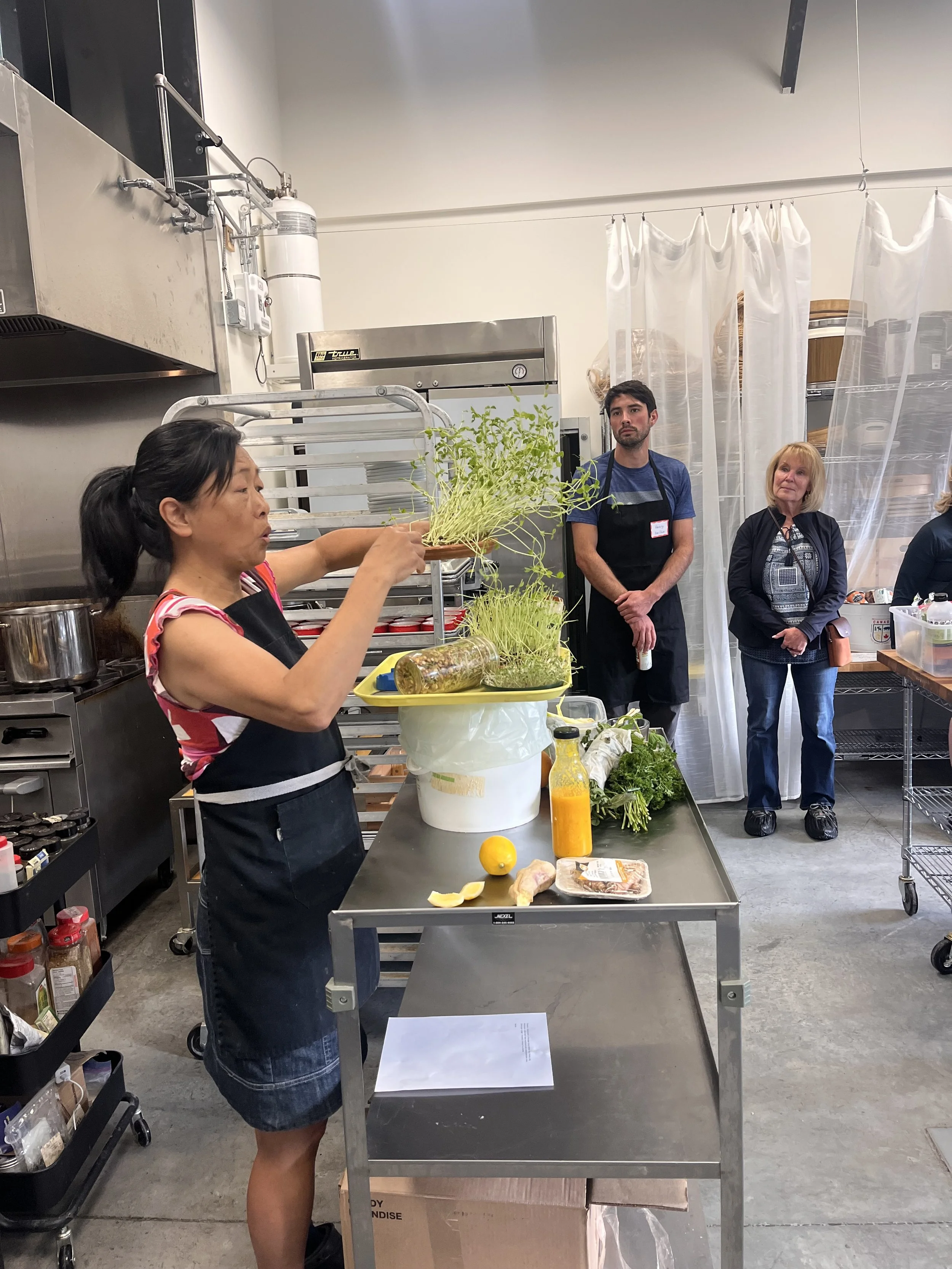
This project has helped spark and inform new circular economy initiatives across the Bow Valley from the ReUse Bow Valley Hub & System and Community Microgrants supporting grassroots circular economy ideas, to workshops focused on reducing food waste and making more sustainable choices at home.
Borrow it. Share it. Repair it. Reuse it.
Keep it circulating.
Driving the Bow Valley's Circular Economy was led by the Biosphere Institute of the Bow Valley with support from the Alberta Ecotrust Foundation's Environmental Impact Grant. Thank you to the Alberta Ecotrust Foundation for providing an Environmental Impact Grant that made all of this work possible.