

Did you know that WildSmart is a program of the Biosphere Institute, a local charity? Our work relies entirely on donations and sponsors. If you would like to support our community-based efforts to promote human-wildlife coexistence, please donate now!
BEAR ACTIVITY UPDATE (Oct.8, 2026)
(Banff National Park East Gate to Bow Valley Provincial Park)
This past week there has been a decline in bear sightings so some of the warnings that were in place on Parks lands have been removed, and after this weekend, many of the Alberta Parks campgrounds will be closed for the winter season. However, people should be not be getting complacent as bears continue to be out on the landscape on a constant search for food to fatten up for their winter hibernation. With the upcoming long weekend (and depending on the weather…as we might get snow), the trails and day use areas could be busy with visitors. It’s important that everyone remains vigilant and mentally prepared for possible encounters with bears and other wildlife, all of which are still active in the Bow Valley and K-Country!
If there are bears feeding or walking along trails, give them their space (at least 100m), back away, leave the area, don't try and sneak past them and don’t expect bears to move off a food source for you. Bears can be very protective of their food and may exert their dominance if you get too close. Trail users need to be prepared by carrying bear spray but also need to respect the bears and give them space to move around and feed undisturbed. IMPORTANT: Bears can and will be encountered on busy trails. If a bear is walking down the trail towards you (and if safe to do so), simply try moving off of the trail to let them pass. If the bear continues past, you were just in the way. If the bear turns to follow you, there is more going on and you should have your bear spray out and be ready to spray the bear.
Bears need a healthy fat layer before they go into their deep sleep; it helps them to stay warm and provides calories to survive the winter. With that in mind, bears will continue to actively search for food in the coming weeks to pack on those extra few pounds before heading into their dens for the winter. Those calories should not be coming from people and bears will be searching for easy food sources which leads to trouble if people leave attractants out and bears get into them. A reminder that day-use areas and campsites need to be kept clean, and wildlife attractants need to be properly secured. RELATED ARTICLE: Grizzly bears 'investigating' tents and gear force closure of two Banff National Park campgrounds.
Reminder to residents: REMOVE AND SECURE ATTRACTANTS to keep you and your neighbourhood safe! If you don't want a bear in your yard or to get it relocated or killed, make sure you don't provide it with a meal! Remove or secure ALL wildlife attractants such as fruit (on trees and on the ground), PUMPKINS, bird feeders, unsecured garbage, greasy bbq's and pet food - or you may face steep fines and be responsible for killing a bear! To find out more about the fines associated with allowing wildlife attractants such as fruit to accumulate on trees and on the ground, view and download the Community Standards Bylaw here.
Black bear accessing a Schubert chokecherry tree in Canmore in Oct.2025.
Elk continue to be seen and heard bugling along trails and in wide open fields such as school yards and playing fields around town, which means you may have to choose an alternate route while out for a walk/run/ride. Male elk are particularly protective of any female elk they are with, and there continue to be reports of large rutting bull elk showing aggression towards people getting too close trying to take pictures or trying to sneak past them on the trails. The best way to keep them at ease is to give plenty of space to ALL ELK by staying at least 100m away - which is 10 school bus lengths - never try to sneak past them and never get between a male elk and the female elk.
Remember: keep pets on a leash, carry bear spray in an easily accessible location, and if an elk charges, position a large object (e.g. car, large tree) between you and the elk or consider using your bear spray. Never approach elk up close as they are wild animals that can react unpredictably! Even if you are going for a leisurely walk in Canmore, you should be carrying bear spray and keeping your distance from all wildlife! INTERESTING ARTICLE: This US research study found elk populations in Colorado, Wyoming and Pennsylvania have distinct regional “dialects” or accents. It would be interesting to find out what kind of accent the elk of the Bow Valley have…

Photo by Amar Athwal.
Hunters need to be cautious as, due to the nature of their activity, they are intentionally being quiet on the landscape. They should always be bear aware and carry bear spray with them while out hunting! Bear spray can save the life of the hunter AND the bear(s).
VIEW CURRENT WARNINGS AND CLOSURES
Grizzly bear activity has closed two backcountry campgrounds near Lake Louise.
NO CAMPING - at Hidden Lake and Baker Lake Campgrounds in Banff National Park due to a grizzly bear that has entered campsites and investigated tents and gear. The campgrounds are closed to reduce risk to visitors and to the bear.
Please report any sightings of a bear, cougar, wolf or any aggressive wildlife in the Bow Valley or K-Country to Kananaskis Dispatch at 403-591-7755. In Banff, call Dispatch at 403.762.1470. They prefer to get the reports first hand from the people who see the wildlife!
SOME THINGS TO ‘BEAR’ IN MIND
For bears, fall is “last chance to eat a lot” season as they continue to roam about searching for every bit of remaining food, natural and otherwise. Days are getting shorter and nights are getting longer as the countdown to denning up continues. The combination of shorter days, longer nights and foraging bears also makes fall a prime time for people and bears to encounter each other out on the trails or on the roads. If your activities take you into the outdoors, click here for some fall tips for avoiding bear encounters! Are you prepared to encounter a bear on the trail? The following video is a great example of how to properly handle an encounter with a bear. It occurred close to Canmore on EEOR (East End Of Rundle) back in 2018.
Ever wonder what bears do in October? Learn all about it from our friends at BearWise south of the border. “October at a Glance: Hyperphagia is in full-swing. Bears may be awake and searching for food up to 20 hours a day. Many bears also look for den sites. Some pregnant females may den up by the end of the month. As days shorten, vehicle collisions rise.” Click here to read the full article about What bears do in October.
SLOW DOWN: Bears and other wildlife are often seen feeding and travelling on or near the road so motorists need to slow down when passing wildlife roadside, obey speed limits and be extra alert (especially at dawn and dusk) as the days are getting shorter and the number of darkness hours are increasing. Remember to always stay in your vehicle and give bears at least 100m of space at all times! Check out the Friends of Kananaskis Country’s Tips for Roadside Wildlife Viewing here.
Larch Viewing: Click here to read what the Friends of Kananaskis Country recommends! You can also click here for an extensive list of trails, none of which are at the Highwood Pass, where you can see Lyall’s Larches. All of these trails will be less busy than the Highwood Pass!
WILDLIFE AMBASSADOR WORDS OF WISDOM
Watching for Bear Signs: Kananaskis Country is home to a lot of animals, including bears. Recreating safely in bear country means more than just knowing what to do in a bear encounter. It’s also understanding signs that bears are around, so that maybe those encounters can be prevented.
Bears are big enough that they almost always leave evidence that they’ve been present – if you know what to look for. Keeping your eyes peeled for this evidence can help you be aware if bears are present, and will decrease the risk that you’ll accidentally run into a bear. Every month we’re going to learn about some of the signs bears leave in the forest, and in this edition of Watching for Bear Signs by Derek Ryder, Volunteer Wildlife Ambassador & IGA Interpretive Guide, it is Digs.
It’s larch season, and that means throngs of people are going to head up to the high alpine. That’s exactly where grizzlies are at this time of year, too. There are a couple of things that grizzlies chow down on up in the alpine before they go to bed, and almost all of them are dug up. Accordingly, something to keep your eye out for on your larch explorations are Grizzly Bear digs.
Many of the plants bears eat grow in patches. If bears are digging for roots or bulbs, such as those of the Glacier Lily, you’re going to find a large area that looks like it’s been attacked by a rototiller. When I say “large”, it could be as much as 15 m by 15 m, so it’s really hard to miss. The first photo was taken in the Highwood Pass area. Note that, whatever was being dug up, it is above treeline and right near the start of scree. This kind of mess is very common in these locations. Click here to read Derek’s full article about Digs!
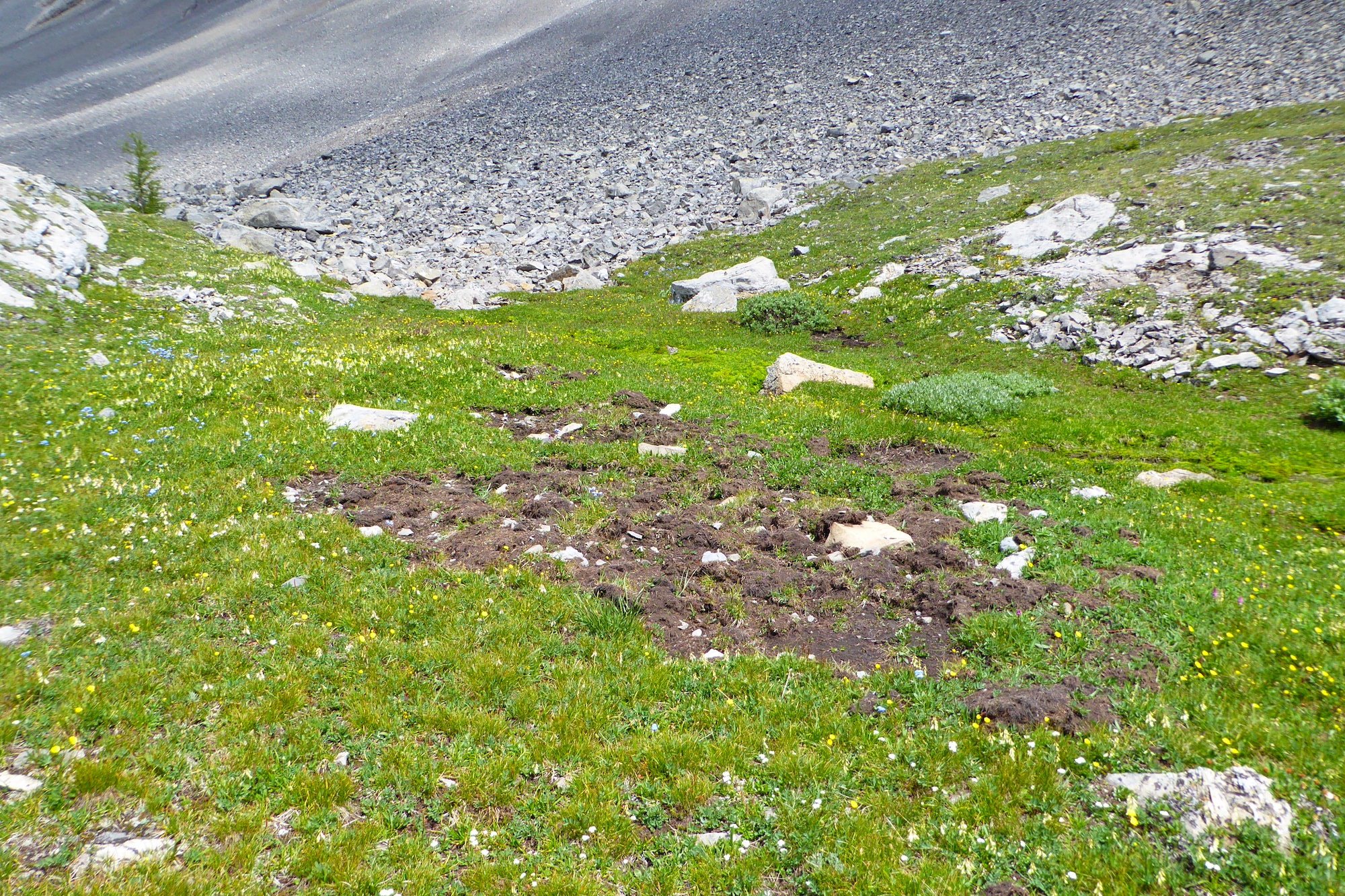
Click on this image of a dig to read the full article!
REST IN PEACE JUDY!
It is with a heavy heart that we share with you that Judy Cairns, one of our amazing Wildlife Ambassadors, passed away last week. On behalf of the Biosphere Institute, her fellow Wildlife Ambassadors, and all the wildlife that call the Bow Valley and K-Country home - we want to say THANK YOU JUDY for all your passion and dedication in helping keep people and wildlife safe since 2018 - and WE WILL MISS YOU!
No matter where she was, whether it be a trailhead, an event, at the hospital, even in the operating room, Judy took advantage of teachable moments to talk to people about wildlife safety, how to use bear spray and how to better coexist with wildlife! She was a true Wildlife Ambassador until the very end! Judy was a Rockstar and our love and hugs go out to Judy’s family and friends.
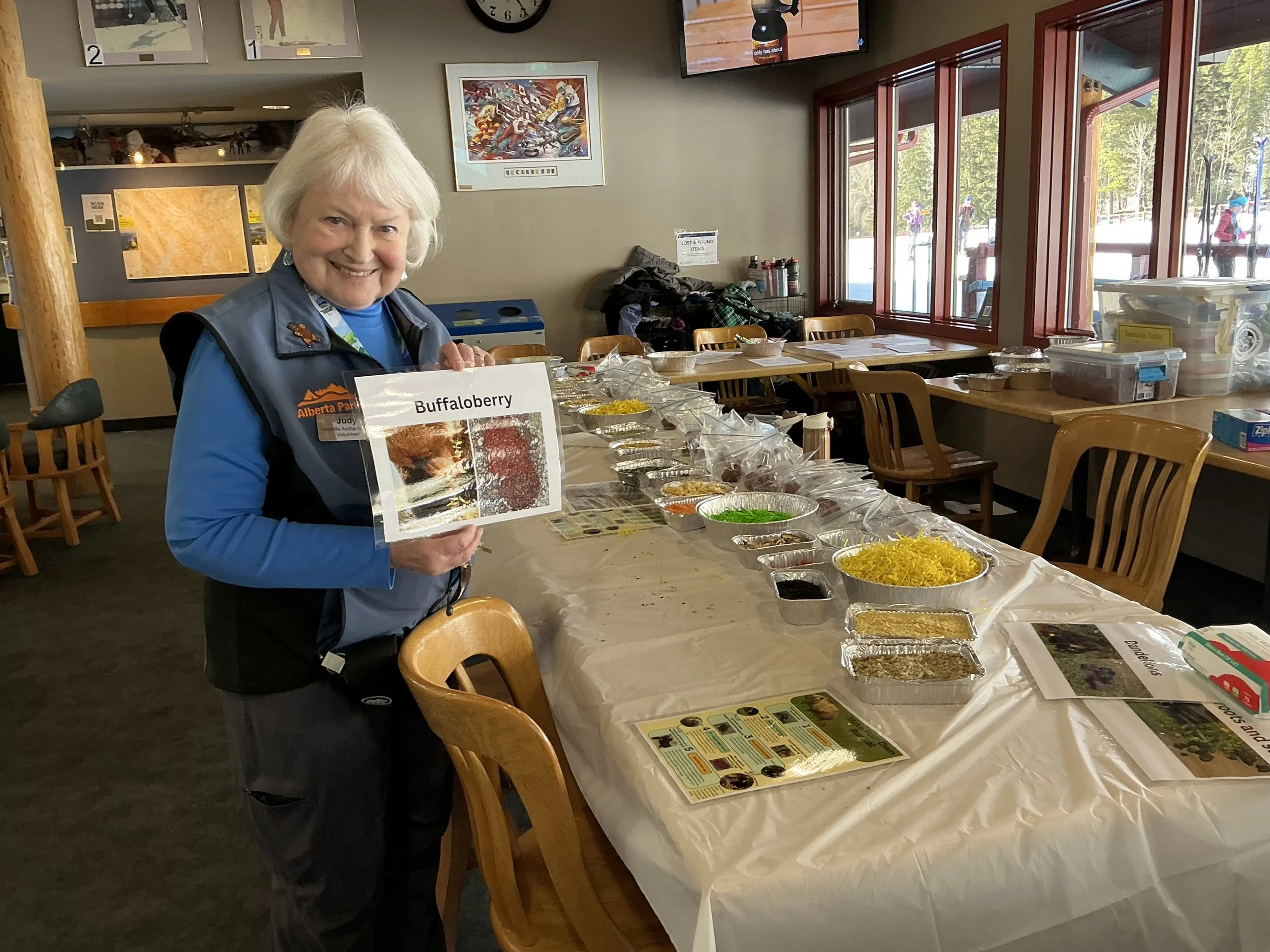
Judy at Bear Day ready to help teach kids how to “make your own bear scat” using common items that bears typically eat.
FOOD FOR THOUGHT?
Bears are so focused on food this time of year that they are more likely to take risks, like coming into town and backyards to feed in fruit trees. Letting a bear access these higher calorie items such as crabapples, cherries and mountain ash won't do it any favours. Once they try these food sources they can learn that towns provide easy meals, meaning they're more likely to stick around and come back. This can become a public safety issue as bears can get protective of food sources, leading to conflicts between bears and humans, with bears normally paying the price by getting relocated or killed.
If there are any houses with fruit trees in your neighbourhood, we urge you to start having friendly conversations (not confrontations) with your neighbours about the importance of removing fruit to keep people and bears safe in the Bow Valley. NOTE: Just because you have never had a bear in your fruit tree before, it does not mean it can’t or won’t happen. Even ornamental fruit trees (that typically do not attract bears) can and will attract bears.
Need help removing the fruit? WildSmart has pruning shears, extendable pole saw pruners and fruit pickers that can be borrowed (free of charge) to assist Bow Valley residents in removing that hard to reach fruit. Please send an email to resource@biosphereinstitute.org to make arrangements to borrow the fruit removal equipment.
Don’t know where to put the picked fruit? Remove all fruit from branches. Picked fruit can be put in the residential food waste bins around town. Leaves, branches and clippings can be put in the appropriate bins at the 115 Boulder Crescent Recycling Depot.
Get FREE money and apply for the Town of Canmore’s Fruit Tree Removal and Replacement Incentive: Picking fruit every year is a lot of work so the recommended long-term solution is to remove your fruit tree! There is still plenty of money remaining in the budget this year for the Town of Canmore’s Fruit Tree Removal and Replacement Incentive Program so we urge you to consider removing your fruit tree now while the funds are available! Get up to $500 per property for removing fruit trees. Condos or commercial properties that remove 5 or more trees may be eligible for up to $1,000. The same reimbursement amounts are available for fruit tree replacement. These programs are first-come first-served while funds are available. Click here for more details!
Halloween is around the corner and with that, pumpkins are starting to make an appearance. Please be proactive and remember to keep pumpkins inside of windows and NOT outside on your doorstep. Pumpkins are a wildlife attractant to all sorts of animals, not just bears. You might think that your pumpkin is safe on a balcony, far off the ground, but bears are very good climbers. Check out this video of an ingenious bear climbing up onto a balcony.


WILDLIFE IN THE NEWS
Off-leash dog rules broken by Banff National Park superintendent.
Hunters shot grizzly that charged them west of Edmonton and bear believed to still be alive.
6 bears killed by conservation officers or police on North Shore this season.
Bear with us: New research underway into Elk Island black bears.
Dash cam shows mother bear slamming into car to protect her cub in Japan.
Waste collection workers release bear from back of garbage truck in Alaska.
'Wreaking havoc" - Repeated cougar attacks on farm animals in B.C. community.
Canadian bear ousted from yard with a simple 'please' and 'thank you'.
This Japanese artisan turns bear-scarred trees into surfboards and skateboards.
Amid Bear Attacks, Japan's Massive Cull May Go Too Far.
Vancouver Island has one of the highest concentrations of cougars in the world.
AND NOW SOME PAWS-ITIVE NEWS
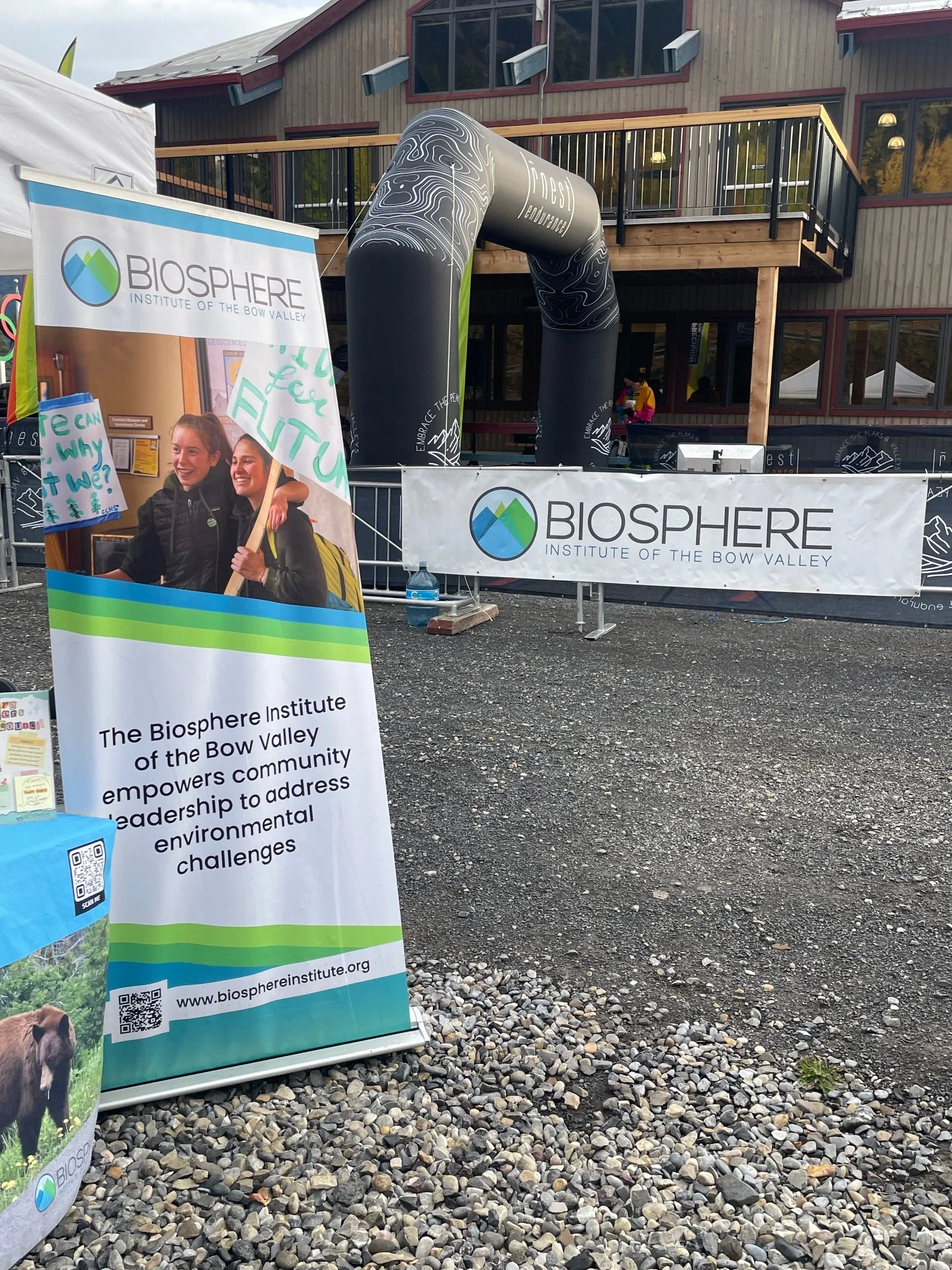
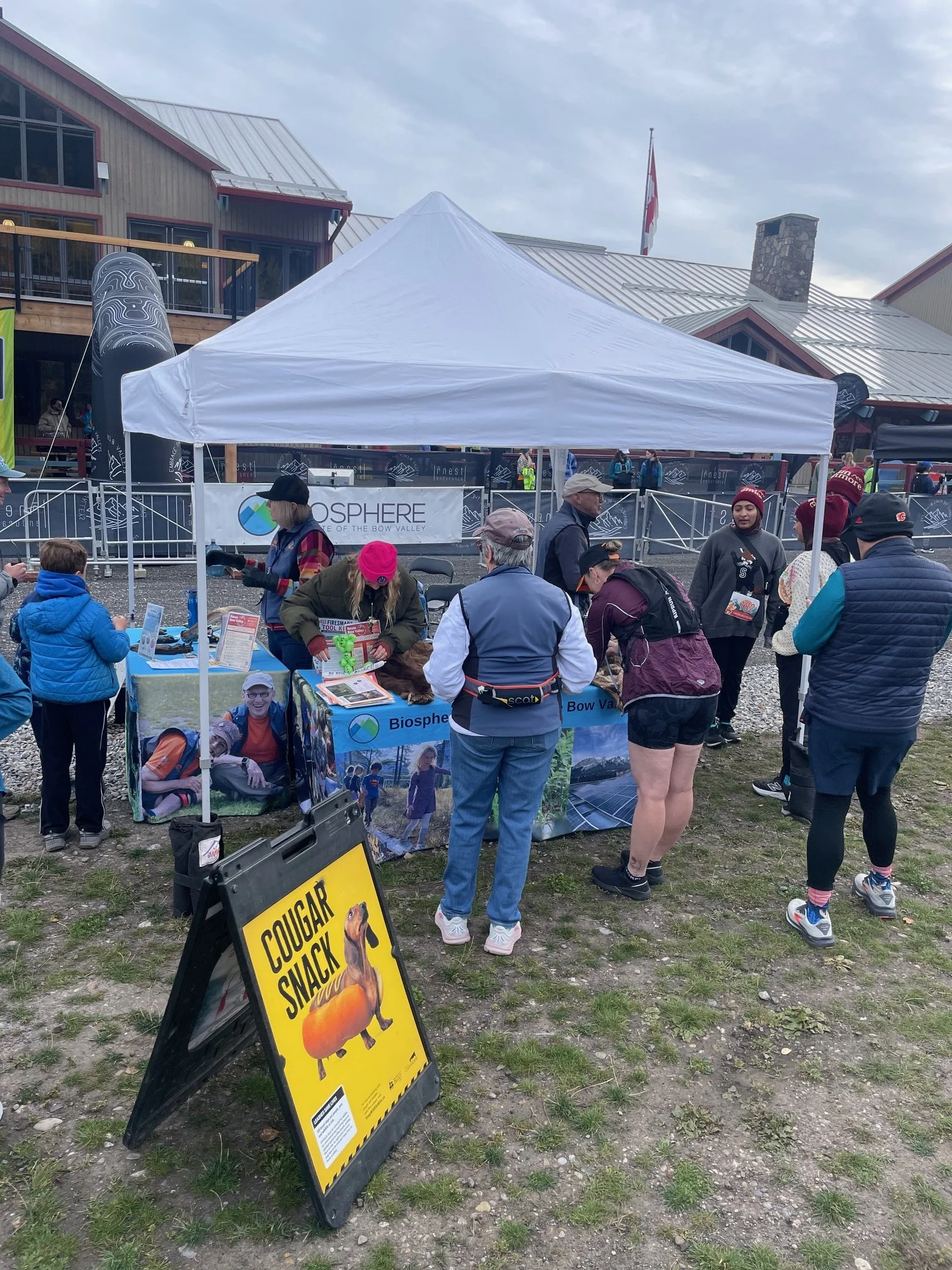
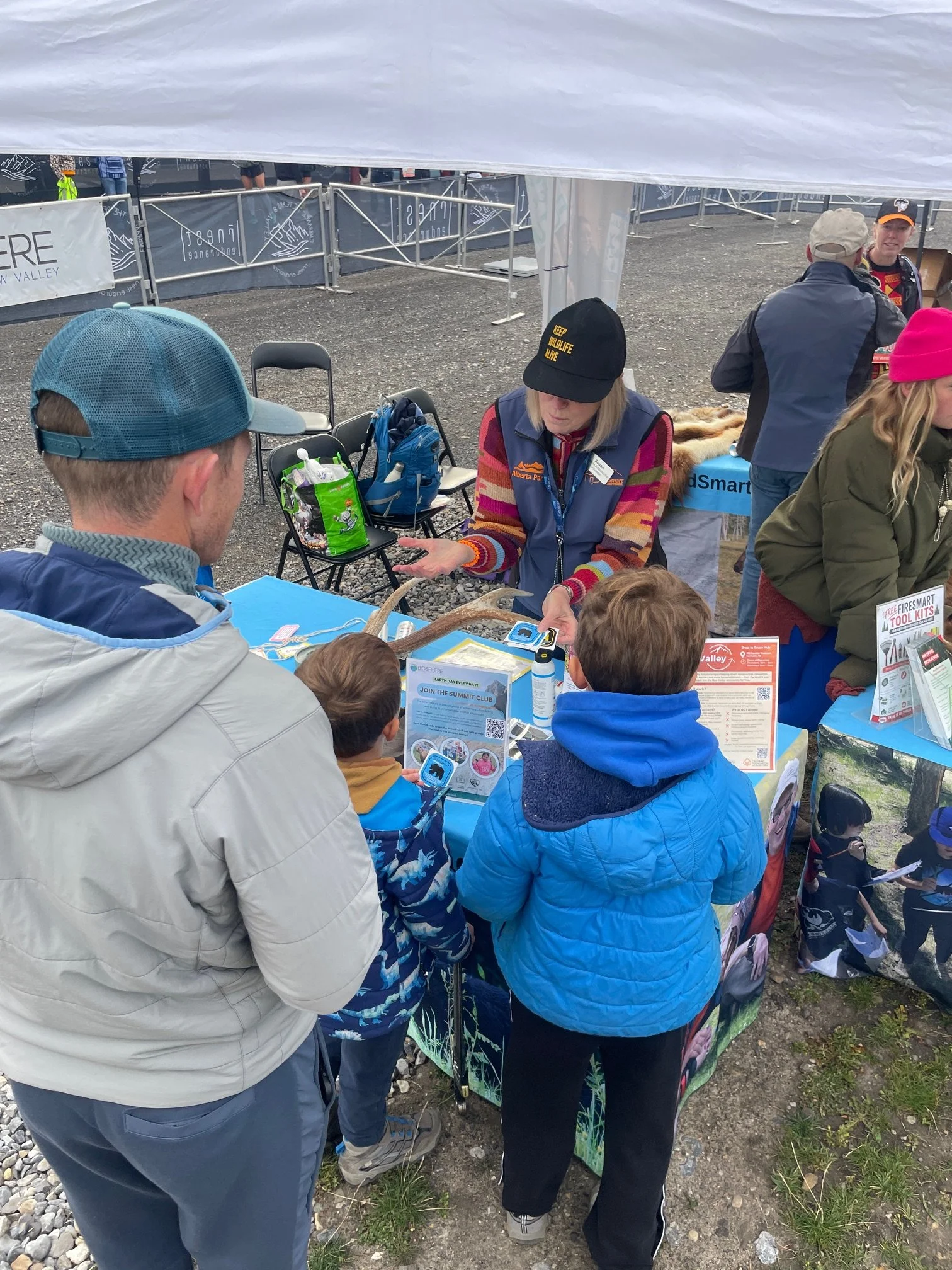
Last weekend we attended the Sweater Weather 10K & 5K Race at the Canmore Nordic Centre. The race had a great vibe and there were some amazing sweaters worn and delicious pies eaten. The Biosphere Institute and our Wildlife Ambassadors we there with our interactive booth and we had some awesome conversations with participants and visitors about managing attractants, giving wildlife space, responsible trail use, how to use bear spray and how we can all work together to improve human-wildlife coexistence in the Bow Valley and beyond!
Race organizers RNEST Endurance shared that $2 from every entry will be donated to us at the Biosphere Institute, and race participants were also given the ability to add an optional donation through the registration platform. We are delighted to announce that the Biosphere Institute received a total of $2,500 in donations to help support our programs and promote long-term environmental stewardship within our community! Many thanks to all the runners who donated and Devon and Jordan at RNEST Endurance for all their support! You can follow them on Instagram @rnestendurance and check out some more great photos of the event.
UPCOMING EVENTS
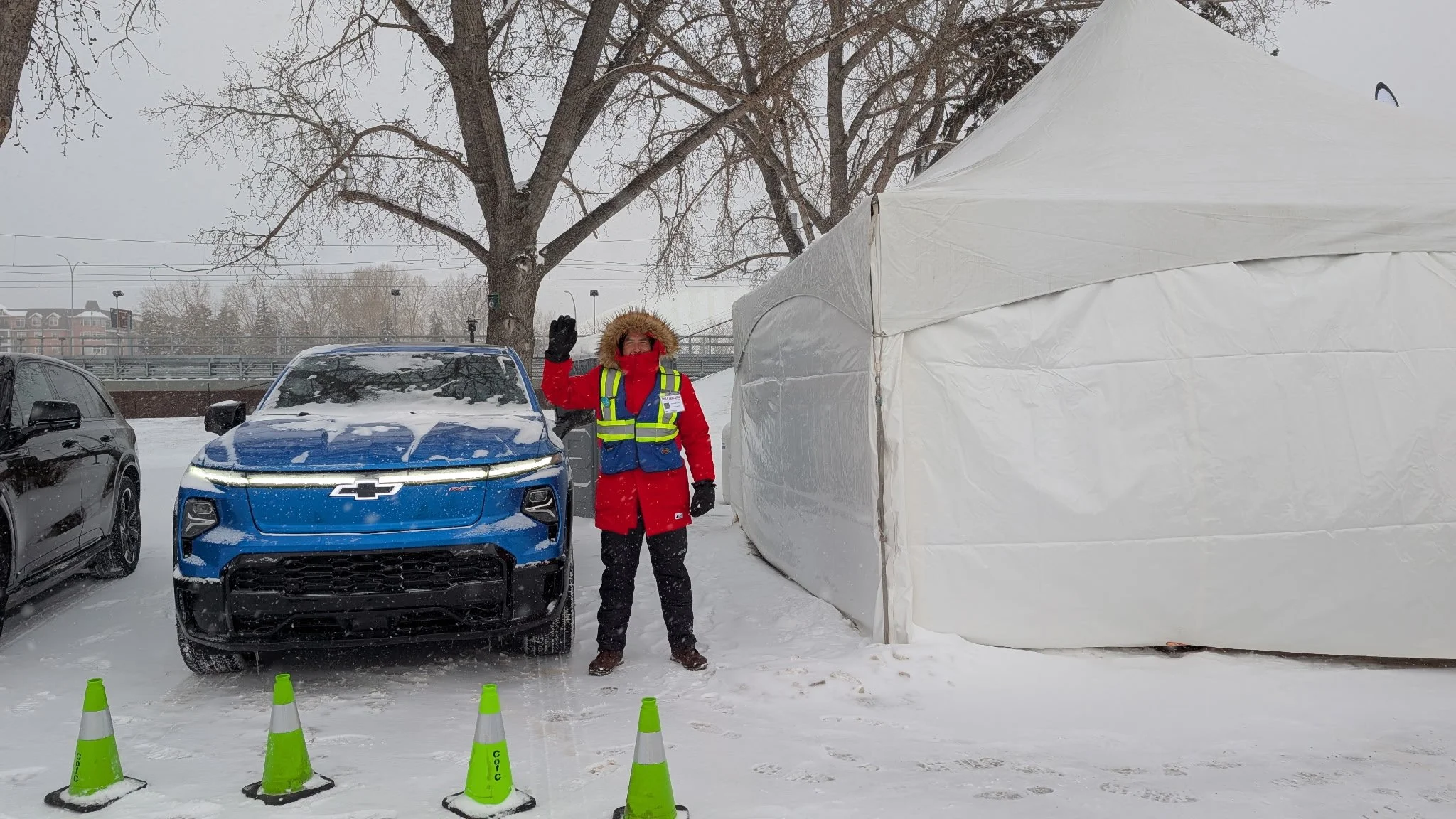
Oct.19 - Earth Talks | Plugging In: Understanding EV Charging in the Bow Valley
Curious about EV charging? Learn how it works, what your options are, and what to consider at home in the Bow Valley and on the go. Join the Biosphere Institute of the Bow Valley, the Canmore Public Library and Edmund Ong for an Earth Talk on the topic of electric vehicle charging. FREE to attend - Registration is required. 7-8pm at the Canmore Public Library.
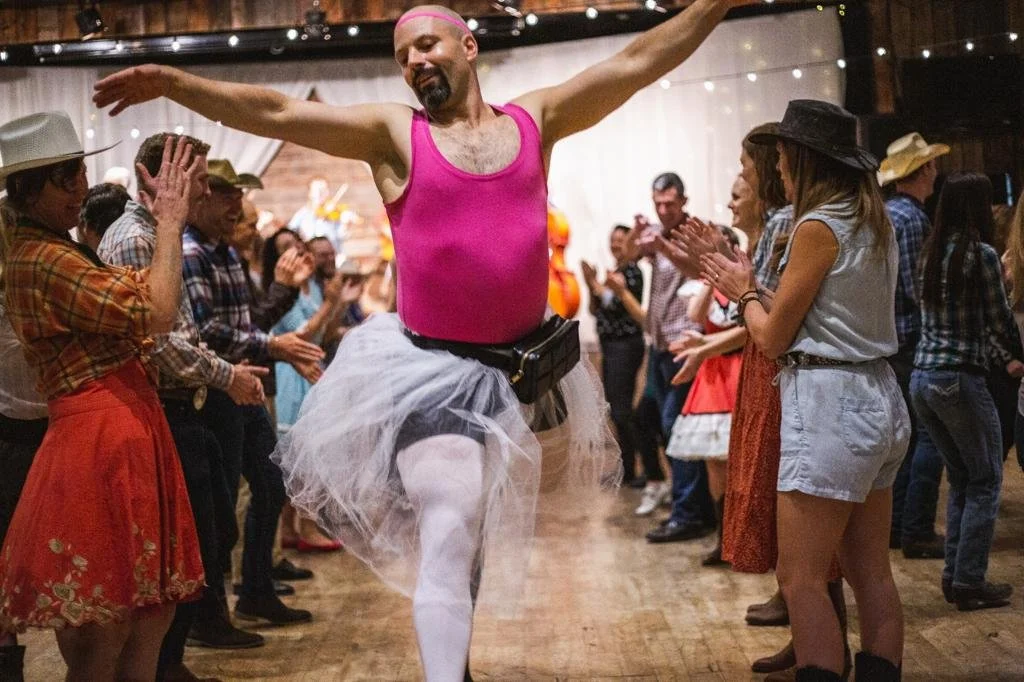
Nov.13, 2026 - Do-Si-Do with the Biosphere at our Fourth Annual Square Dance Community Fundraiser! Join us for a boot-stompin’ night of live music, square dancing, good company, light snacks, a silent auction, and plenty of laughs. No square dance experience needed—our fantastic caller will teach you every step!
When: Friday, November 13, 2026
Where: Canmore Creekside Hall (New Location!!!)
Tickets: Click here to buy your ticket now!
Silent auction, cash bar, dancing, 50/50 and light snacks! All proceeds support the Biosphere Institute and our work advancing climate action and human-wildlife coexistence throughout the Bow Valley. Bring your friends, bring your boots, and come dance for a good cause.
Nov.25-27 - 2026 Building for Sustainability Symposium! Join us in Canmore for three days of learning, connection, and practical conversations about the future of the built environment. This year’s Symposium explores the themes of Innovation | Collaboration | Small Changes, Big Impacts, bringing together builders, developers, architects, engineers, municipal leaders, sustainability professionals, and others working to create more resilient, efficient, and sustainable communities.
The program will feature engaging workshops and panel discussions, technical demonstrations, inspiring speakers, networking opportunities, and field trips showcasing real-world projects throughout the Bow Valley. Whether you work directly in the building industry or are interested in how our communities can build better, we invite you to be part of the conversation. Registration is open. Explore the program and reserve your spot NOW!

Please remember BEARS CAN BE ENCOUNTERED ANYWHERE, ANYTIME!
Report any sightings of a bear, cougar, wolf or any aggressive wildlife in Kananaskis Country or the Bow Valley to Kananaskis Dispatch at 403.591.7755