
Did you know that WildSmart is a program of the Biosphere Institute, a local charity? Our work relies entirely on donations and sponsors. If you would like to support our community-based efforts to promote human-wildlife coexistence, please donate now!
BEAR ACTIVITY UPDATE (Sep.24, 2026)
(Banff National Park East Gate to Bow Valley Provincial Park)
Bears continue to be seen in the Bow Valley and Kananaskis Country in search of food, and they will be searching for easy food sources. This leads to trouble if people leave attractants out and bears get into them. All trails users need to be mentally prepared to encounter a bear while out recreating and a reminder that day-use areas and campsites need to be kept clean, and wildlife attractants need to be properly secured. RELATED ARTICLE: WildSmart was on Global TV yesterday to talk about the Elk Rut and the importance of removing wildlife attractants from your yard.
A grizzly bear bluff charge has prompted the closure of popular Kananaskis hiking trails in Spray Valley Provincial Park. If there are bears feeding along trails, give them their space (at least 100m), back away, leave the area, don't try and sneak past them and don’t expect bears to move off a food source for you. Bears can be very protective of their food and may exert their dominance if you get too close. We need to do our part and and give them that peace and quiet to feed undisturbed. RELATED ARTICLE: Grizzly bear bluff charge prompts closure of popular Kananaskis trails.
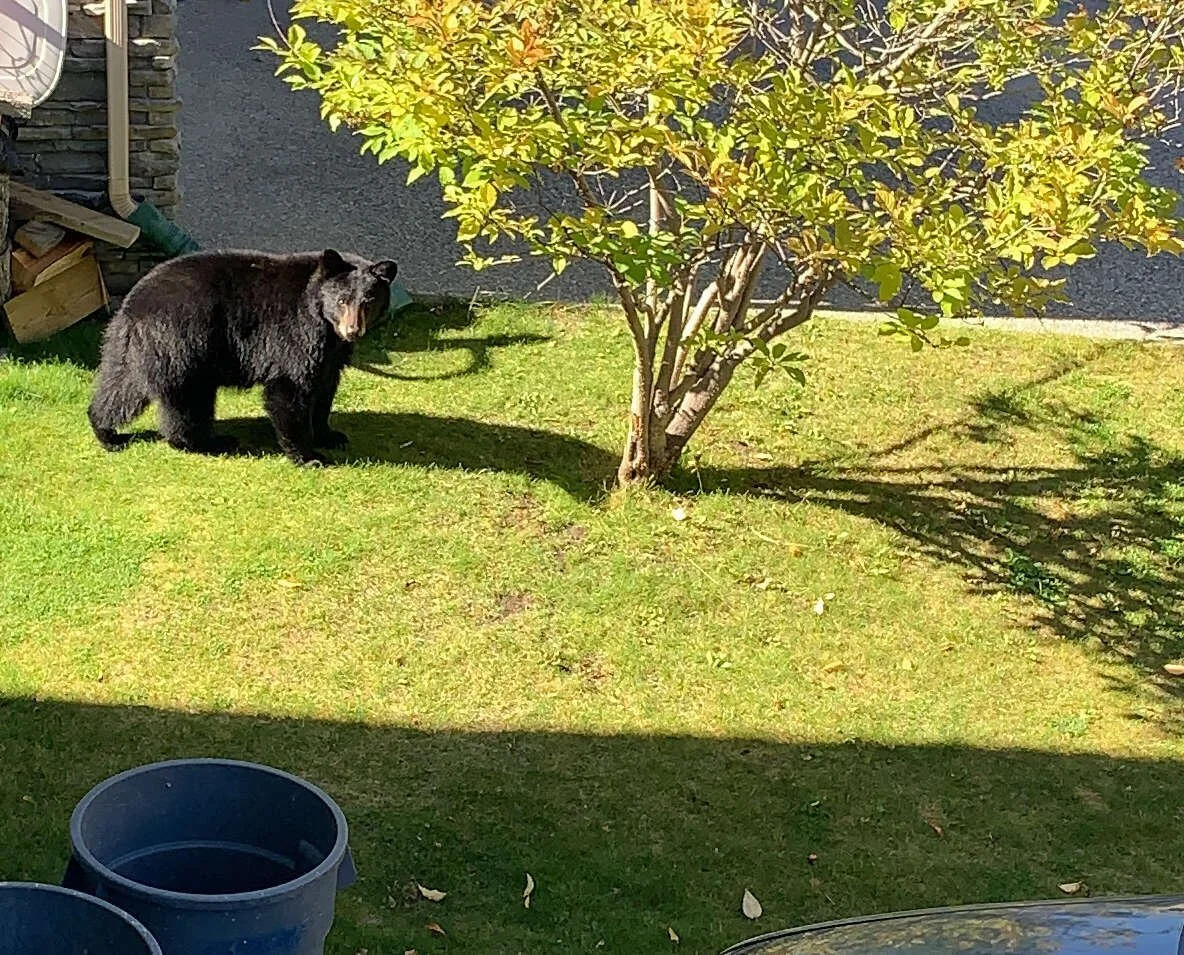
Bears will continue to be uber focused on food and they will be actively seeking food for the next six weeks to fatten up for their winter hibernation. As such, bears will be more likely to take risks, like coming into town and backyards to feed in fruit trees, but that food should not be coming from town and peoples’ yards! Letting a bear access these higher calorie items such as crabapples and mountain ash won't do the bear any favours. Once bears try these food sources they can learn that townsite provides easy meals, meaning they're more likely to stick around and come back. This repeated behaviour can become a public safety issue as bears can get protective of food sources, leading to conflicts between bears and humans, with bears normally paying the price by getting relocated or killed. RELATED ARTICLE: Bear takes a Saturday morning stroll through NW Calgary.
Bow Valley residents need to be aware of and concerned that attractants such as fruit trees pose a safety risk to people and the survival of bears! Coexisting with wildlife in the Bow Valley means removing fruit BEFORE it is ripe, and the best long-term solution is to remove the fruit tree. You can also help keep bears alive by securing and removing other wildlife attractants around your home such as taking down birdfeeders, storing pet food inside, cleaning your bbq and ensuring garbage is secured. Just because you have never had a bear in your fruit tree before, it does not mean it can’t or won’t happen. Even ornamental fruit trees (that typically do not attract bears) can and will attract bears. Canmore Residents: Remove your fruit trees or their fruit, or you may face steep fines and be responsible for killing a bear! To find out more about the fines associated with allowing wildlife attractants such as fruit to accumulate on trees and on the ground, view and download the Community Standards Bylaw here.
Archive photo of a black bear in a yard in Canmore. Photo by Lisanne Mol.
We are in the elk rutting season and people need to give elk lots of space! Male elk will act aggressive towards anything that comes too close, even trucks, as we pictured last week, and as shown in this article. RELATED ARTICLE: Massive bull elk charges, rams vehicle in Banff.
The best way to keep them at ease is to stay at least 100m away - which is ten school bus lengths - NEVER TRY TO SNEAK PAST THEM and never get between a male elk and the female elk. Never approach elk up close as they are wild animals that can react unpredictably!
Elk frequently hang out along trails and in wide open fields such as school yards and playing fields around town, which means you may have to choose an alternate route while out for a walk/run/ride. Parents: have a conversation with your children about giving wildlife lots of space and calmly leaving the area if they see elk or other wildlife. Remember: keep pets on a leash, carry bear spray in an easily accessible location, and if an elk charges, consider using your bear spray or position a large object (e.g. car, large tree) between you and the elk. Even if you are going for a leisurely walk in Canmore, you should be carrying bear spray and keeping your distance from all wildlife! Here is a great video about elk in Colorado with some footage of the elk rut.
Hunting Season is open and many techniques used by hunters make it more hazardous for them in bear country because they intentionally do not make noise and they rarely travel in groups. Hunters need to make a compromise between hunting success and safety in bear country – that means always carrying bear spray in an easily accessible location and knowing how to use it. Bear spray can save the life of the hunter AND the bear(s).
VIEW CURRENT WARNINGS AND CLOSURES
Cougar Warning - Meadow/Loggers Loop Area in the Sheep River Valley due to a carcass that was located within the trail network.
Bear Closure - Smutwood Peak, Tryst Lake and Commonwealth Peak Area due to a grizzly bear bluff charge.
Please report any sightings of a bear, cougar, wolf or any aggressive wildlife in the Bow Valley or K-Country to Kananaskis Dispatch at 403-591-7755. In Banff, call Dispatch at 403.762.1470. They prefer to get the reports first hand from the people who see the wildlife!
SOME THINGS TO ‘BEAR’ IN MIND
Ever wonder what bears do in September? Learn all about it from our friends at BearWise south of the border. “September at a Glance: Bears enter hyperphagia in September and may look for food up to 20 hours a day. Berries, nuts and acorns are important fall bear foods. Bears can gain two to three pounds a day. Even bears that don’t hibernate eat as if they’re going to. Moms-to-be look for a good birthing den and nursery. Click here to read the full article - What bears do in September.
Larch Viewing: This is the time of year to head up into the alpine looking for larches, but be aware that grizzly bears are up there at this time of year too! There are a couple of things that grizzlies chow down on up in the alpine before they go to bed, and almost all of them are dug up such as ground squirrels, roots and bulbs. So keep an eye out for grizzly bear digs on your larch explorations.
Here are a few responsible behaviours that larch seekers should remember while out on the trails:
Always stay on designated trails. There are literally thousands of people out on the trails on the weekends and the alpine environment up there is very fragile.
Wear the proper footwear so you’re not grabbing onto trees.
Make lots of noise to avoid surprising wildlife - it is not guaranteed and people should exercise caution in the backcountry, have good situational awareness and react appropriately to a bear’s behaviour.
Bikers and runners need to be making lots of noise as bears are solely focused on feeding. There have been several recent encounters with people getting into close quarters with bears as they are not making noise on the tails to alert bears they are coming and not giving the bears the opportunity to move off the trail.
Reminder that bears in the backcountry are in their natural habitat and people should be respectful by giving them space, particularly if they are seen in their natural habitat. Talk quietly, back away slowly and retreat. Whether it’s along trails in the valley bottoms or up in the alpine, bears need space to feed undisturbed, at least 100 metres (10 school bus lengths).
Carry bear spray in an easily accessible location (not in your backpack), know how to use it and be prepared to use it!
It is advised to keep pets on a leash or consider leaving them at home when hiking in alpine environments to avoid any potentially dangerous encounters with grizzly bears.
Leave No Trace and pack out what you pack in.

Some beautiful Larch trees in K-Country!
WILDLIFE AMBASSADOR WORDS OF WISDOM
Living and recreating safely in bear country means understanding many things, from signs that bears are around, to what to do in a bear encounter. As we wander in the wilderness (or even in town sites) we are travelling in a bear’s home: their living areas, dining areas, and even their bathrooms. Recognizing the food sources that bears are currently eating can help raise your awareness of the possibility that bears are around where you are at any given moment. Every month we’re going to look at what bears are eating right now, and for the next few weeks, and in this edition of What are the Bears eating today? by Derek Ryder, Volunteer Wildlife Ambassador & IGA Interpretive Guide, it is Cow Parsnip.
At this time of year, as berry season fades in the valleys and frost kills the berry plants, most Grizzlies are now up in the alpine. Now that they’re up there, the first and easiest plant they’ll find to eat is Cow Parsnip with their tall, distinctive white flowers. Remember, bears hunt with their noses and Cow Parsnip flowers… stink. Find a marshy, wet spot, or creek or river course anywhere in K-Country, and you’ll find Cow Parsnip. You can’t miss it by late September; it has grown to 6’ tall before deep freezes (which we have not had yet) kill it off. And best for bears: the roots are still edible after it’s dead. Grizzlies eat Cow Parsnip in both spring and fall shoulder seasons. All parts of the Cow Parsnip are edible for bears. Click here to read Derek’s full article about Cow Parnsip!

Click on this image of Cow Parsnip to read the article!
During this busy summer season, there have been many bear jams, which puts unnecessary stress on the animals and causes public safety concerns. Motorists should obey posted speed limits and slow down near roadside wildlife - but don’t stop and cause (or be part of) a bear jam on the highway. Keep moving in order to give bears the space they need to feed undisturbed and never get out of your vehicle! The Friends of Kananaskis Country have some great Tips for Roadside Wildlife Viewing for motorists and cyclists.
Don’t stop for roadside bears! Visiting the Bow Valley and Kananaskis Country? You might find black bears or grizzly bears by the side of the road. Wildlife Ambassador Derek is back with Part 1 of a 2 part series: the things you should DO, and the things you should NOT do with roadside bears.
WEEKLY WILDLIFE AMBASSADOR WHEREABOUTS
In case you have not seen them yet, our amazing Volunteer Wildlife Ambassadors have been heading out onto trails and trailheads! You can find them talking to people about responsible trail use and staying safe while recreating in bear country. Note: their locations may change at the last minute.
September 26 - Canmore Engine Bridge
September 28 - New Banff Sign at the Banff Train Station
FOOD FOR THOUGHT?
As winter draws near, it is YOUR responsibility to make sure that bears do not have a reason to linger in your yard, resulting in bears being relocated or killed. If there are any houses with fruit trees in your neighbourhood, we urge you to start having friendly conversations (not confrontations) with your neighbours about the importance of removing fruit to keep people and bears safe in the Bow Valley. RELATED ARTICLE: Editorial: Fruit trees, shrubs removal in Canmore a win for wildlife, community.
Need help removing the fruit? WildSmart has pruning shears, extendable pole saw pruners and fruit pickers that can be borrowed (free of charge) to assist Bow Valley residents in removing that hard to reach fruit. Please send an email to resource@biosphereinstitute.org to make arrangements to borrow the fruit removal equipment.
Don’t know where to put the picked fruit? Remove all fruit from branches. Picked fruit can be put in the residential food waste bins around town. Leaves, branches and clippings can be put in the appropriate bins at the 115 Boulder Crescent Recycling Depot. Please note that they do not accept branches with fruit as they attract wildlife, and the Town of Canmore is not is not able to dispose of the bins at the Boulder Crescent Depot when there are berries and fruit in the bins, as the landfill will not accept them!
Apply for the Town of Canmore’s Fruit Tree Removal Incentive: Picking fruit every year is a lot of work so the recommended long-term solution is to remove your fruit tree! There is still plenty of money remaining in the budget this year for the Town of Canmore’s Fruit Tree Removal and Replacement Incentive Program so we urge you to consider removing your fruit tree now while the funds are available! Get up to $500 per property for removing fruit trees. Condos or commercial properties that remove 5 or more trees may be eligible for up to $1,000. The same reimbursement amounts are available for fruit tree replacement. These programs are first-come first-served while funds are available. Click here for more details!

Black bear accessing a Schubert chokecherry tree in Canmore.
WILDLIFE IN THE NEWS
Could ‘The Boss’ be euthanized? Parks Canada addresses plans for Bear 122.
Third annual bison hunt underway in Banff National Park.
Elk involved in nearly two-thirds of aggressive encounters in national parks, study finds.
Why fire stations are shipping hoses to polar bears in Cochrane, Ont.
Bear encounters are rising across the United States. Here’s why.
Want the bare facts on bears in Edmonton? We're pretty lucky, says U of A prof.
Conservation officers kill bear in Hope, B.C., after encounter at pharmacy.
Fat Bear Week Is Here. Take Our Quiz to Find Out Which Fat Bear You Are.
Hungry bears are breaking into Colorado homes as drought dries up their food.
AND NOW SOME PAWS-ITIVE NEWS
Biosphere’s Ongoing Reflections on Truth & ReconciliACTION
As we approach the National Day for Truth and Reconciliation, the Biosphere team is reflecting on our ongoing journey of learning, unlearning, and taking reconciliACTION.
The impacts of colonialism are not only historical. They continue to shape relationships with land, water, and access to a healthy environment today. At the same time, Indigenous communities continue to lead vital work protecting lands, waters, wildlife, and climate (Learn more: Indigenous Resilience Report).
We recognize that reconciliation in environmental work means listening, building relationships, centering Indigenous leadership and knowledge, and continuing to change how we work. Over the past year, we’ve worked toward this through Indigenous-settler workshops, land-based learning, community events, and supporting Indigenous-led projects.
Reconciliation is not a checklist, nor does it begin and end on September 30. We are committed to continuing this journey and asking how we can better center Indigenous leadership, knowledge, relationships, and responsibilities to the land.
UPCOMING EVENTS
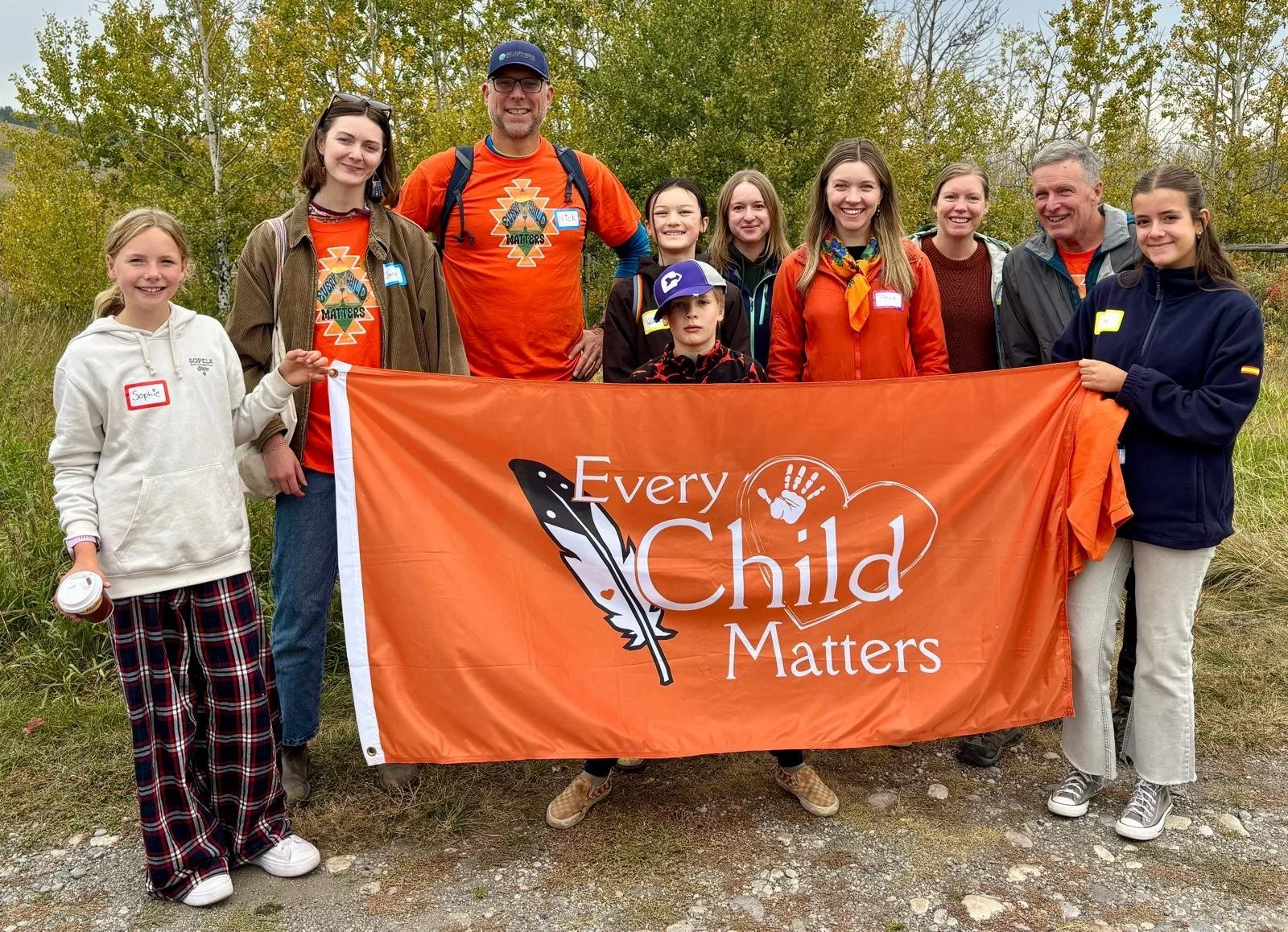
Sep.30 - Honouring National Day for Truth and Reconciliation in Canmore. The Town of Canmore and artsPlace welcome all to gather in recognition of the National Day for Truth and Reconciliation on September 30 at artsPlace from 12-9 pm. Click here for schedule and event details.
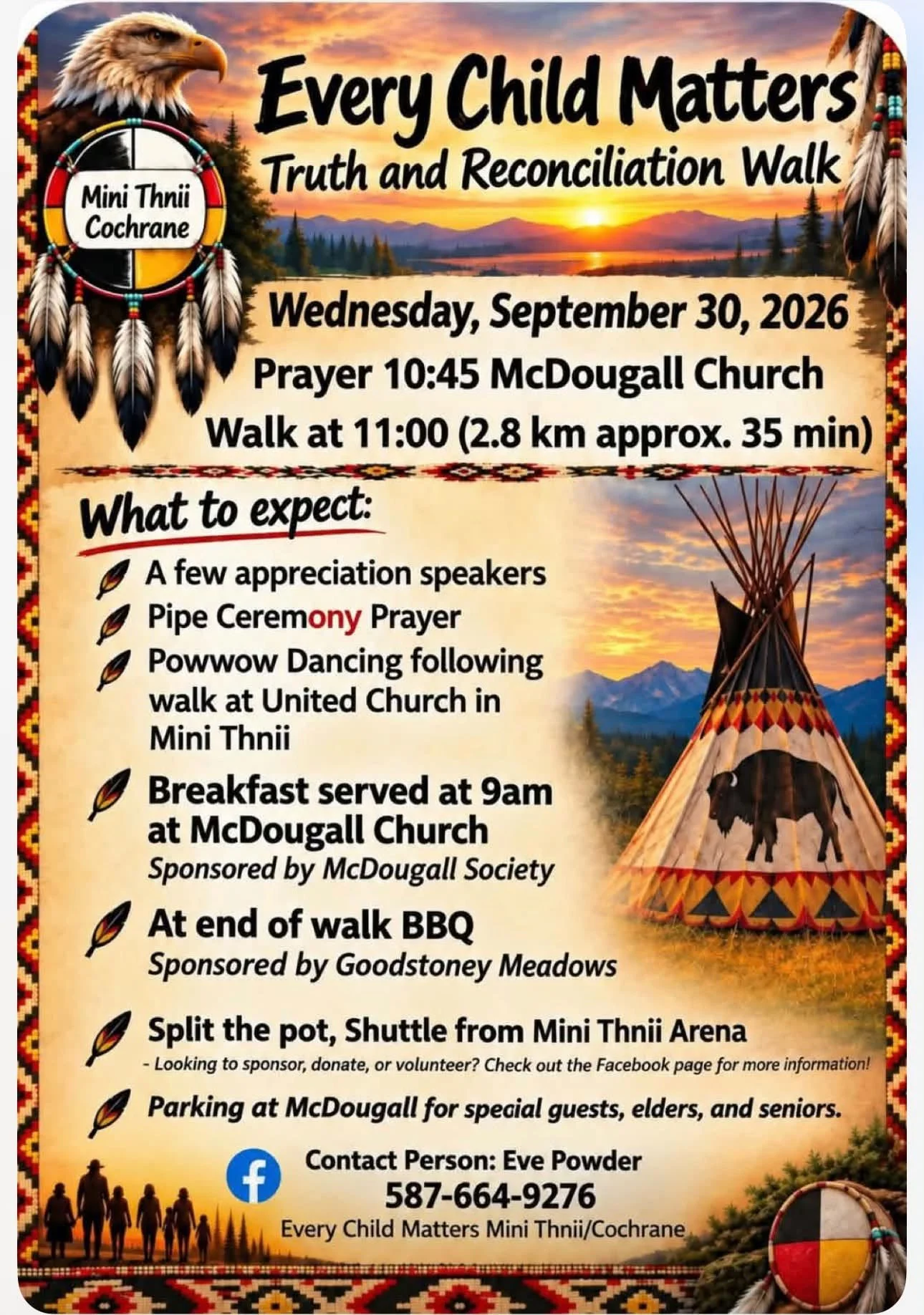
Sep.30 - Truth and Reconciliation Day Breakfast, Blessing and Walk at the McDougall Church in Mînî Thnî. The McDougall Stoney Mission Society is proud to once again host a breakfast and blessing at Historic Morleyville as they gather before the Truth & Reconciliation Day Walk to Mînî Thnî organized by the grass-roots group Every Child Matters Mînî Thnî and Cochrane. This is a family event and everyone is welcome!
Breakfast starting at 9am
Blessing and Pipe Ceremony at 10:30am
Please bring a food donation for the Îyârhe Nakoda Food Bank
Dress for the weather!
Every Child Matters Walk at 11am (2.8km – approx. 35 minutes). Program with appreciation speakers, Powwow Dancing and BBQ to follow at Morley Community Church.Shuttle from Mînî Thnî Arena parking lot to Historic Morleyville (check the ECM Mînî Thnî and Cochrane Facebook page for times)
Parking at Historic Morleyville for special guests, Elders and seniors
For more information on the Walk, contact Eve from Every Child Matters Mînî Thnî and Cochrane at 587-664-9276
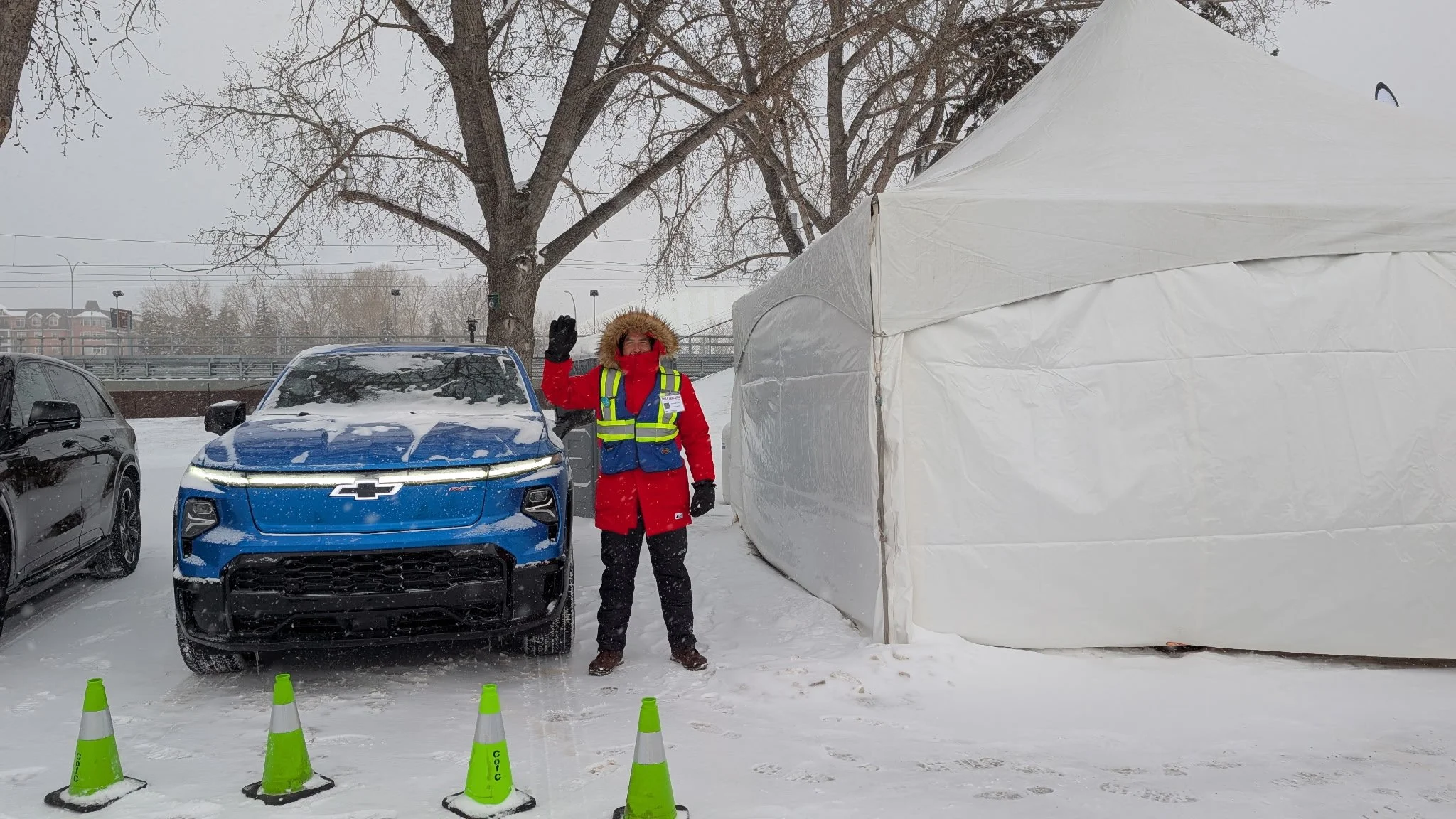
Oct.19 - Earth Talks | Plugging In: Understanding EV Charging in the Bow Valley
Curious about EV charging? Learn how it works, what your options are, and what to consider at home in the Bow Valley and on the go. Join the Biosphere Institute of the Bow Valley, the Canmore Public Library and Edmund Ong for an Earth Talk on the topic of electric vehicle charging. FREE to attend - Registration is required. 7-8pm at the Canmore Public Library.
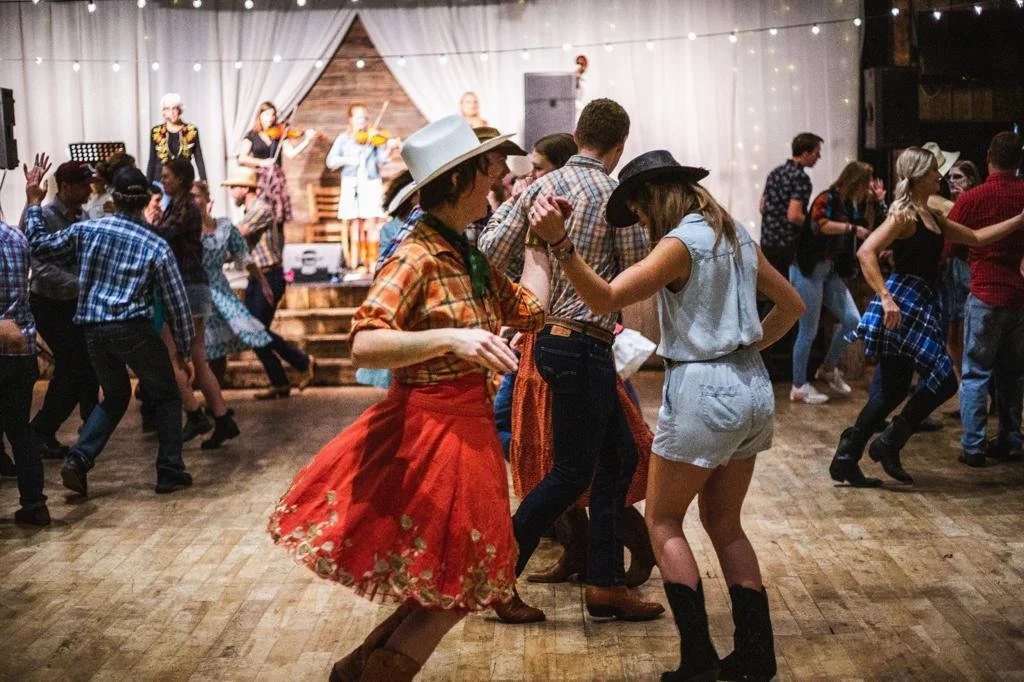
Nov.13, 2026 - Do-Si-Do with the Biosphere at our Fourth Annual Square Dance Community Fundraiser! Join us for a boot-stompin’ night of live music, square dancing, good company, light snacks, a silent auction, and plenty of laughs. No square dance experience needed—our fantastic caller will teach you every step!
When: Friday, November 13, 2026
Where: Canmore Creekside Hall (New Location!!!)
Early Bird tickets are available until September 25 — grab yours now and save!
Tickets: Click here to buy your ticket now!
Silent auction, cash bar, dancing, 50/50 and light snacks! All proceeds support the Biosphere Institute and our work advancing climate action and human-wildlife coexistence throughout the Bow Valley. Bring your friends, bring your boots, and come dance for a good cause.
Nov.25-27 - Registration is now open for the 2026 Building for Sustainability Symposium! Join us in Canmore for three days of learning, connection, and practical conversations about the future of the built environment. This year’s Symposium explores the themes of Innovation | Collaboration | Small Changes, Big Impacts, bringing together builders, developers, architects, engineers, municipal leaders, sustainability professionals, and others working to create more resilient, efficient, and sustainable communities.
The program will feature engaging workshops and panel discussions, technical demonstrations, inspiring speakers, networking opportunities, and field trips showcasing real-world projects throughout the Bow Valley. Whether you work directly in the building industry or are interested in how our communities can build better, we invite you to be part of the conversation. Registration is now open. Explore the program and reserve your spot NOW!

Please remember BEARS CAN BE ENCOUNTERED ANYWHERE, ANYTIME!
Report any sightings of a bear, cougar, wolf or any aggressive wildlife in Kananaskis Country or the Bow Valley to Kananaskis Dispatch at 403.591.7755