

Did you know that WildSmart is a program of the Biosphere Institute, a local charity? Our work relies entirely on donations and sponsors. If you would like to support our community-based efforts to promote human-wildlife coexistence, please donate now!
BEAR ACTIVITY UPDATE (August 7, 2026)
(Banff National Park East Gate to Bow Valley Provincial Park)
Bears continue to be seen regularly in the Bow Valley and Kananaskis Country as they are feeding on ripe buffaloberries and other natural vegetation in residential backyards, and along trails, campgrounds and day use areas. This includes sows with cubs (family groups of bears) and both new and experienced mother bears will be very defensive of their cubs when surprised by people at close range. Although the buffaloberry season in the Bow Valley is starting to wind down, the dogwood berries are abundant in Canmore, and we can expect to see more bears in the Canmore area in the coming days and weeks. As such, residents should be removing berry bushes and any fruit from the trees in their yards to help keep bears out of town and out of trouble!
Be prepared and on the lookout for bears feeding on berries while you recreate, as many berry bushes are found along popular trails. As bears seek out berries, they will have their heads down focused on eating and not paying attention. People and bears are coming into close contact as both parties do not notice one another until they are in close proximity. This is leading to close interactions and people need to be extra noisy while out on the trails or in areas with high ground vegetation and berries. Use your voice to let bears know you are around and give them time to move off the trails. That being said, bears will be focused on eating berries and even if you make noise, don’t expect bears to move for you. If you see a bear, do not try to sneak past it and don’t expect to push bears off a food source. Bears can be very possessive of their berry patches and may exert their dominance. You should be expecting close encounters during berry season and always have good situational awareness. Always be aware of your surroundings and give bears the space they need (at least 100 m or 10 school bus lengths) to forage undisturbed in this crucial, short window of time.
To trail users - Bear spray should always be carried in an easily accessible location (not your backpack) and you need to know how to use it! If a bear is feeding along a trail, do not disturb it, and do not try to sneak past it. Wait until it leaves, turn around, or find another way around giving it lots of space. It is not fair to the bear if you spray it while it is feeding and minding its own business just so you can walk past it. Remember you are in their backyard, not yours, so if they are behaving and doing what they are supposed to, we need to respect that, give them space and leave them alone.
IMPORTANT: You should always expect encounters and never be thinking “this is a popular trail so it won't happen to me.” All trail users should have a heightened awareness, keep dogs on a leash, carry bear spray and make lots of noise to alert bears of their presence. Bears can and will be encountered on busy trails. If a bear is walking down the trail towards you (and if safe to do so), simply try moving off of the trail to let them pass, but always have your bear spray out and ready just in case. If the bear continues past, you were just in the way. If the bear turns to follow you, there is more going on and you should have your bear spray out and be ready to spray the bear.
Speed Kills: Bears and other wildlife continue to be seen on and near roads, and sadly a female bear was recently killed by a vehicle strike on Highway 1A. Drivers need to be prepared for wildlife encounters on the road and give themselves time to react by reducing their speed. Remember to obey speed limits and slow down when passing wildlife but don’t stop and create bear jams, as they put unnecessary stress on the animals and cause public safety concerns. Give bears at least 100m of space at all times and do not linger near wildlife feeding roadside - keep moving along and never get out of your vehicle! The Friends of Kananaskis Country have some great Tips for Roadside Wildlife Viewing for motorists and cyclists.
Mother grizzly bear and cub in K-Country feeding on buffaloberries.
Mountain bikers and Trail Runners who are moving quickly (and often quietly) need to be making lots of noise (yelling and shouting) on the trails. Bears are feeding on berries very close to trails and bikers/runners are coming up on them quickly with little warning to the bears. In addition to letting wildlife know they are coming down the trail (by making noise), bikers/runners should slow down to avoid surprise encounters with wildlife, especially around blind corners, at the tops of hills, or in areas with thick vegetation and poor sight lines.
Managing Wildlife Attractants: Reminder to campers and picnickers to be diligent in keeping ALL wildlife attractants secure from bears including food, garbage, recycling, pet food and any other scented items. Lock them in vehicles, hard-sided trailers or bear-proof storage lockers and never leave these items unattended, even for a minute. Never leave food and scented items in tents as bears can easily access them and always dispose of garbage in bear-proof bins. We can’t prevent bears from walking through our picnic areas and campsites, but we can certainly do our best not to give them a food reward or reason to linger!
RELATED ARTICLE: A camper at Rampart Creek Campground along the Icefields Parkway has been charged after food was left beside an occupied tent inside a bag marketed as bear-resistant.
Having a picnic? Whether you are sitting at a picnic table, or along a river or lake - Never feed wildlife and do not let bears and other wildlife get any food rewards as a Fed Bear is a Dead Bear! If you are sitting and eating and a bear starts approaching your food and table, do your best to deter the bear by yelling and/or using your bear spray to prevent it from getting your food. If safe to do so, try moving your food into your hard-sided vehicle/trailer or locker nearby to prevent the bear from getting that food reward. Your safety and the bear’s life might depend on it!
VIEW CURRENT WARNINGS AND CLOSURES
Cougar Warning - Mount Baldy scramble routes, Mount Baldy climbing crag, Baldy Pass Trail and Lusk Pass Trail due to a close encounter with a cougar.
Bear Closure: Rampart Creek Campground is closed to all tents and tent trailers. A black bear that has sought and obtained human food is frequenting the area.
Bear Warning: Rampart Creek Campground. A black bear that has sought and obtained human food is frequenting the area.
A reminder to please report any sightings of a bear, cougar, wolf or any aggressive wildlife in the Bow Valley or K-Country to Kananaskis Dispatch at 403-591-7755. In Banff, call Dispatch at 403.762.1470. They prefer to get first hand reports from the people who see the wildlife!
SOME THINGS TO ‘BEAR’ IN MIND
BEAR SPRAY
With numerous recent bear encounters, warnings and closures, we will focus this portion of the bear report on bear spray and we will be answering some common questions about it.
WILDLIFE AMBASSADOR WORDS OF WISDOM
Great job, you bought a can of bear spray...now what? For your own safety, you need to check your bear spray to make sure it is safe and ready for use! For example, you will need to remove the plastic wrap AND cut the yellow strap off! Bear spray is only useful if you can get it out and ready to use in under 2 seconds and you won’t be able to remove that plastic wrap and yellow strap in a hurry. Read this article about a safety for your safety and watch the video below!
Wildlife Ambassador Derek has some words of wisdom about the safety of your bear spray safety!
Does bear spray actually work? YES! Watch the video below and read this article on the the Efficacy of Bear Spray. Results showed that in 90% of close-range encounters with black and brown bears, bear spray stopped the bear’s undesirable behaviour. It is important to note that 98% of persons carrying it were uninjured after a close encounter with bears. Bear spray is a very effective way of deterring a bear at close range and bear spray has also been shown to be effective at deterring other wildlife such as cougars, wolves, coyotes and elk, and it should be carried year-round while walking on well-traveled trails, including the trails in and around town.
Does bear spray hurt the bear? Bear spray is non-lethal and the effects on the bear may last anywhere from 10-45 minutes. The bear will be disoriented, confused and will likely run away as it will have difficulty seeing and breathing, giving you time to get out of a dangerous situation.
In fact, by spraying a bear that approaches or charges at you with bear spray you might actually be saving its life! When bears get too close to humans, it is the bear that typically pays the price by getting relocated (only about 30% successful) or killed. By spraying the bear, you are giving it a negative experience to teach it a lesson that it is not OK to approach humans. Hopefully this will teach it to stay away from people in the future - which will help that bear live longer.
What happens if we spray ourselves? It is not pleasant, and it will sting your eyes, nose, throat and skin and may make you cough and gag. This may last up to two days but the effects will eventually go away. People have so much exposed skin (not fur like a bear) so it affects us longer. Read the first aid instructions on your can of bear spray and wash your skin with cool, clean running water. Do not rub if it gets on your skin. PRO TIP: If you get bear spray in your eyes, rinse it out with baby shampoo and water (remember, do not rub)! A small bottle of baby shampoo is a great addition to your first aid kit.
Where should I carry my bear spray? Bear spray should be carried in an easily accessible location such as a chest or hip holster or a belt, not in your backpack! Whatever option works best for you (most efficient and quickest) is recommended and our personal preference is a belt. Here are several types of examples of holsters and belts that are available at Kodiak Wildlife Products and Scat Belt.
It is not enough to just carry it, you need to be mentally prepared to use it and physically able to pull it out and use it in time when necessary. Surprise encounters with bears can happen in under two seconds so you need to be confident, fast and efficient at pulling out your bear spray. PRACTICE removing your bear spray quickly, but stop short of spraying; conserve your supply for close encounters. See more practice suggestions below.
Does bear spray expire? YES! Be sure to check the expiry date on your can as bear spray normally expires after 3-4 years. In addition to checking the expiry date on the can, be sure to read the manufacturer’s instructions on the back of the can for proper use of your spray.

Make sure your bear spray is not expired!
Why does bear spray expire? Bear spray is made with capsaicin, a chili pepper extract, and it's not the potency of the spray that diminishes over time. It is actually the propellant that may degrade over time and there may not be enough pressure in the can to effectively spray and distance, you might just get a dribble!
Should you use expired bear spray? NO! It is recommend that you replace your expired bear spray to avoid a situation like this. There is no guarantee that expired bear spray will work properly and you want to give yourself the greatest chance of successfully deterring a bear if/when the time comes.
Should you practice with real bear spray? It is not recommended to practice using actual bear spray as once the seal is broken, small leaks can occur in the can, possibly reducing the performance of the bear spray.
That being said, if you have an expired can of bear spray that you are planning on disposing of properly anyway, it may be a good opportunity for you to practice using real (expired) bear spray. However, if you are going to do this, make sure that you go to an isolated location far away from other people and houses (I.E. NOT IN YOUR BACKYARD, AT YOUR CAMPSITE OR ALONG A TRAIL)! Also make sure you take wind direction into account so that you don’t spray yourself.
The safest way to practice using bear spray is to buy inert training bear spray, which is what we use for our bear spray training sessions as there are no harmful effects if you accidentally spray some on yourself.
How do I dispose of expired cans? In Canmore, you have two options:
Take expired bear spray to the Household Hazardous Waste area (near paint and light bulbs waste) at the 115 Boulder Crescent Recycling Depot (open every day 8:30 - 16:15).
Take it to the New Firehall on Palliser Trail in Canmore and drop it off in the designated bear spray bin (pictured below) by their front doors (bin is open 24/7).
Most cities and communities have Household Hazardous Waste drop-of areas. Never put cans of bear spray in your garbage bins at home! Some designated fire stations in certain communities may accept them (maybe call first and check).

Drop your expired bear spray off in this dedicated bin at the new Firehall in Canmore.
Should I leave my bear spray in my car? NO! It is important to remember not to leave your bear spray in the car on a hot day as it may explode. If you must leave your bear spray in the car, store it in a bear spray safety travel container and out of direct sunlight. When not in use, bear spray should be stored indoors in a safe place out of reach of children.

An example of bear spray that exploded in a car on a hot day. It was messy!
How do I use bear spray? Watch this video on How to Properly Use Bear Spray which is available with subtitles in ten languages.
An important point about when it is appropriate to use bear spray. Bear spray is used to save your life and should not be used as a convenience tool to clear bears off the trail. We need to give bears a chance to do the right thing, and if we do the right thing (such as make noise, give them space, back away slowly, slow down), it may not be necessary to use your bear spray and everyone can go their separate ways. For example: It is not approriate to use your bear spray on a bear that is minding its own business, being a bear, and feeding along the trail. If a bear charges at you and is showing sign of aggression - absolutely use your bear spray.
Factors influencing bear spray performance: In a 2020 publication in the Journal of Wildlife Management, scientists examined the effects of temperature, wind, canister age, and repeated use on bear spray performance. The main takeaway is that bear spray is an important and effective deterrence tool in all areas where bears occur, even if it is windy or cold. Based on the results of this paper, they recommend the following guidelines:
Do not test‐fire cans intended for use in the field
Keep canisters warm when in the cold, tucking them inside a parka or sleeping bag
Retire canisters of bear spray when they are expired
Bear spray could save your life, your friend’s life and also a bear’s life! Carry it year-round!
FOOD FOR THOUGHT?
Living and recreating safely in bear country means understanding many things, from signs that bears are around, to what to do in a bear encounter. As we wander in the wilderness (or even in town sites) we are travelling in a bear’s home: their living areas, dining areas, and even their bathrooms. Recognizing the food sources that bears are currently eating can help raise your awareness of the possibility that bears are around where you are at any given moment. Every month we’re going to look at what bears are eating right now, and for the next few weeks, and in this edition of What are the Bears eating today? by Derek Ryder, Volunteer Wildlife Ambassador & IGA Interpretive Guide, it is Berries.
Welcome to berry season! When it comes to berries, of course we endlessly talk of shepherdia, and that’s an absolutely prime source of berries for bears. There are places in K-Country where there are a LOT fewer shepherdia bushes, or where the berry crop just isn’t as good. If you’re a bear living in that space, what berries do you eat? Well, one berry you DON’T eat are strawberries. Why? We know strawberries are delicious and sweet. Why do bears NOT eat strawberries?
The simple answer is “density”. Anyone who has walked through an alpine meadow can find lots of strawberry plants, but there just aren’t a lot of berries. Bears are eating 200,000 shepherdia berries a day to get the calories they need at this time of year. Anyone who has gone wild strawberry hunting knows Mr. Bear would basically have to lick square miles of ground to find that many strawberries – and he still probably wouldn’t get that many. So while strawberries are tasty, bears just don’t bother, since they’re too much work for too little reward. Click here to read Derek’s article about Berries!
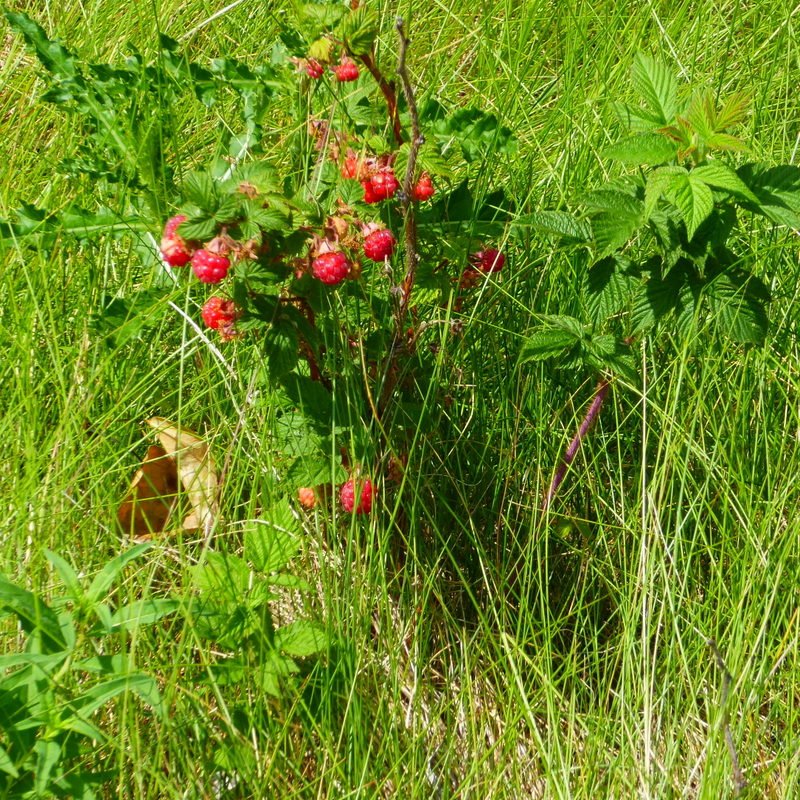
Click on this image of Berries to read the full article!
WEEKLY WILDLIFE AMBASSADOR WHEREABOUTS
In case you have not seen them yet, our amazing Volunteer Wildlife Ambassadors have been heading out onto trails and trailheads! You can find them talking to people about responsible trail use and staying safe while recreating in bear country. Note: their locations may change at the last minute.
August 8 - Kananaskis Visitor Information Centre (KVIC)
August 9 - MEC Store in Calgary at 830 – 10th Avenue SW (from 11am-3pm)
WILDLIFE IN THE NEWS
Camper charged after bold bear gets into human food in Banff National Park.
Think your dog makes you safer in bear country? The data says otherwise.
There's One Predator That Terrifies Bears And Mountain Lions Alike - us!
Fishing Guide Takes Calm Selfie With Grizzly Bear Right Behind Him.
Beloved BC grizzly bear “Grinder” dead after 2 decades of delighting locals and tourists alike.
Bear dogs help keep endurance races safe, ‘paw-tected’ in bear country.
Why bears are entering communities in Manitoba and what you can do.
14 captivating photos that reveal the polar bears softer side.
A Grizzly Bear in Katmai National Park Charged a Much Larger Male.
Mother bear kills cub in second tragic incident at Brooks River.
CURRENT OPPORTUNITIES
The Biosphere Institute is hiring an Environmental Educator and Program Coordinator (Maternity Leave Contract) for our Future Leader Program, supporting the ecological literacy of children and youth in the Bow Valley. The Environmental Educator and Program Coordinator is responsible for organizing and delivering the Future Leaders programming including outdoor learning classes and field trips aligned with the Alberta curriculum, coordinating the Future Leaders Youth Council and maintaining strong relationships with funders while supporting the program’s fund development plan. The position will be based out of our office in Canmore.
This is a full-time maternity leave contract position, between 12 and 18 months in duration, with a start date of October 1, 2026. Click here for the full job description and requirements!
If you are interested in applying for this opportunity please email a resume and cover letter with the subject title “Future Leaders, Maternity Leave Contract” to education@biosphereinstitute.org by 5:00 p.m. MST on September 1, 2026.
AND NOW SOME PAWS-ITIVE NEWS
There are still funds available for the Town of Canmore’s Fruit Tree Removal and Replacement Incentive Programs! Fruit trees are the main attractants that will draw bears into residential areas and NOW is the time to remove the fruit before a bear points out the problem. Leaving fruit (such as crabapple, mountain ash, chokecherry and dogwood) in your trees can attract bears into residential areas, putting bears and people at risk. The best practice is to remove fruit bearing trees and shrubs from your yard, however if you decide to keep your fruit bearing trees and shrubs, please ensure the fruit is removed BEFORE it is ripe! It is your responsibility to make sure that bears do not have a reason to linger in your yard, resulting in bears being relocated or killed.
WildSmart has pruning shears and extendable pole saw pruners and fruit pickers that can be borrowed (free of charge) to assist Bow Valley residents in removing fruit and berry bushes from their property. Please send an email to resource@biosphereinstitute.org to make arrangements to borrow the fruit removal equipment.
Take advantage of the Town of Canmore’s Fruit Tree Removal and Replacement Incentive Program NOW before the money runs out AND before you attract a bear into town and/or get a large fine! Applications are still open while limited funds are available so click here to apply now!
UPCOMING EVENTS
August 12 - Harnessing the Power of Food Workshop #2: Cooking Out of the Box!
What's in the box? Join us to find out! Gather for an evening of creativity, community, and delicious surprises as we transform a mystery selection of fresh, seasonal produce into a shared meal. Wednesday August 12 at 6pm at the Co+Kitchen in Canmore.
Sliding Scale Tickets: $20-$50. Click here to register and buy your ticket now!
If cost is a barrier, please reach out to tanya@biosphereinstitute.org for a complimentary ticket. No questions asked. Your registration includes:
A hands-on cooking experience featuring a surprise selection of local, seasonal ingredients
A nourishing shared meal with leftovers to take home
Tips and tricks for making the most of what's in your fridge, pantry, or Good Food Box

Please remember BEARS CAN BE ENCOUNTERED ANYWHERE, ANYTIME!
Report any sightings of a bear, cougar, wolf or any aggressive wildlife in Kananaskis Country or the Bow Valley to Kananaskis Dispatch at 403.591.7755